Headline
Amnesty International criticizes Qatar for lagging behind on addressing migrant worker reforms

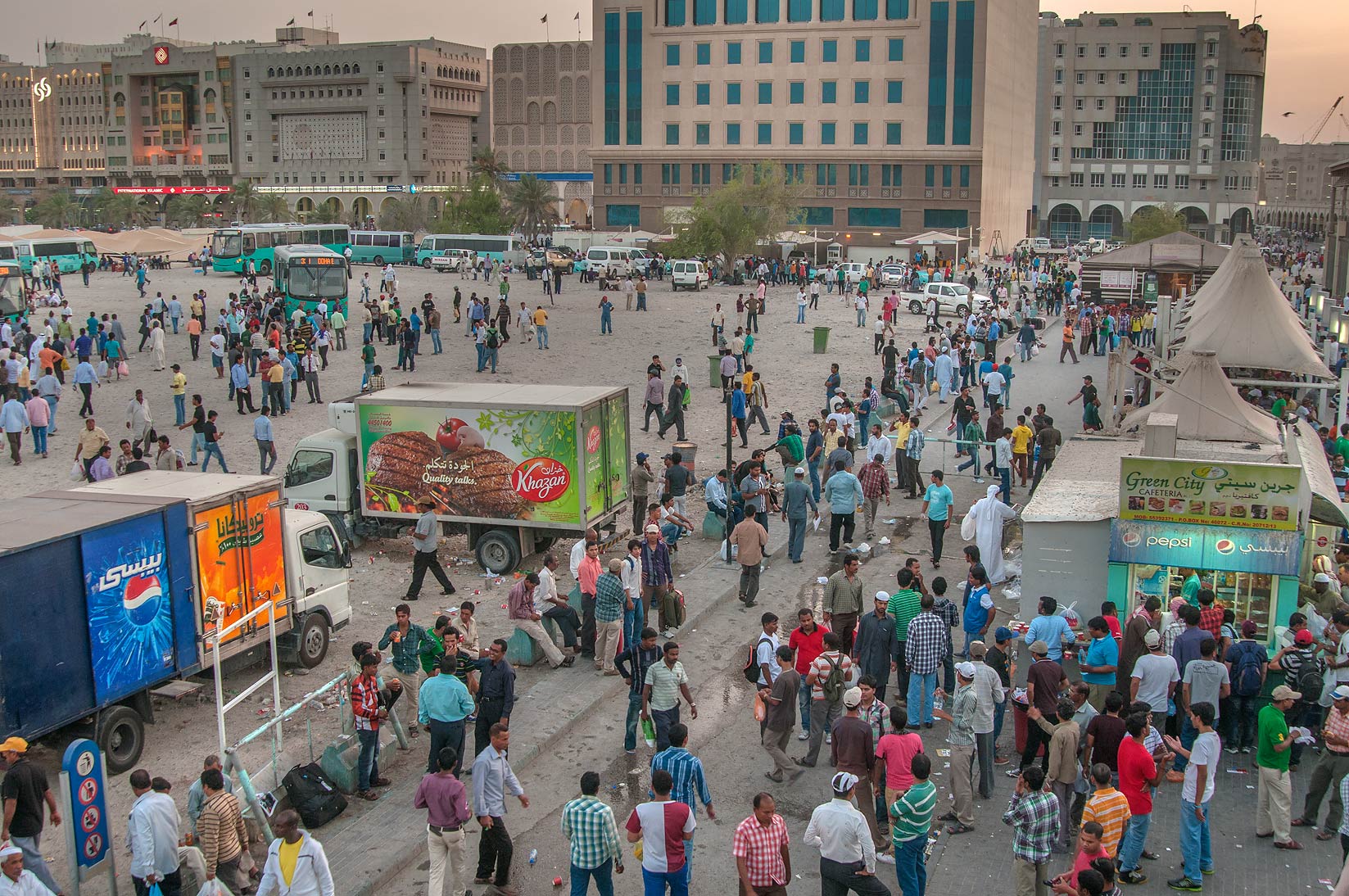
Crowds of migrant workers on Central Bus Station Al Ghanim, Doha, Qatar. Alexey Sergeev
DUBAI, United Arab Emirates—Amnesty International said Wednesday that 2022 World Cup host nation Qatar is lagging behind on addressing concerns about the abuse of migrant workers six months after it laid out plans for labour reforms.
The wealthy OPEC nation has come under increasing scrutiny over its labour practices since world football governing body FIFA awarded it the rights in 2010 to host the tournament.
Like other energy-rich Gulf nations, Qatar relies heavily on migrant workers drawn mainly from South Asia to build its roads, skyscrapers and stadiums.
In a new report, the London-based human rights group criticized Qatar for failing to substantially tackle issues such as the “kafala” employee sponsorship system that ties expatriate workers to a single employer, and requirements that workers obtain exit permits from their employers in order to leave the country.
Amnesty notes that Qatari officials increasingly acknowledge the existence of labour problems and the need for improvement. But it also warns that a failure to put serious changes in place in the coming months “will call into question whether the Qatari authorities are serious about reform.”
“The legacy of the FIFA 2022 World Cup would be the hundreds of thousands of workers who were exploited to make it happen,” the group said in the 12-page report.
In May, Qatari officials announced plans for new legislation that could eventually end the controversial sponsorship system in its current form.
Currently, migrant workers—who make up the bulk of Qatar’s workforce—typically must be sponsored by their employer to work legally. That gives employers considerable sway over workers’ lives and leaves employees open to abuse, as bosses must approve workers’ departure from the country or their requests to change jobs.
Qatar’s labour and social affairs minister, Abdullah Saleh Mubarak al-Khulaifi, told local Qatari newspaper editors last week that new labour legislation should be ready by the end of the year. An advisory council must still weigh in on the draft law before it goes to the ruling emir for his approval.
Qatar’s sports minister, Salah bin Ghanem bin Nasser al-Ali, separately told The Associated Press this week that the country plans to implement labour reforms in the “next few months.”
“We understand this problem. For us, it’s a human question,” al-Ali said.
Qataris aren’t “vicious people who are like vampires. … We have emotions, we feel bad.”
The draft legislation was introduced after Qatar hired international law firm DLA Piper to examine its labour issues. The firm outlined dozens of recommendations, including changes to the sponsorship system and the eventual phasing out of exit visa requirements.
Reforms proposed by authorities this year would automatically grant workers exit permission 72 hours before their scheduled departure, though there would still be limits on how soon they could leave.
Amnesty says those proposals don’t go far enough—though even they have yet to be implemented. As a first step, it is calling on authorities to do away with exit permits, investigate the causes of worker deaths, scrap fees for workers to file court cases against employers, publish names of “exploitative” recruiters and companies, and give domestic workers the same protections as other labourers.
James Lynch, the head of Amnesty’s business and human rights team, said it was important to keep pressure on Qatar because work on large-scale infrastructure projects that rely on migrant labour are racing ahead.
“The government hasn’t been taking the decisive action that it could take and should take,” he said in an interview. “There are a range of concrete steps that could be taken almost overnight … that would serve as a signal and confidence builder that the government is really serious.”
Associated Press writers John Leicester and Rob Harris in Doha, Qatar, contributed reporting.