
Breaking
Brazil’s election hinges on fickle lower middle class, its members torn between gains, future

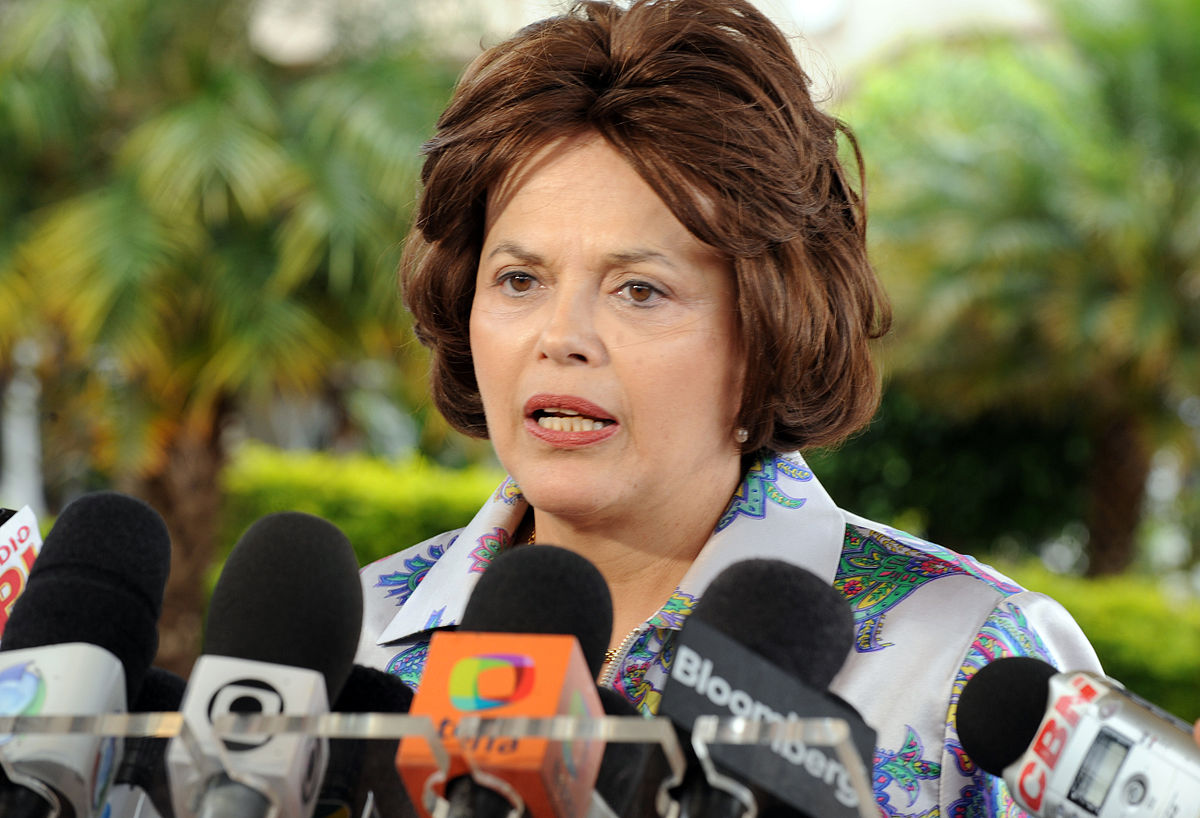
Dilma Vana Rousseff is the 36th and current President of Brazil. She is the first woman to hold the office. Roosewelt Pinheiro / Agência Brasil.
RIO DE JANEIRO, Brazil—The political debate boiled in Lena’s Salon in Rio’s Cantagalo slum, as patrons argued about who should win Sunday’s presidential election.
In one corner, owner Lucia Helena Silva was loudly arguing for President Dilma Rousseff and her Workers’ Party, waving a hot straightening iron. A customer, primping her carefully coiffed hair, was having none of it, insisting that centre-right opposition candidate Aecio Neves would revitalize Brazil’s pallid economy.
“No way! You’ve got to vote for Dilma,” said Silva. “Who has improved the lives of people in this slum? Who has shrunk the distance between us and the rich?”
The tightest and most unpredictable presidential election since Brazil’s return to democracy three decades ago is now in the hands of lower middle class voters like those debating in Lena’s Salon, who represent 35 per cent of the electorate and remain torn about which candidate they’ll back just days before the ballot.
Which camp such voters ultimately fall in has wavered over the final days of the campaign.
Last week, a survey by the Datafolha polling group said the lower middle class favoured Neves 52 per cent to 48 per cent. Four days later, a poll by the same firm said they had flipped and were supporting Rousseff 53-to-47, largely because of aggressive Rousseff ads arguing that she’s the better steward of the economy. The margin of error in both polls was two percentage points.
A Datafolha survey released Wednesday confirmed the confidence in Rousseff’s handling of the economy, showing a huge shift in voter sentiment from a poll in June. Four months ago, 64 per cent of respondents said inflation would get worse, but now only 31 per cent think it’ll heat up. The percentage of people who said the economy would improve jumped to 44 per cent from 26 per cent in June.
The optimism has surprised many, considering that since the June poll Brazil entered a technical recession and inflation jumped above the government’s own ceiling target of 6.5 per cent, despite attempts to lower it by imposing price controls on gasoline and electricity.
Observers said the only explanation was Rousseff’s aggressive campaign to convince voters that times are still good and that she’s looking out for their economic interests, whereas Neves, long hit with charges of elitism, would care only about the rich.
Eliane Cantanhede, one of Brazil’s best-known political commentators who writes for the newspaper Folha de S.Paulo, said Rousseff has the natural incumbent’s advantage of being able to better shape the debate and control the focus of the campaign.
“Dilma’s marketing is the big winner here,” said Cantanhede. “She’s got an economy that won’t grow over 0.5 per cent this year, the worst among emerging-market nations, but her campaign puts forth the notion that everything is fine and many people are buying it.
”
One ad featured popular former President Luiz Inacio Lula da Silva, Rousseff’s mentor who chose her to succeed him in 2010, telling supporters at a rally that Neves would govern only “for bankers.”
Another ad ominously asks: “Do you remember how your life was during the opposition’s government?”—referring to the economic turbulence Brazil faced when Neves’ Social Democracy Party held the presidency in 1995-2003. “Did your family have jobs? Did you have your own house? Did you have a car? Did you take trips on planes?”
The message that only Rousseff and the Workers’ Party can secure those gains was at the heart of the debate that played out in the Cantagalo beauty salon and is being repeated across Brazil.
To shop owner Silva, it is thanks to policies pushed by Rousseff’s Workers’ Party during its 12 years in power that millions of Brazilians like her have been lifted out of poverty.
But Adna Marcos, sitting in a yellow salon chair, said that while the Workers’ Party’s welfare programs are great, the country now needs economic growth.
“We need somebody who can control inflation,” said Marcos. “We need improvements in public services that the Workers’ Party hasn’t managed. They did their part in helping the poor advance; we’ve improved, but we need new leadership to expand even more.”
Silva and Marcos are part of Brazil’s “intermediary” lower middle class—households earning about $400 a month per capita and who have a high school or technical education. They are just well off enough to not take part in government cash-transfer programs, but not rich enough to have cushions against economic shocks.
They have escaped the poverty their parents lived in, and they’ve gained access to credit to buy flat-screen TVs and smartphones. But they’ve often not moved from slums and don’t make enough money to avoid using the country’s notoriously bad public services. They take crowded buses not taxis, suffer long waits and poor care in public hospitals, and their children study in bad public schools.
They are the strongest echo in this election of last year’s big anti-government protests that roiled cities across Brazil, a collective outburst of frustration over pitiful public services in the face of a heavy tax burden and a high cost of living
“They’ll be decisive in this election and the race rests on how this group votes, especially since the rich and poor have crystalized their support for Aecio and Dilma, respectively,” said Alessandro Janoni, director of research at Datafolha.
Analysts say this group breaks for Rousseff when her campaign successfully connects Neves to what she calls the “ghosts of the past”—the hyperinflation and high unemployment Brazil suffered when his party held power.
By contrast, Neves wins over this group when he hammers at Rousseff for creating “monsters of the present”—rising prices, a stagnant economy, woeful infrastructure and accusations of widespread corruption.
With just one debate left and only a few more days to air campaign ads, Brazil’s election is going down to the wire.
“With Dilma, we know what we’ll get, and it’s not working anymore, the country’s not growing, inflation is rising and I’m starting to feel that,” said Marcos. “They say Aecio would only govern for the elite, but I don’t believe it.
”
Silva guffawed at that, telling Marcos: “You’re crazy if you think anybody but Dilma is going to help us.”
“Without the Workers’ Party, the divide between rich and poor will only grow,” she said. “I’m afraid that would mean those of us in the middle would just fall back to where we started.”




















