Sports
New allegations of abuse have grounded Canada’s artistic swimming team

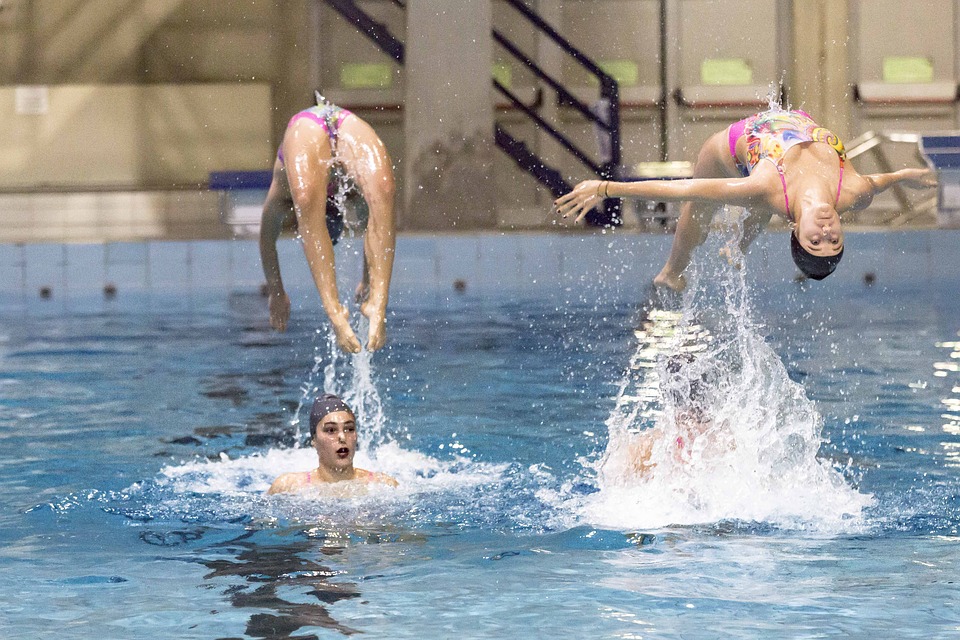
Given the very real repercussions of speaking out about these concerns, including being removed from the team, athletes have learned to be compliant, and have often resorted to compromising their health if they choose to remain on the team. Some end up leaving the sport entirely. (Pixabay photo)
Recently, the Montréal training site for the senior Canadian artistic swimming team (previously referred to as synchronized swimming) closed following reports of abuse and harassment.
Radio-Canada Sports obtained a recording of Julie Healy, Canada Artistic Swimming’s chief sport officer, responding to athletes’ allegations of psychological abuse and discriminatory comments: “We can’t continue to operate in an environment where athletes don’t feel safe, where coaches do not feel they can work without being accused of being hostile, harassing, abusive.”
Although Healy claims that the alleged abuses have only occurred since 2019, artistic swimmers have expressed concerns about abusive training environments for years, as shown by recent social media posts by former national team artistic swimmers. And a recent statement by the Ontario Artistic Swimming organization indicates that it’s more of a sports-wide issue.
Controlling environments
Our research has found that female athletes from esthetic sports — those requiring physical capacity alongside skill and artistry, such as artistic swimming — report repeated experiences of psychological abuse, including body-shaming practices. Artistic swimming requires a lean, long, sleek physique and that all athletes on the team look similar. To meet these expectations, many coaches have engaged in practices such as regular weigh-ins, making derogatory statements about the athletes’ bodies and recommending unhealthy eating practices.
Given the very real repercussions of speaking out about these concerns, including being removed from the team, athletes have learned to be compliant, and have often resorted to compromising their health if they choose to remain on the team. Some end up leaving the sport entirely.
Coaching concerns
Curiously, Healy refers to concerns about coaches feeling they cannot do their job without fears of being accused of being hostile, harassing or abusive. One has to wonder what these coaching practices are that raise fears of being abusive?
As professionals with oversight over the health and development of adolescents and emerging adults, how are they being perceived as abusive or harassing?
Research indicates that a culture of control persists in the elite sport world, one in which derogatory and humiliating comments and body shaming are normalized practices. In these environments, athletes quickly learn that in order to pursue their talents and passion for sport, they are expected to tolerate these practices; in fact, many athletes are socialized into these environments in such a way as to accept these practices as normal and required for optimal performance.
Regrettably, however, the normalized practices that characterize many elite athletes’ experiences are harmful to athletes’ long-term health and well-being. The complaints about Canada Artistic Swimming are another reminder that archaic coaching practices must be replaced with evidence-based methods grounded in learning and development, and an environment in which athletes have agency over their experiences and the decisions that affect them.
New oversight
Fortunately, an independent body has been engaged to investigate the concerns and climate within which these Canada Artistic Swimming athletes and coaches work. This is a significant step forward.
To date, athletes’ recourse for raising concerns has been to address them with the sport’s governing body — the same body that hires coaches, makes decisions about Olympic team membership and funding, and sets the overall climate for the entire organization. Given these inherent conflicts of interest, it’s no wonder that athletes have been reluctant to report their concerns, or have seen their concerns ignored.
Over the past few years, many researchers, athletes and others in the Canadian sport system have advocated for an independent mechanism outside of the sport organizations to receive and investigate complaints of athlete maltreatment. Currently, McLaren Global Sport Solutions — a Toronto-based consulting group — has been charged with recommending structures and processes to ensure such an independent mechanism. A final report is expected shortly.
The allegations within Canada Artistic Swimming again reinforce the need for an independent body where athletes can raise their concerns without fear of reprisal.
The situation with Canada Artistic Swimming is another reminder that the time has come for competitive sport to normalize practices that are aligned with the expectations and standards Canadians have of the treatment of young people.
Gretchen Kerr, Vice-Dean of Faculty of Kinesiology and Physical Education, University of Toronto and Erin Willson, PhD Candidate, Kinesiology, University of Toronto
This article is republished from The Conversation under a Creative Commons license. Read the original article.