
Health
10 reasons kids develop sleep problems, and how parents can help

For some parents, getting their child into bed is a struggle that can take hours. Others get up at midnight to help their child fall back to sleep. Sleep problems like these affect one in four kids — and their parents, too.
As a pediatric sleep researcher, I’ve grappled with the question of why these sleep problems happen. My team’s research delivers the largest synthesis of why kids develop these sleep problems, capturing over 30 years of research. We have identified the 10 biggest reasons these sleep problems occur for kids ages one through 10 years.
Why kids develop sleep problems
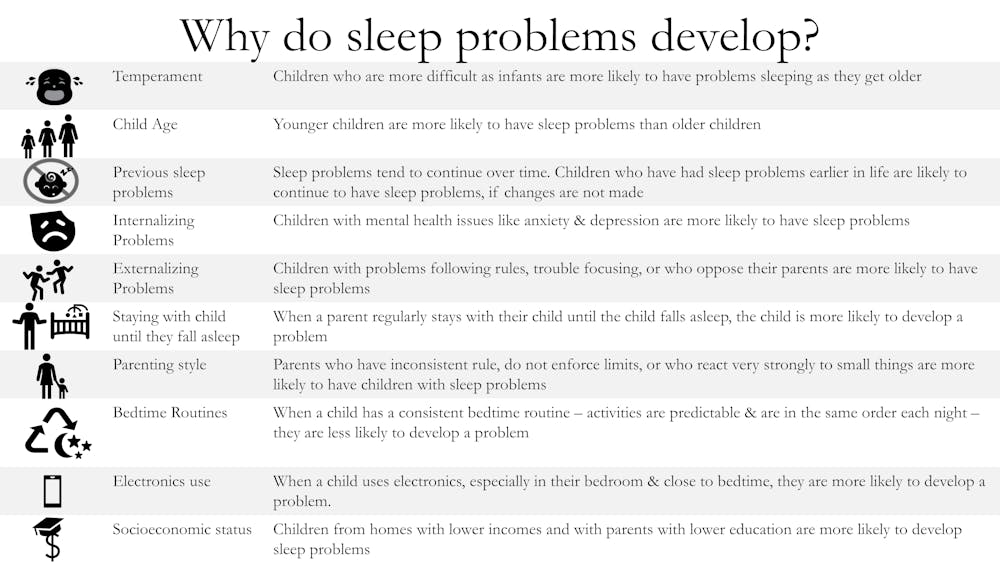
This is a complex question. We identified nearly 60 factors that could play a role, from a pool of 98 studies. Ten of these factors were supported in several rigorous studies.
These factors fall under three “lenses” we can use to understand where children’s sleep problems come from: biology, psychology and the environment.
Biology
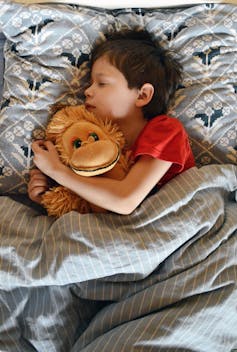
(Pixabay)
Biology involves the child’s internal functions, their make-up.
We identified two reasons kids develop sleep problems stemming from their biology — their temperament and their age.
Temperament, or disposition, is the personality you see in your baby. Babies who seem more fussy or irritable can have a hard time responding to change and may not settle easily. Babies with this type of temperament may be more likely to have sleep problems later in childhood.
As children get older, they are less likely to have sleep problems. This may be because their brains can better manage the processes needed to settle at night, or that they are more independent in their bedtime routines.
Psychology
The psychology of children’s sleep problems involves two parts: how children act and feel, and how children and parents interact with each other.
We found six psychological reasons kids develop sleep problems: three relating to how kids act and feel, and three relating to family interaction.

(Pexels)
Firstly, we know that children who have had sleep problems earlier in life are likely to continue to have sleep problems later in childhood — unless change happens.
Children with mental health problems tend to have more sleep problems, even if there’s no diagnosis. There are two groups of problems linked with sleep problems: internalizing problems (like anxiety and depression) and externalizing problems (trouble with following rules and focusing). Internalizing problems can make it harder for kids to settle down and fall asleep, due to higher stress levels. Externalizing problems may make rules and routines more difficult for children to follow, which then makes it harder to settle to sleep.
How children and their parents interact also matters.

(Pexels/Ketut Subiyanto)
At night, parents who stay with their child until they fall asleep tend to have children with sleep problems. Parents become a cue for children to fall asleep. So, when a child wakes in the middle of the night and mom or dad isn’t there, it’s tricky to fall back asleep.
During the day, parents who have inconsistent rules at home, who do not enforce limits on their children or who react very strongly to little hitches tend to have children with more sleep problems. Parents who act in these ways may have trouble keeping their child on the same bedtime routine from night-to-night and have children who have more stress at bedtime, making it harder to fall asleep.
Consistency is also important at night. Children with consistent bedtime routines tend to have fewer sleep problems than children with inconsistent routines. Consistent bedtime routines help kids to feel safe, settled and ready to fall asleep.
The environment
The environment involves how children and parents interact with the world around them.
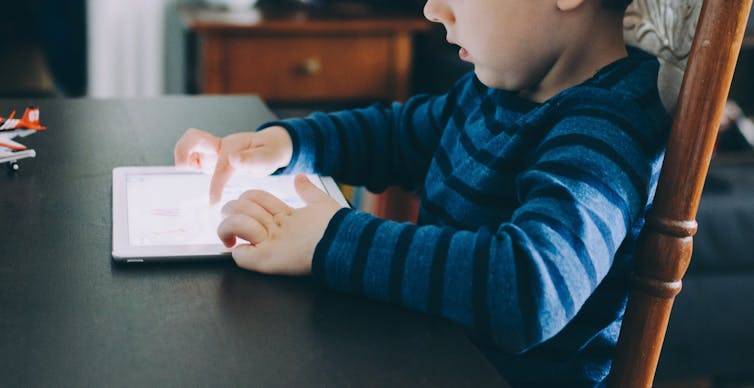
(Pixabay)
Firstly, more electronic use is associated with more sleep problems. This is especially true when children use screens in their bedroom or close to bedtime. This is because screens prevent melatonin (the sleep hormone) from doing its job, which is to make us sleepy. But this isn’t the whole story. Electronics may also keep kids’ minds alert, especially if they are playing a game or watching an interesting show.
Secondly, families with lower incomes and lower education are more likely to have children with sleep problems. This likely isn’t a direct result of income or education, but the fallout from these circumstances, like living in noisy neighbourhoods or having parents with changing schedules.
(Adam Newton), Author provided
These factors give a principal account of why sleep problems occur, but not the whole story. We don’t yet know how these factors might influence each other to make sleep problems better or worse. There are also other factors I’ve not mentioned — like bedroom light and noise or conflicts between parents — that may help our understanding.
How can parents help?
Of the 10 factors I’ve listed, parents can directly improve four:
- Help kids to fall asleep on their own;
- Develop a clear and consistent bedtime routine;
- Limit electronics in the bedroom and at bedtime;
- Calmly, set clear and age-appropriate limits for your child during the day.
These changes can be easy to make and can have a great impact on your kid’s sleep.
Adam T. Newton, PhD Candidate in Clinical Psychology, Western University
This article is republished from The Conversation under a Creative Commons license. Read the original article.




















