
Canada News
The election’s on: Now Canadians should watch out for dumbfakes and deepfakes

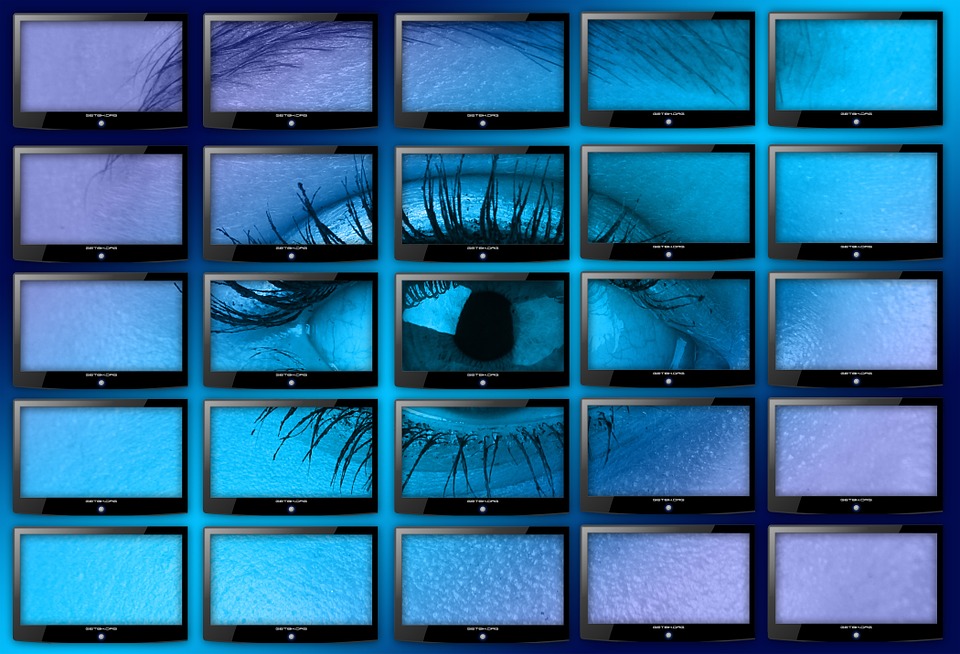
These fake videos are already present in Canadian politics and are even more likely to be created and disseminated during Canada’s ongoing election campaign. (Pixabay photo)
Dumbfakes and deepfakes are edited or altered videos. In just the past few years, the capability to produce and share these videos has increased exponentially due, in part, to artificial intelligence.
These fake videos are already present in Canadian politics and are even more likely to be created and disseminated during Canada’s ongoing election campaign.
Dumbfakes are videos edited through traditional video editing techniques. They use technology that is readily accessible on most computers and smart phones. Political dumbfakes that already showed up in the lead-up to the election include a video that falsely made it appear as though Prime Minister Justin Trudeau was snubbed by Brazilian President Jair Bolsonaro at the G20 Summit in Japan in June 2019.
In comparison, deepfakes typically use what are known as generative adversarial networks, a type of machine learning, to swap the face of one individual onto the body of someone else or to manipulate the features of someone’s face.
Deepfakes may also include audio manipulation by using a voice actor or voice-mimicking technology. Technology to create deepfakes has quickly spread, including a new Chinese app called Zao.
An example of a deepfake is the video of Canadian Conservative Party Leader Andrew Scheer as comic Pee-wee Herman in an old public service announcement about crack cocaine.
Dumbfakes and deepfakes are unique from other forms of false news due to the use of video manipulation. They offer visual representations of supposed events, as opposed to words or still images, and are therefore closest to how events are actually experienced. Indeed, studies on doctored videos have found them to be an effective tool in producing false memories.
While dumbfakes and deepfakes have been picked up by traditional news outlets, they are most likely to be shared on social media. This is concerning because false news, specifically political false news, spreads exponentially faster and further than accurate news on Twitter.
Impact on election
As we ponder what impact dumbfakes and deepfakes might have on the election, it’s important to note that they are not likely to affect all people equally.
They are most likely to have an impact on people who are marginalized and already face barriers to political engagement. Women, for instance, face barriers to running and staying in politics. Deepfakes are likely to exacerbate that because, since their inception, deepfakes have been used to abuse women (for example, incorporating female celebrities into pornographic films).
An intersectional lens to understanding how dumbfakes and deepfakes could affect the election is therefore essential.
Three areas that dumbfakes and deepfakes are most likely to have an impact are political representation, participation, and discussion.
Representation
While everyone has a right to run for office, dumbfakes and deepfakes may make it more difficult for people to do so. Fake videos could be produced to blackmail politicians into not running or to discredit their campaigns by spreading false information.
Political candidates must now reflect on whether they’re prepared for the possibility of dumbfakes and deepfakes targeting them as they step into the public eye — both in regards to campaigning and in the increased number of photos and videos of them available online that could be used to make dumbfakes and deepfakes.
Political campaigns may furthermore be derailed by a damaging fake video.
Participation
Dumbfakes and deepfakes may be more broadly used against the public in order to silence citizens.
Organizations and activists who are in the public eye may be particularly targeted due to their online presence. Citizens may be silenced through the release of a harmful fake video. Even the possibility of a fake video can promote political self-censorship, especially for individuals already facing online discrimination (for example, racist tweets).
Dumbfakes and deepfakes may also aim to discredit important work that promotes political accountability by criticizing the government and oppressive practices.
Discussion
Fake videos create an environment of distrust that further hinders the ability of citizens to operate on the basis of shared information. They could also hinder discussion by playing into and worsening existing social tensions domestically and internationally.
We’ve seen this before. Russian disinformation efforts during the 2016 American presidential election stirred conflict on a number of issues including immigration, gun control and the Black Lives Matter movement.
Another issue with dumbfakes and deepfakes is that they undermine the credibility of video evidence overall, including real videos that may depict politicians or others engaging in compromising or morally reprehensible behaviour.
Protecting Canadian democracy
Legal means of addressing dumbfakes and deepfakes — copyright infringement and defamation laws, for example — are currently being explored. Detection technology is also being advanced.
But these approaches may not be effective if a dumbfake or a deepfake is opportunely shared just a few days before the election. Canadian citizens must therefore take on the responsibility of checking information and videos, especially around election time.
Dumbfakes and deepfakes have clearly changed the medium of video. The best way to protect against the disinformation they spread is by being aware of their existence.
——
This article is republished from The Conversation under a Creative Commons license. Disclosure information is available on the original site. Read the original article:
https://theconversation.com/the-elections-on-now-canadians-should-wa




















