
News
Royals’ roles in politics vary, but few join electoral fray

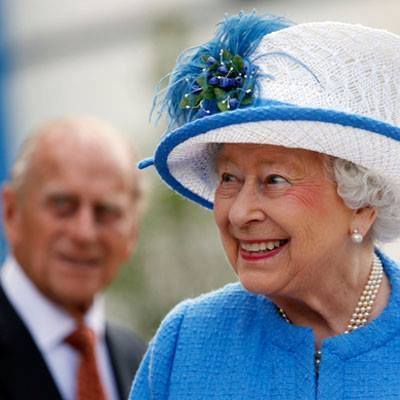
She signs legislation and is at the centre of many political rituals, such as opening Parliament by reading a speech and a government agenda she plays no role in preparing. (File Photo: The Royal Family/Facebook)
BANGKOK — The selection of the elder sister of Thailand’s king as a political party nominee for prime minister has upended a tradition of the palace playing no public role in politics. Most but not all modern monarchies steer clear of direct involvement in electoral politics or governing. Here is a look at the status of royals and government across the globe:
THAILAND
The Thai Raksa Chart party’s choice of Princess Ubolratana, 67, formalizes her affiliation with a political machine that has been dismissed by hardcore royalists as opposed in spirit to the monarchy. It pits her against the military’s preferred candidate, current Prime Minister Prayuth Chan-ocha, who led a 2014 coup, ousting Thailand’s last elected government. It also raises questions about the long-term partnership of the palace with the army. Usually, the royal family remains aloof from the country’s political ferment and it’s unclear how Thailand’s strict lese majeste — the insulting of monarchy — law might affect the campaign or its aftermath.
———
BRITAIN
Queen Elizabeth II, the world’s longest-reigning living monarch, mostly lives a life of ceremonial duty, world travel and great wealth. She also acts as hostess for state visits. As a constitutional monarch she and her family are prohibited from getting actively involved in politics, though she has a consultative role, meeting regularly with the prime minister. She signs legislation and is at the centre of many political rituals, such as opening Parliament by reading a speech and a government agenda she plays no role in preparing.
———
BRUNEI
Southeast Asia’s smallest nation is an absolute monarchy ruled by the wealthy, autocratic Sultan Hassanal Bolkiah, who is also prime minister, defence minister and finance minister. He has ruled through emergency decree since 1984 and the country’s last election was in 1962. The country’s national ideology invokes Islam and history in support of the sultan’s absolute power.
———
BHUTAN
The South Asian country in the eastern Himalayas, the region’s last remaining Buddhist kingdom, transitioned from an absolute monarchy to a constitutional monarchy in 2008. The country’s fourth king introduced a concept of gross national happiness in the 1970s, embracing sustainable development, education and health over economic growth. His son and current king, the U.S. and British-educated Jigme Khesar Namgyel Wangchuck (affectionately known as K-5) has overseen his country’s democratization and land reforms.
———
JAPAN
The late Emperor Hirohito renounced his status as a living god and assumed a symbolic role under a U.S.-inspired constitution adopted after Japan’s defeat in World War II. The imperial family eschews involvement in politics and are seen as resisting Prime Minister Shinzo Abe’s efforts to give the emperor a bigger role in order to restore pre-war paternalistic social values.
———
LESOTHO
The poor, mountainous kingdom encircled by South Africa has had a ceremonial, constitutional monarchy throughout decades of political instability since its independence from Britain in 1966. King Letsie III has openly criticized politicians for manipulating the military and shown interest in a more active political role. In the southern African kingdom of Eswatini, formerly known as Swaziland, King Mswati III is an absolute monarch who during his more than three decade long rule has been accused of suppressing human rights.
———
NORWAY
Like fellow Nordic royals Denmark’s Queen Margrethe and Sweden’s King Carl XVI Gustaf, Norway’s King Harald mostly keeps to his traditional role as a figurehead. But he has spoken out in support of gay rights and diversity. In a 2016 speech, he said: “Norwegians are girls who love girls, boys who love boys, and girls and boys who love each other” and also that many Norwegians have emigrated from Afghanistan, Pakistan, Poland and other countries and that they “believe in God, Allah, the Universe and nothing.”
———
THE GULF STATES
The kings and sheikhs who rule the Arab countries lining the Persian Gulf preside over some of the few remaining absolute monarchies in the world. King Salman of Saudi Arabia assumed the throne in 2015 following the death of his half brother. Saudi Arabia does not allow political parties and has only held elections for some municipal council posts. Neighboring United Arab Emirates, a federation of seven states, has as its president the hereditary ruler of Abu Dhabi, the largest and richest of the emirates. Dubai, the commercial hub, holds the posts of prime minister and vice-president. The hereditary ruler within each emirate has widespread powers to rule by decree. The sultan of Oman, Qaboos bin Said, is the absolute ruler over a country that lacks the vast oil wealth of Saudi Arabia or the UAE. Tiny Kuwait holds regular elections, though its emir retains vast powers, including the ability to dissolve parliament.




















