
Canada News
Apple trees from Isaac Newton’s bring ‘magic’ to universities around the world

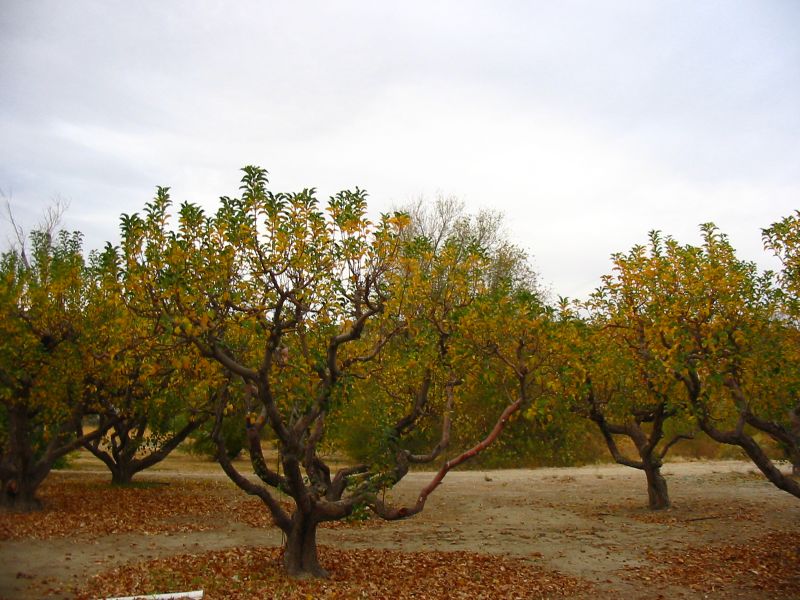
“Nobody (involved in the development) cared too much about Newton apple trees,” he said. “For them, they were in the way.” (File Photo: *Robert*/Flickr, CC BY-SA 2.0)
VANCOUVER — On a cold, sunny day in December, Jean-Michel Poutissou paused to admire the six apple trees that he once fought to save.
Poutissou came to Vancouver in October 1972 when the trees on the campus of physics laboratory TRIUMF were mere saplings. The trees are scions of the same tree that Sir Isaac Newton is said to have sat under as he pondered gravity.
Poutissou, a researcher emeritus at TRIUMF, said the trees “were happily growing” until the mid-1990s when condo developers wanted a straight road from the campus to the homes. The trees were in danger of being axed.
“Nobody (involved in the development) cared too much about Newton apple trees,” he said. “For them, they were in the way.”
It took a campaign to convince the president of the University of British Columbia, where TRIUMF is located, to intervene and save the roundabout where the trees are planted, he said.
Now nearly 50 years old, the trees are covered in buds that will fatten over the winter before bursting into fruit.
Poutissou said he’s tasted the apples but that was a long time ago and he doesn’t remember their exact flavour.
“It’s not quite unlike a McIntosh but don’t hold me to that,” he said with a laugh.
The trees’ journey began sometime in the late 1960s and early 1970s.
Letters between the University of British Columbia and the National Physical Laboratory in Teddington, England, show that on the day two grafts of the trees arrived in Vancouver on an Air Canada flight on Jan. 4, 1971, the ground was covered in more than 50 centimetres of snow.
The two cuttings were further grafted and now six trees sit on the TRIUMF campus.
Today, the National Trust in the U.K. is the custodian of the original apple tree at Woolsthorpe Manor, where Newton considered the laws of gravity. The tree is called Flower of Kent, a traditional variety, which produces cooking apples of varying sizes.
An email from the organization says there are many universities around the world that have twins of the original tree. It’s not known how the idea to send universities Newton’s apple trees came about and there doesn’t seem to be a tradition or policy, it says.
“It’s likely this was spread more by word of mouth between universities.”
The tree is an icon of learning, discovery and the start of the era of modern science, the trust says.
In 1820, a storm blew over the original tree, but it survived and continued to grow new roots, the organization says.
Seeds from its descendants have also defied gravity and made a trip to space, thanks to Robert Prince, professor emeritus of the Lassonde School of Engineering at York University in Toronto.
Astronaut Steve MacLean was Prince’s student. He was assigned to a space flight in 2006 and his former teacher had a task for him. He wanted MacLean to take a picture of an apple floating over his head.
“I had this idea of doing something rather humorous with this apple over his head and staying and not falling like Newton’s theory of microgravity,” Price said in an interview.
When MacLean told Prince he wasn’t allowed to take fresh fruit because of contamination, the seeds were sent up instead.
Prince said the seeds are now in the possession of the physics department at York University.
“They may go on display at some point along with other MacLean’s artifacts.”
The trees on York’s campus were planted in 1999.
Originally three trees were planted but some didn’t survive because of the climate, while others were damaged. Only one took root.
“It survived and bore fruit quickly,” Prince said. “I was surprised at how quickly we got fruit off it.”
The apples are not very big. “Like a crabapple size,” he added.
There has also been an imposter of the Newton apple tree in Canada.
Two Newton apple trees at the National Research Council in Ottawa were thought to be grafts from the original tree that were sent over in the 1960s, but it was determined they were unrelated to the tree Newton sat under. The tree was a Newton’s apple, but a variety of the fruit.
Dick Bourgeois-Doyle, who exposed the imposter trees while working on a book for the council’s centennial celebrations in 2016, says he felt guilty having uncovered it.
His plan for a limited-edition coffee table book was going to include a memento from the apple tree: a leaf or a seed. During his research, he found that the twin from the original apple tree died possibly victims of disease or Ottawa winters, in the 1990s.
“It sort of popped a balloon because people had a lot of pride seeing those two trees and there’s a big bronze plaque in front of it here in Ottawa,” he said.
To be sure, he sent off leaf samples to an agricultural institute in England, which confirmed his research.
That year, he contacted York University and was sent a seedling from one of their Newton apple trees, which is growing at the research council.
Newton probably wasn’t clunked on the head with an apple but the tree is still a touchstone linked to a significant point in scientific history, Bourgeois-Doyle said.
Newton’s trees combine history, science, folklore and legend, which makes them enchanting, he said.
“If you can hold something in your hand or touch or look at something and that has a thread going back to Woolsthorpe Manor, it has a little bit of magic to it.”




















