Canada News
Talcum powder products may be harmful to lungs, possible cause of ovarian cancer: feds

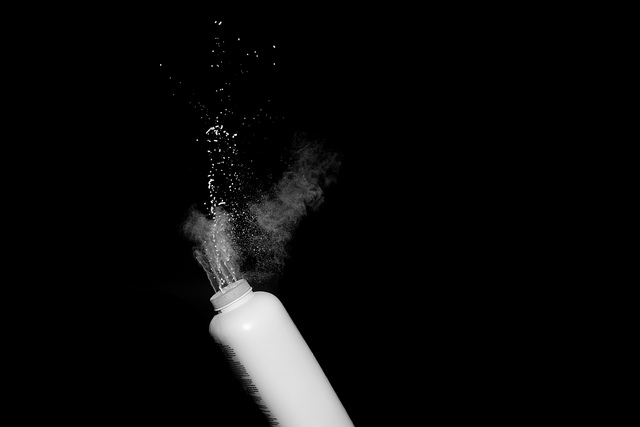
Baby powder should also be kept away from a child’s face to avoid inhalation, Health Canada and Environment and Climate Change Canada said Wednesday in releasing a draft screening assessment of products containing talc. (File Photo: Stefen Acepcion/Flickr, CC BY-NC-ND 2.0)
TORONTO — Consumers are being warned to avoid inhaling talcum powder or using the products on the female genital area, as exposure may cause potentially serious respiratory problems and possibly ovarian cancer.
Baby powder should also be kept away from a child’s face to avoid inhalation, Health Canada and Environment and Climate Change Canada said Wednesday in releasing a draft screening assessment of products containing talc.
The draft assessment focuses on the safety of talc in such self-care products as cosmetics; baby, body, face and foot powders; diaper and rash creams; and genital antiperspirants and deodorants.
“When you inhale talc, the fine talc particles will get lodged inside of the lung, and over time there’s a cumulative effect associated with that,” said David Morin, director general of the safe environment directorate.
Inhaling talc, a naturally occurring mineral, can cause difficulty breathing, decreased lung function and pulmonary fibrosis, a scarring of the lungs.
Products containing talc have also been linked to ovarian cancer in some women, and the Canadian Cancer Society identifies its use on the female genitals as a possible risk factor for the malignancy.
A number of class action lawsuits in the U.S. and Canada launched against Johnson & Johnson contend that longtime use of its talcum powder for feminine hygiene resulted in the development of the plaintiffs’ ovarian cancer. The cosmetics giant has denied its product, which has been on the market since 1894, causes the disease.
Despite studies suggesting a link, Health Canada has not mandated that labels on talc-containing products carry specific warnings about the possible link with the development of ovarian cancer or the respiratory risks to adults who inadvertently inhale talcum powder particles.
Ottawa only requires label warnings related to the use of loose talc powder for infants and children, said Tolga Yalkin, head of the consumer products safety directorate.
“Essentially, those warnings are: ‘Keep out of reach of children’ and ‘Keep out of the way of a child’s face to avoid inhalation, which can cause breathing problems,”’ he said.
The Canadian Paediatric Society also advises against the use of talcum powder — long used by parents to prevent diaper rash — for infants and babies.
Muhannad Malas, toxics program manager for Environmental Defence, said Health Canada’s screening assessment shows that the effects of talc can be “really serious.”
“What we want to see here is some regulatory actions in terms of banning talcum powder in cosmetics and personal care products that pose significant risks to women and to children,” he said in an interview.
The environmental action organization is also calling for “much stronger health warnings that would clearly identify the risks and clearly tell consumers why talcum is a problem and why we should avoid exposure to it,” he said.
Yalkin said the government is investigating the possibility of updating its cosmetic ingredient hotlist and possibly expanding warnings on product labels, but any decision would follow a 60-day consultation process and the final version of the screening assessment.
The consultation will offer members of the public, talc-products manufacturers, academics and others to provide comment and information on the issue. Their input, as well as any new scientific evidence, will help inform the final assessment.
“It’s possible you will see additional warnings that are mandated by Health Canada,” Yalkin said.
Morin added that if the final screening assessment confirms that talc in certain products is harmful to human health, regulatory action will be taken to manage the identified risks.
But Malas said he’s concerned about how long that process could take, from finalizing the screening assessment to taking regulatory action if deemed warranted.
He said it took four to five years for the government to finalize a risk assessment for triclosan, an antibacterial chemical used in cleaning and personal care products, following release of its draft document, and another a few years more before it decided on what measures to take.
“We want to avoid that,” he said. “I think what we’re looking for is some concrete and immediate actions in terms of reducing Canadians’ exposure, especially women’s exposure to talcum powder and also infants’ exposure.”
Federal law requires companies to list the ingredients on cosmetic and personal care products, noted Yalkin.
“So in the meantime, Canadians who are concerned about their exposure can check to see if (talc) is on the product that they’re considering using and make a decision accordingly.”
The draft screening assessment will be published in the Canada Gazette, Part I, and will be open for public comment until Feb. 6. The Canada Gazette containing public notices, official appointments and proposed regulations from the federal government is published every Saturday, but available online Fridays at 2 p.m. Eastern time.