
Health
Hope for cannabis as treatment for opioid addiction

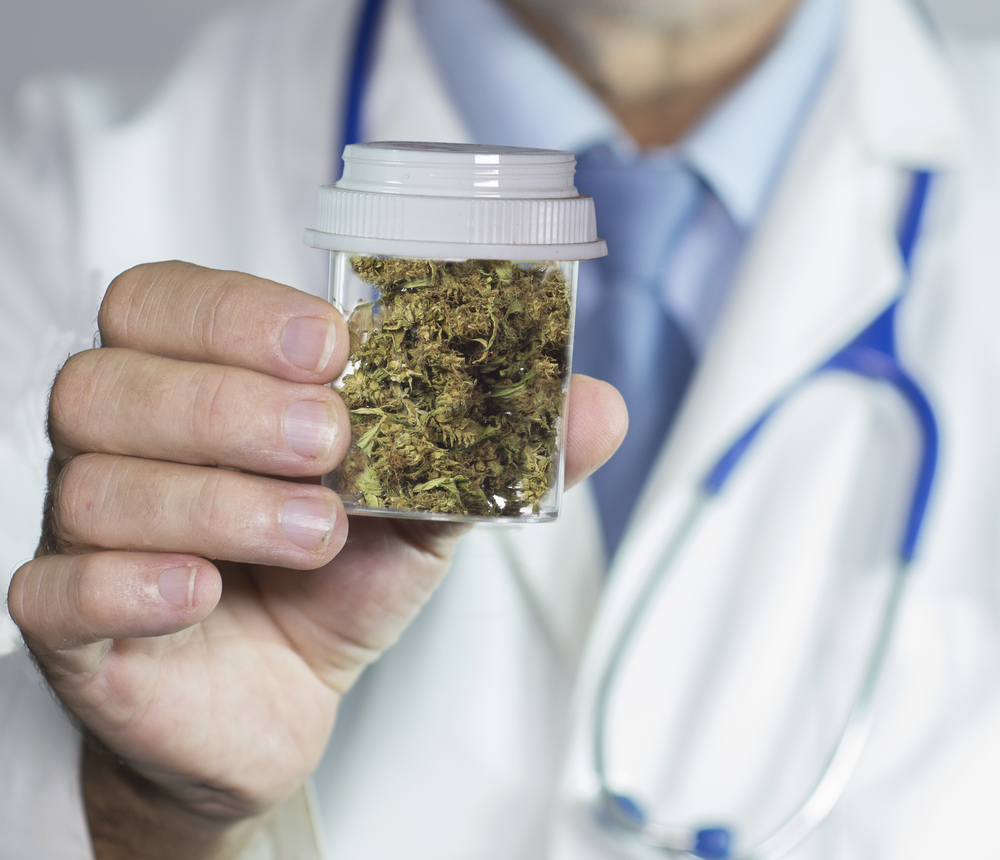
But the potential of cannabis to modulate the addictive effects of a much harder opioid class drug such as heroin or fentanyl is just beginning to be explored. (Shutterstock)
Canada currently finds itself at the intersection of two historic social phenomena with massive implications for public health.
First, after decades of restricting public access to marijuana, on Oct. 17, Canada became the first major industrial nation to fully legalize cannabis for both medicinal and recreational usage.
Second, we find ourselves in the throes of a worsening opioid addiction crisis that has already caused the deaths of thousands of Canadians, young and old.
The interactions between opioids and cannabis have been explored at the clinical and pharmacological levels for decades. But the potential of cannabis to modulate the addictive effects of a much harder opioid class drug such as heroin or fentanyl is just beginning to be explored.
As a neuroscientist, I have been investigating both the role of the brain’s cannabinoid system in a variety of neurophysiological processes including schizophrenia, anxiety, cognition and memory, and the underlying neurobiological mechanisms responsible for opioid addiction. For many years we considered these to be largely separate areas of inquiry.
However, our recent research finds that specific constituents in cannabis may have very profound effects — not only modulating the addictive effects of opioids but possibly serving as a treatment for opioid dependence and withdrawal.
Inside a complicated plant
Since the early 1960s, the complexity of cannabis has been gradually revealed. Cannabis is now known to contain well over 100 distinct “phytochemicals,” including ?-9-tetrahydrocannabinol (THC) and cannabidiol (CBD).
There are also a host of other cannabinoids, along with a variety of volatile “terpene” compounds, which give different cannabis strains their distinct aromas and flavours.
Currently, the pharmacology and psychotropic profiles of both THC and CBD are well understood. For example, THC is considered the main psychoactive chemical in marijuana, responsible for its intoxicating effects and rewarding and dependence-producing properties. In contrast, CBD has been shown to counteract the psychoactive side-effects of THC.
In terms of their functional effects on the brain, we have shown in research with rats that adolescent exposure to THC can lead to a long-term hyperactive state of the brain’s dopamine pathways. These are critical to many psychiatric disorders like schizophrenia and are also partially responsible for the rewarding and addictive properties of opioids.
Other pre-clinical research has shown that adolescent exposure to THC can increase sensitivity to the addictive properties of heroin in later life.
Remarkably, CBD has the exact opposite effect on dopamine. For example, we have shown that CBD can block the sensitization of the brain’s dopamine system in response to drugs like amphetamine.
Even in the adult brain, we were able to demonstrate that whereas THC acutely activates dopamine, similar to drugs like morphine and heroin, CBD decreases dopamine activity.
The story becomes even more interesting when we consider the effects of cannabinoid signals in specific brain circuits.
‘Kappa’ and ‘mu’ receptors
Because THC strongly activates dopamine, our initial suspicions were that activating the brains cannabinoid receptors might make opioids even more addictive.
However, as with all research, the story is never so clear-cut. For example, when we went into specific brain areas like the prefrontal cortex or the amygdala, we found that activating the cannabinoid receptor system actually made opioids extremely “aversive” (less addictive) when measured in our rodent models, so they did not produce their rewarding effects.
More surprisingly, when we used drugs to block the cannabinoid receptors, the rewarding effects of opioids were strongly increased.
This means that cannabinoid receptors in these brain circuits were acting like a gating mechanism — controlling how the brain perceived the rewarding effects of opioids.
We were then able to determine that the cannabinoid receptors in these brain circuits were actually controlling the opioid addiction signals through two separate receptor mechanisms in the brain. The “kappa” receptor was responsible for making opioids aversive; the “mu” receptor enabled cannabinoids to make opioids even more addictive.
Long story short, drugs like THC, which can activate the brain’s cannabinoid receptors, might actually reduce the addictive potential of opioid-class drugs, especially in certain addiction-related brain circuits — by regulating how the rewarding and addictive properties of opioids are processed.
In contrast, CBD has been shown to strongly inhibit the brain’s dopamine pathways and may possess anti-addiction potential. There is already promising data from human clinical studies suggesting that CBD may indeed serve as a promising treatment for opioid-related addictive behaviours.
Cannabis as addiction treatment?
Clearly, the two major constituents in cannabis, THC and CBD can produce dramatically different effects within the brain, particularly in brain circuits linked to opioid addiction.
Nevertheless, important questions remain to be answered. We need to improve our understanding of precisely how THC and CBD are producing their effects.
More importantly, there is an urgent need for early phase clinical trials to explore if and how THC, CBD or perhaps combinations of both, might serve to mitigate both the rewarding, dependence-producing effects of opioids. And whether they could reverse the addiction-related adaptations that occur in the brain during the vicious cycle of opioid addiction, dependence, withdrawal and relapse.
———
This article is republished from The Conversation under a Creative Commons license. Disclosure information is available on the original site. Read the original article:
https://theconversation.com/hope-for-cannabis-as-treatment-for-opioi




















