
Art and Culture
Going to extremes to rebuild a mountaintop museum

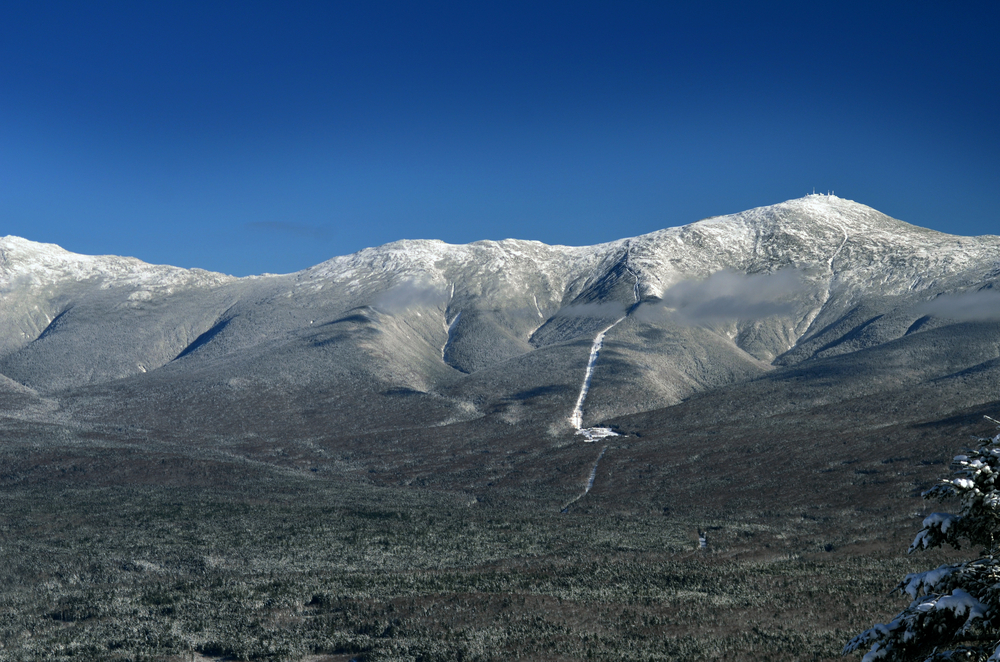
Mount Washington in New Hampshire. ShutterStock photo
MOUNT WASHINGTON, N.H. — Weeks spent in some of the harshest conditions Earth has to offer are finally paying off for a Boston photographer whose images are central to a refurbished museum atop the Northeast’s highest peak.
At 6,288 feet, Mount Washington offers views of six states, plus the Atlantic Ocean on a clear day. But it’s better known for its extreme weather, including a 231 mph gust in 1934 that remains the highest wind speed ever observed by man.
Now, summer and winter are coming together in Extreme Mount Washington, a museum that recently underwent a $1 million transformation from a modest collection of artifacts behind glass to a modern facility packed with hands-on exhibits.
Boston-based director of photography Tom Guilmette spent about 30 nonconsecutive winter days at the summit to capture the photos and video footage, constructing elaborate heated cases hooked up to car batteries to keep his cameras working.
At one point, he had to take apart a $60,000 camera and use a hair dryer to remove ice crystals that had formed inside. Another time, he got blown across the observation deck and had to scramble to find another way back into the building.
“There were times when I was setting up time-lapse cameras out on the summit thinking to myself, `If there was no building for shelter for me to go inside and grab a hot cup of tea, that if I was out here for five minutes more, even the way I was dressed, that I would die,'” he said.
Mount Washington owes its weather to its location at the confluence of three major storm tracks and its high profile, combined with its steepness and the north-south orientation of the Presidential Range, which aid wind speed.
Housed in the lower level of the Mount Washington State Park visitor center, the museum aims to explain the cold, wind, snow and ice to the 300,000 people who reach the summit by foot, car or cog railway each summer. More than 60 percent of the time, they’re surrounded by fog.
It has stunning time-lapse video of rime ice growing overnight on the railing of the observatory’s observation deck and video showcasing both the harsh conditions weather observers face and the frozen beauty that often surrounds them.
Just last Sunday, the weather changed from blue skies and sunny to foggy with 70 mph winds in seconds. Visitors struggled to stay upright as they moved about outside. Inside, they were able to still enjoy the view thanks to a feature of the new museum: three large screens that show a 180-degree image taken on a clear fall day.
Demolishing the old museum down to the studs and rebuilding it wasn’t easy.
Once the museum closed for winter last fall, crews from the Appalachian Mountain Club went to work preparing the site while the new exhibits were built in Massachusetts. As soon as the snow melted enough to make the auto road passable, another crew drove them up in box trucks.
One group got stuck at the summit for an extra two nights because of a late May snowstorm, and heavy rain and wind forced the museum’s official ribbon-cutting ceremony last week to be held at the base of the mountain instead of the summit.
“It’s pretty ironic that extreme weather messed with the opening of an extreme weather museum, but we roll with whatever Mount Washington dishes out,” said Scot Henley, executive director of the Mount Washington Observatory, a nonprofit research and education organization that has operated the summit weather station since 1932 and the museum since 1973.
A centerpiece is a snow machine simulator that lets users experience what Henley calls “the most harrowing commutes in America.” Sitting in front of a large video screen, visitors use a joystick to “steer” the machine down the snowy auto road.
The museum also features the original anemometer used to record the 231 mph wind.
A remote sensor recorded a 253 mph gust off Australia during a 1996 typhoon, but Mount Washington’s record was observed by man, hence the distinction in the record books.




















