American News
Administration plan sees deterrence in new nuclear firepower

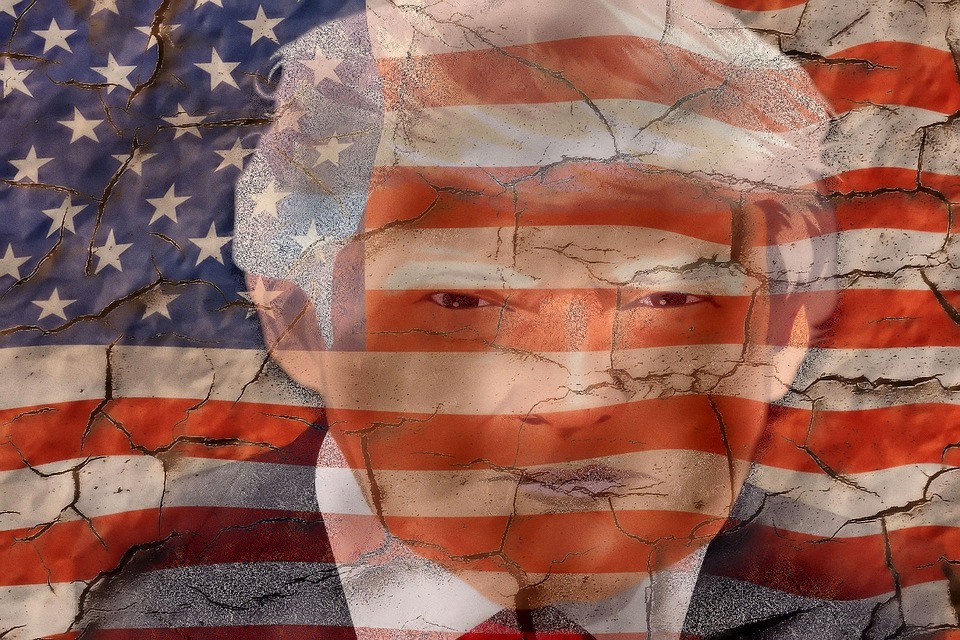
The plan, not yet approved by President Donald Trump, is intended to make nuclear conflict less likely. (Pixabay photo)
WASHINGTON— With Russia in mind, the Trump administration is aiming to develop new nuclear firepower that it says will make it easier to deter threats to European allies.
The plan, not yet approved by President Donald Trump, is intended to make nuclear conflict less likely. Critics argue it would do the opposite.
The proposal is spelled out in a policy document, known officially as a “nuclear posture review,” that puts the U.S. in a generally more aggressive nuclear stance. It is the first review of its kind since 2010 and is among several studies of security strategy undertaken since Trump took office.
In many ways it reaffirms the nuclear policy of President Barack Obama, including his commitment to replace all key elements of the nuclear arsenal with new, more modern weapons over the coming two decades.
It says the U.S. will adhere to existing arms control agreements, while expressing doubt about prospects for any new such pacts. The Trump nuclear doctrine is expected to be published in early February, followed by a related policy on the role and development of U.S. defences against ballistic missiles.
Where the Trump doctrine splits from Obama’s approach is in ending his push to reduce the role of nuclear weapons in U.S. defence policy. Like Obama, Trump would consider using nuclear weapons only in “extreme circumstances,” while maintaining a degree of ambiguity about what that means. But Trump sees a fuller deterrent role for these weapons, as reflected in the plan to develop new capabilities to counter Russia in Europe.
The Huffington Post published online a draft of the nuclear policy report Thursday, and The Associated Press independently obtained a copy Friday. Asked for comment, the Pentagon called it a “pre-decisional,” unfinished document yet to be reviewed and approved by Trump, who ordered it a year ago.
Russia, and to a degree China, are outlined as nuclear policy problems that demand a tougher approach.
The administration’s view is that Russian policies and actions are fraught with potential for miscalculation leading to an uncontrolled escalation of conflict in Europe. It specifically points to a Russian doctrine known as “escalate to de-escalate,” in which Moscow would use or threaten to use smaller-yield nuclear weapons in a limited, conventional conflict in Europe in the belief that doing so would compel the U.S. and NATO to back down.
The administration proposes a two-step solution.
First, it would modify “a small number” of existing long-range ballistic missiles carried by Trident strategic submarines to fit them with smaller-yield nuclear warheads.
Secondly, “in the longer term,” it would develop a nuclear-armed sea-launched cruise missile re-establishing a weapon that existed during the Cold War but was retired in 2011 by the Obama administration.
Together, these steps are meant to further dissuade “regional aggression,” which means giving Russia greater pause in using limited nuclear strikes.
Interest in the condition and role of U.S. nuclear weapons has grown as North Korea develops its own nuclear arsenal it says is aimed at the U.S.
The Trump administration views the North Korean threats, along with what it sees as provocative nuclear rhetoric from Russia, as evidence that security conditions no longer support the idea that the U.S. can rely less on nuclear weapons or further limit their role in national defence.
The nuclear report also makes rare mention of a newer Russian weapon: a nuclear-armed drone torpedo that could travel undersea to far-off targets.
Hans Kristensen, a nuclear weapons specialist at the Federation of American Scientists, questions whether the administration is overstating the Russian threat and responding with the right solution. But he said it is clear that Moscow has raised fears in the West by its aggression in Ukraine.
“Clearly, the Russia situation is much more of a direct confrontational situation,” he said. “The gloves are off.”
Bruce Blair, a former nuclear missile launch officer who co-founded Global Zero, which advocates the elimination of nuclear weapons, called the report “basically a status quo document” except for the plan to develop new nuclear options for countering Russia. He worries these could lead the U.S. into “blundering into a nuclear war with Russia.” Blair based his comments partly on knowledge of the report’s content before it appeared online.
“The Pentagon’s underlying motivation,” Blair said, “is fear of Russia’s new option for striking U.S. and Western European civilian infrastructure financial, energy, transportation and communications with cyber and conventional forces.”
Moscow developed this doctrine in recent years to exploit vulnerabilities in vital Western infrastructure, such as communications networks, he said. This falls into a category of threat the Trump administration calls “non-nuclear strategic,” meaning it could inflict unacceptably high numbers of casualties or costs.
Authors of the Trump nuclear doctrine argue that adding new U.S. nuclear capabilities to deter Russia in Europe will lessen, not increase, the risk of war. They worry the nuclear-capable aircraft that are currently the only Europe-based nuclear force to counter Russia have become less credible, in part because they may be vulnerable to Russian air defences. Thus, the focus on adding sea-launched U.S. nuclear weapons to the mix.
“This is not intended to, nor does it, enable ‘nuclear war-fighting,”’ the draft report said. Instead, the goal is to make nuclear conflict less likely by ensuring that “potential adversaries” see no possible advantage in escalating a conventional conflict to the nuclear level.