
News
New study examines ecological underpinnings of world’s rural poverty

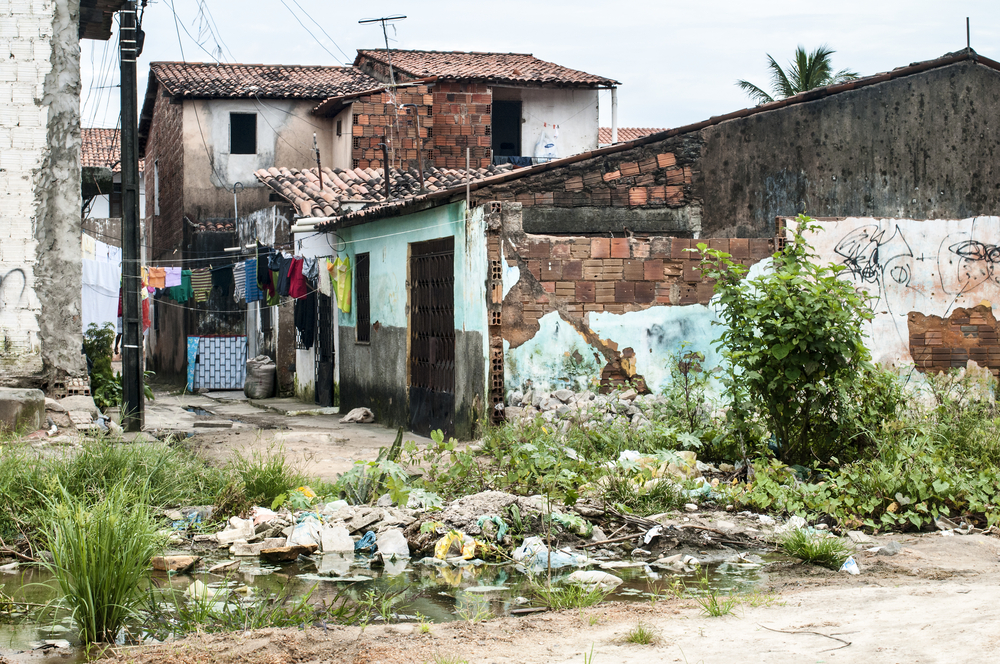
Alessio Moiola/ShutterStock
SAN FRANCISCO — A new study joined by researchers at Stanford University tries to present a general theoretical framework for modeling subsistence and health of the rural poor by analyzing ecological, economic and epidemiological factors.
It combines economic, ecological and epidemiological models in search of a solution for rural poverty.
Of the 1 billion people living below the international poverty line, most live in rural communities where the natural resources around them present a double-edged sword.
Ecological systems provide subsistence, but also spread high rates of infectious diseases through pathogens carried by agricultural pests, rodents, parasites and other vectors.
“The livelihoods of the rural poor are literally consumed by other organisms in complex ecological systems,” explained Matthew Bonds, a visiting assistant professor of medicine at Stanford and co-author of the study published in Nature Ecology & Evolution. “The environment’s influence on poor rural economies makes them fundamentally different from the economies of more developed countries.”
The picture is further complicated by the need to balance nutrition and health care with investments in land, livestock and crops.
This web of interactions leads to grim statistics: More than 75 percent of rural poor people in Sub-Saharan Africa and Southeast Asia die from infectious diseases.
It also leads to a poverty trap, namely the inability to earn enough to save and invest in future earnings. If a farmer or their livestock become unhealthy, income suffers.
“These natural enemies compete with the rural poor for resources,” co-author Giulio De Leo, a professor of biology at Stanford’s Hopkins Marine Station, was quoted as saying in a news release from the university in Northern California. “They consume biological capital in the form of human health or crops, livestock, forests, wildlife, soils and fisheries, thus eroding people’s livelihood and well-being.”
The researchers worked with the Program for Disease Ecology, Health and the Environment, a joint initiative of the Stanford Woods Institute for the Environment and the Center for Innovation in Global Health at Stanford School of Medicine, on the new study.
The study’s models show that disease transmission and recovery rates are the most consistently important determinants of long-term health and wealth dynamics. The framework also highlights feedbacks, processes and parameters that are important to measure in future studies of rural poverty. They could help identify effective pathways to sustainable development and better predict countries’ resilience to economic, health and environmental shocks.
According to the authors, a major, one-time wave of support, such as an injection of capital or agricultural supplies, might be enough to disrupt the vicious cycle of feedback between poverty and disease and set a country on a path of healthy development.
However, this widely adopted development approach would only provide temporary relief in some circumstances. In those cases, only permanent and sustained system changes can create lasting economic development and public health improvement.
Rwanda, in landlocked Africa, is labeled as a shining example by the authors. By providing broad and robust access to health care for the poor through social insurance systems, being followed by dramatic economic growth, the “land of a thousand hills” now has one of the continent’s strongest economies and healthiest populations. (Xinhua)




















