Headline
Oil excise tax suspension to depend on oil trends – PBBM

By Ruth Abbey Gita-Carlos, Philippine News Agency
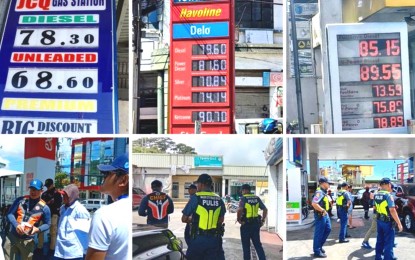
MONITORING OF FUEL PRICES. The local price monitoring council has been deployed on Tuesday (March 17, 2026) to monitor prices in gasoline stations in Baguio City. President Ferdinand R. Marcos Jr. on Wednesday (March 18) said the possible suspension of excise tax on oil products would depend on global price movements amid uncertainties stemming from tensions in the Middle East. (Photo: PNA)
MANILA – President Ferdinand R. Marcos Jr. on Wednesday said the possible suspension of excise tax on oil products would depend on global price movements amid uncertainties stemming from tensions in the Middle East.
Marcos, in a media interview in San Juan City, said the government is carefully studying the situation before deciding on any intervention.
Marcos noted that exercising the power to suspend excise tax requires a thorough assessment of multiple factors.
“That depends. Marami (There are so many to consider). It’s a very complicated calculation. We will see. It depends on the trends. We have to watch the trends on oil prices. We will just have to look. It’s very hard to say because it’s all speculation,” he said.
Marcos said global developments play a significant role in determining domestic fuel prices, adding that uncertainties in the duration and impact of the ongoing conflict in the Gulf region make it difficult to predict price movements.
He said the government is closely monitoring key global supply routes, including major oil transit points that could influence supply and pricing.
“We don’t know how long this will last for. We don’t know what the effects are. We don’t know what will happen at the Strait of Hormuz,” he said.
“Right now, we are just adjusting to the situation. When the situation calls for it, maybe we will see when to exercise that power and by how much,” Marcos added.
Marcos assured the public that the government remains ready to act, should conditions warrant intervention.
He noted that to date, there is no immediate cause for alarm since the supply of petroleum products remains stable.
“We don’t have a problem sa (on) supply, with petroleum products, including fertilizer for the farmers. That’s our main concern,” Marcos said. “So far, we’ve been able to keep everything at normal levels. Everything is normal. No need to worry.”
The House of Representatives and the Senate have both approved bills granting the President authority to suspend or reduce the excise tax on petroleum products to mitigate the impact of rising crude oil prices.
The Senate version allows for the suspension or reduction of the excise tax on fuel when the average price of Dubai crude oil reaches or exceeds USD80 per barrel for one month, while the House version requires the President to declare a state of national emergency to justify the suspension or reduction.