Jacob Blanc, The Conversation
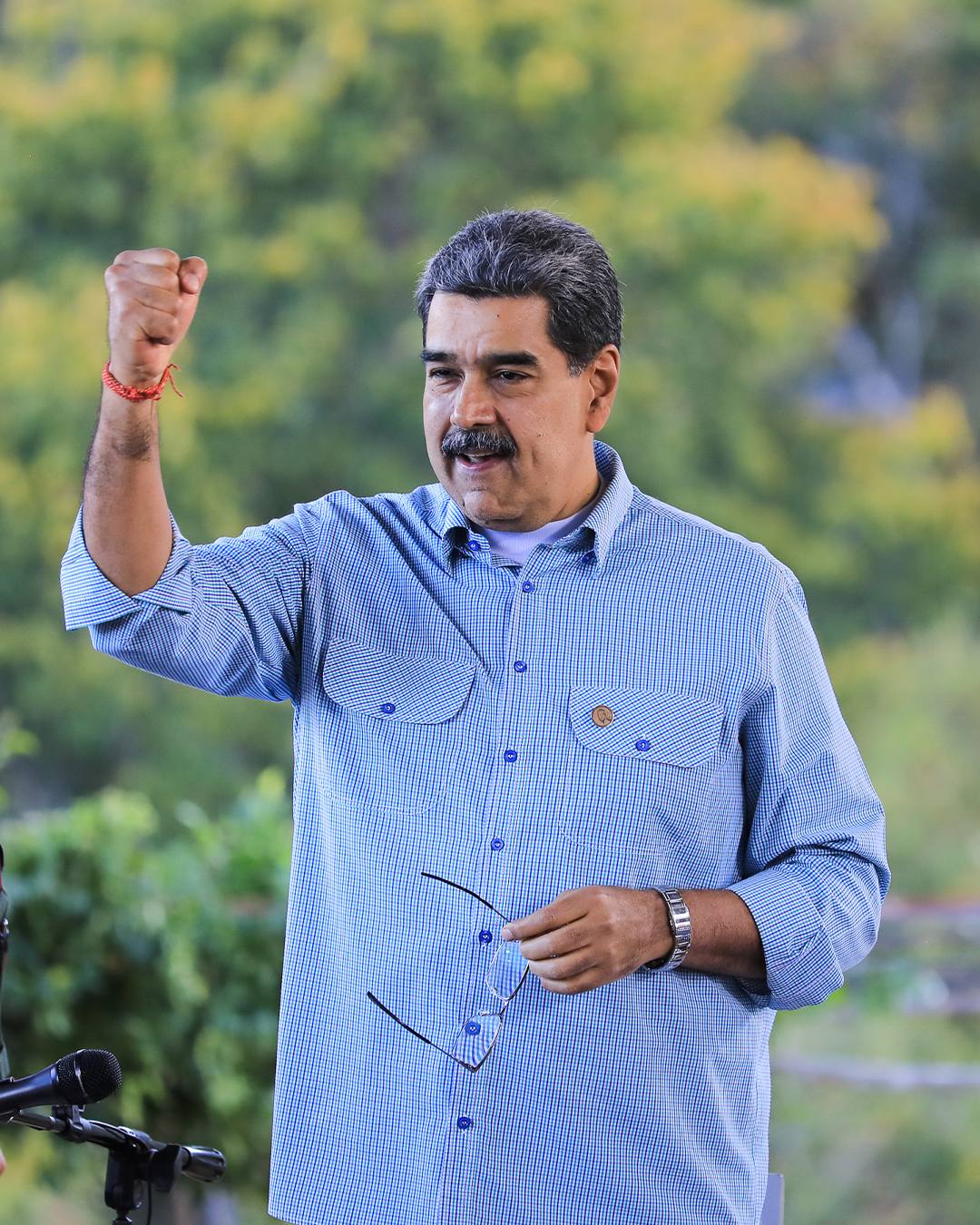
(Nicolás Maduro/facebook)
The United States military recently carried out a covert operation to capture and then remove Venezuelan President Nicolás Maduro and his wife, transporting them from Caracas to New York. The pair is accused of narco-terrorism, conspiracy, drug trafficking and money laundering.
President Donald Trump announced that the U.S. will temporarily “run” Venezuela until a “safe, proper and judicious transition” can be ensured. Trump also announced Venezeula was handing over up to 50 million barrels of oil to the U.S. to be sold at “market price.”
There’s nothing new about the American desire to put an end to the Maduro regime. In March 2020, during Trump’s first term, Maduro was indicted by the U.S. on narco-terrorism and cocaine trafficking charges. A reward of US$15 million was offered for his arrest. But the U.S. had been increasing pressure on Venezuela for months through both military and diplomatic tactics.
Nor is it the first time that the U.S. has intervened militarily in Latin America. It happened in Grenada and Panama in 1983 and in Honduras in 1988.
But an intervention of this magnitude in a large South American country is unprecedented. Jacob Blanc, a Latin American specialist and professor in the history department at McGill University, explains.
The Conversation Canada: Were you surprised by the American intervention in Caracas?
Jacob Blanc: Yes, I was, especially because of how audacious it was. There is a long history of American interventions in Latin America, but in the larger countries these have generally been carried out in a more subtle way. The United States has supported regime changes when they are perceived as pro-Communist or anti-American. But this case — a military intervention in the middle of the night at the presidential palace and the abduction of the leader of a modern country — is unusual. What’s more, Trump is not touching the political system. He is leaving the regime in place, with Vice-President Delcy Rodriguez as interim president. This is unprecedented.
TCC: What kind of relationship did the United States have with Venezuela?
J.B.: Venezuela is particularly important to Americans because it was the country where one of the first independence movements against the Spanish took place. This was where the colonial wars took root, and where [military and political leader] Simón Bolívar proposed unifying the South American hemisphere in a confederation. Bolivar’s plan did not succeed, but Venezuela was at the forefront of this movement. Then, in the 20th century, oil was discovered in several countries in northern South America, including Venezuela — which has the largest reserves in the world — and Colombia. The economy benefited, but this also created regional problems.
The region became more important to the Americans in the 1990s with the instability in the Middle East. With the rise to power of Hugo Chávez, [president from 1999 until his death], and his left-wing ideas, relations cooled. Chávez became the bête noire of the Americans, who accused him of corruption, among other things.
An oil embargo was imposed in 2019, which considerably weakened the oil sector. Under Hugo Chavez, the oil sector was already slowing down, mainly due to corruption. It will take years and a lot of money for the Americans to get it back on track, but the Americans themselves created part of the problem with the embargo.
TCC: How do other South American countries view this intervention?
J.B.: It depends on their ideology. Brazil, Mexico and Colombia, which are more left-wing, have denounced the intervention, but Argentina and Chile have supported it. In my opinion, this will accentuate the divide between the two ideologies present in South America, but this situation is not really new. For Cuba, the threat is real. But an American intervention on the island would be purely ideological, as the country has almost nothing to offer. It would be a trophy for Trump to show off.
TCC: Trump’s bellicose rhetoric against Colombia is surprising, given that the country is a democracy. How should we interpret this?
J.B.: Yes, it surprises me a little. But at the same time, it makes sense: the official justification for the intervention against Venezuela is the illegal entry of drugs into the United States. But Venezuela is a small player. Colombia, on the other hand, is a very large exporter. So if the justification is true, that makes it all the easier to do the same thing in Colombia.
TCC: What message is Trump sending to the rest of the world?
J.B.: Trump’s actions are reminiscent of what Putin is doing in Ukraine, and what Xi Jinping could do in Taiwan or other neighbouring countries. This jeopardizes the international rules that nations established after the Second World War, when they set up a system — which might be weak, but it’s still a system — to prevent wars.
TCC: What does the future hold for Venezuela?
J.B.: It will all depend on the type of administration Trump supports. For now, he is not changing the regime or the system and says he wants to manage it from a distance, through various incentives. I believe the Trump administration is crossing its fingers and hoping that the new presidency will not implode due to internal factions. We can expect infighting within the current government, as well as with the military.
Many want power. Donald Trump wants to have his cake and eat it too. He wants to make the operation look like a victory without any risks or costs; without sending soldiers who could lose their lives. But nothing is less certain. And if chaos spreads in the region, particularly in Colombia, it will be Trump’s fault. He has taken a very, very risky gamble.
This article is republished from The Conversation under a Creative Commons license. Read the original article.