Nadia Hasan, and Sarah Abou-Bakr, The Conversation
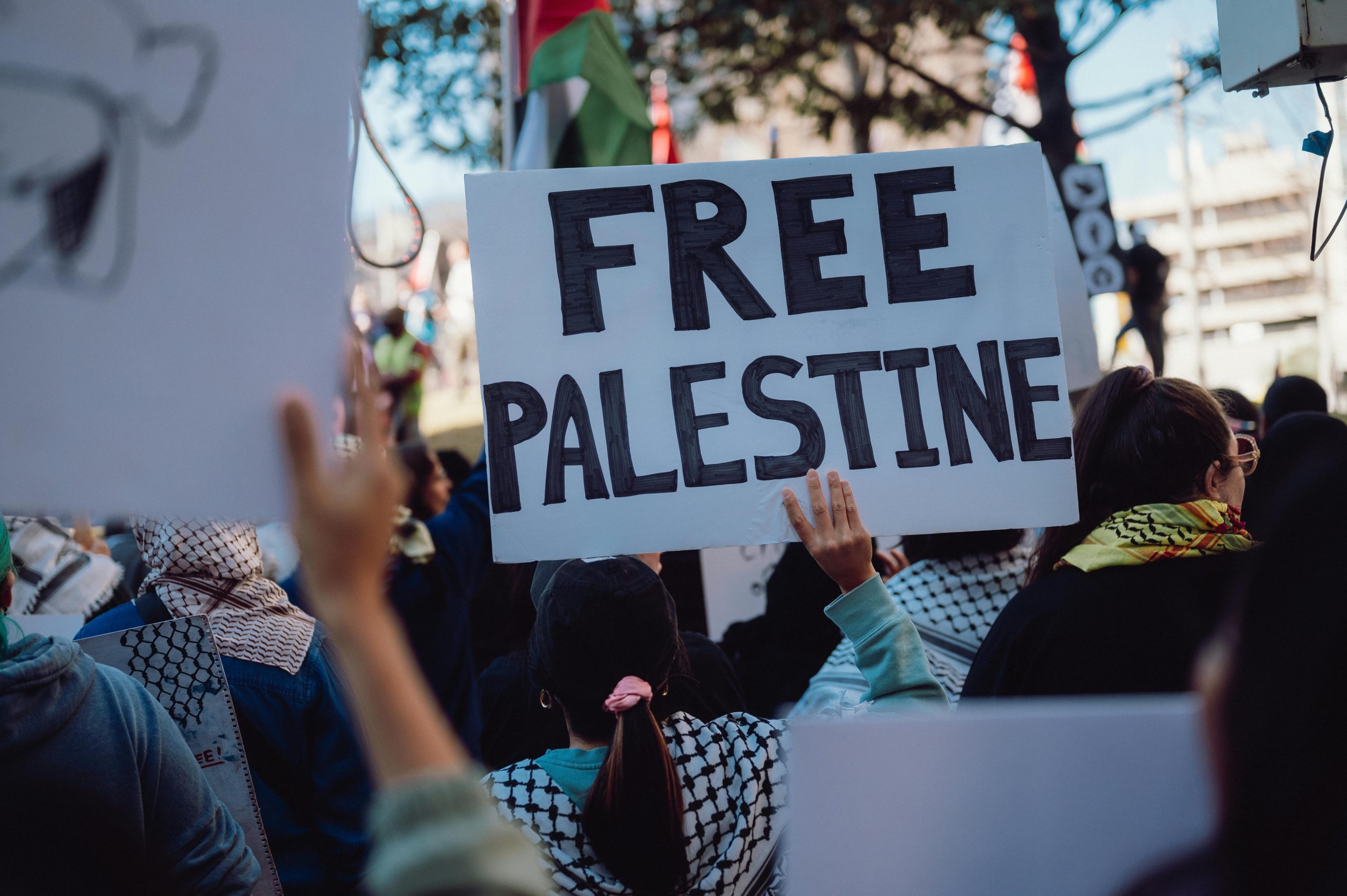
For Palestinians in Canada, this often means hiding their heritage for fear of stigmatization, or facing punishment for expressing pro-Palestinian views. (Pexels photo)
In April 2024, a video circulated online showing an Oakville, Ont. high school teacher and a student having an alarming and contentious conversation about his keffiyeh.
The Iroquois Ridge High School educator says mid-way in the clip: “I didn’t call you a terrorist. I said it (the keffiyeh) reminds me of …” When the student pushes her to finish her sentence and suggests “Hamas?” she answers “yes.”
The Halton District School Board (HDSB) quickly placed the staff member on leave and launched an investigation, deeming her language “harmful and discriminatory.”
This incident, a clear example of Islamophobia and anti-Palestinian racism, is one of many detailed in our recently released Islamophobia Research Hub report, Documenting the “Palestine Exception”: An Overview of Trends in Islamophobia, Anti-Palestinian and Anti-Arab Racism in Canada in the Aftermath of October 7, 2023.
Our findings point to a pattern of unethical use of institutional power to intimidate and alienate those expressing support for Palestine or their identities — what many community organizers in Canada now call “the Palestine exception.”
What is the Palestine exception?
The expression describes how democratic freedoms and multicultural ideals historically meet their limits when it comes to Palestinian human rights, history and identity. Studies in Canada and the United States show systemic silencing and erasure of Palestinian experiences — often through unfounded accusations of antisemitism.
Race scholars have long argued that Canadian multiculturalism practises inclusion through exclusion, demanding that racialized people suppress parts of their identity to gain conditional belonging in order to uphold a normative racial order.
For Palestinians in Canada, this often means hiding their heritage for fear of stigmatization, or facing punishment for expressing pro-Palestinian views.
As Nihad Jasser of the Association of Palestinian Arab Canadians, an Ottawa-based community collective, said:
“It feels that institutions in our society will support all human rights except Palestinian human rights, celebrate all cultures except Palestinian culture, and condemn all forms of racism except anti-Palestinian racism.”
Unfair targeting, censorship and discipline of those speaking out for Palestinian rights — or merely perceived as Palestinian, Arab or Muslim — is a common theme in our report and particularly disturbing in terms of young people’s experiences.
A pattern of targeting young people
According to our research, young people in schools, universities and early careers are facing Islamophobia, anti-Palestinian racism and anti-Arab racism in the form of employment discrimination, doxing, hate-motivated violence, bullying and the suppression of their democratic rights.
The HDSB keffiyeh incident reflects a wider reality: a treatment of suspicion toward Palestinian expressions.
Another example that drew attention was a Toronto District School Board (TDSB) field trip to the Indigenous-led Grassy Narrows River Run in September 2024. During the march, some participants used chants connecting settler colonialism in Canada to the experiences of Palestinians.
This led to social media backlash from parents who claimed the trip exposed students to pro-Palestinian political activity and compromised safety. The Ontario education minister’s office demanded an investigation — an unusual move that many felt revealed a double standard compared to other incidents.
The TDSB issued an apology for the “harm” caused and pre-emptively cancelled another planned field trip for National Day for Truth and Reconciliation — ironically undermining commitments to decolonization.
Patrick Case, a former Ontario Ministry of Education chief equity officer, conducted an independent review, interviewing 146 parents, students, Indigenous leaders, staff and trustees. His report found that the Grassy Narrows event was not overshadowed by pro-Palestinian activism and that the TDSB’s reaction reflected a broader pattern of erasure and suspicion toward Palestinian identity.
Indigenous leaders also noted that media outrage diverted attention from pressing issues of environmental justice in Indigenous communities.
Despite these findings, the education ministry has not promoted the report and has rejected some of its key recommendations.
Punishment over pedagogy
Our report raises concerns about a growing political culture that punishes rather than engages young people advocating for Palestinian human rights. Instead of fostering critical thinking, institutions are choosing repression.
Another striking example is the treatment of students at the Lincoln Alexander School of Law at Toronto Metropolitan University, who were accused of antisemitism for signing an open letter in solidarity with Palestinian people and critical of Israeli state actions. Several law firms and the Ontario Ministry of the Attorney General blacklisted them from recruitment as punishment for signing the open letter.
In an external review, Justice J. Michael MacDonald condemned this response as a “rush to judgment” that unfairly targeted “young idealists motivated by immense human suffering.” He ruled that the students’ actions were a “valid exercise of freedom of speech” and criticized the administration for negatively impacting the students.
He also criticized members of the legal community for fuelling the backlash against these students. Some of these students are now suing Toronto Metropolitan University for defamation.
Many young people have shown resilience in the face of such repression, but the harm is undeniable. Being punished for expressing solidarity with Palestinians — and witnessing peers being punished — affects young people’s sense of safety, intellectual curiosity and career prospects.
Protecting Canadian multiculturalism
Two years into the brutal genocide in Gaza, there is a notable shift in public discourse and policy related to Palestine. Yet many remain deeply skeptical of the sincerity of this shift.
Earlier this fall, the federal Liberal government introduced the Combating Hate Act, proposing amendments to the Criminal Code.
Critics warn these changes could further curtail civil liberties, particularly around expressions of Palestinian identity and solidarity.
The amendments would ban the public display of “hate symbols” and criminalize protests near places of worship, schools and community centres. The government defines hate symbols as those associated with terrorist entities such as the Nazi swastika and SS (Schutzstaffel) bolts. And so, understandably, questions abound about whether this means that Palestinian flags or the script of the shahada (Muslim declaration of faith) could be deemed hate symbols.
Given recent institutional responses to pro-Palestinian expression, there is little confidence these sorts of laws will not be weaponized to criminalize Palestinian identity, dissent and criticism of the Israeli state.
In large part, this pervasive suspicion stems from the widespread experience of Palestinian identity and pro-Palestinian positions being treated as inherently suspect, even dangerous. Such exceptional treatment exposes the profound fissures — and in fact the limits — of Canadian multiculturalism and its professed commitments to democratic freedoms.