News
Lawmakers still dictating DPWH budget, pork barrel alive – senator

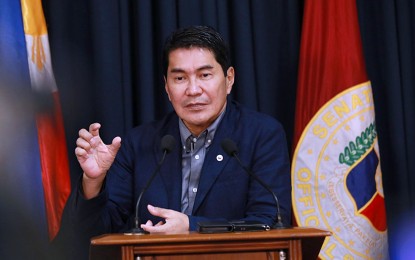
Senator Erwin Tulfo (PNA photo by Avito Dalan)
By Wilnard Bacelonia, Philippine News Agency
MANILA – Pork barrel politics remains entrenched in government spending, with lawmakers allegedly inserting billions of pesos into the Department of Public Works and Highways (DPWH) budget without the President’s knowledge, Senator Erwin Tulfo said Wednesday.
In an interview with ANC, Tulfo was asked about figures showing Ako Bicol Rep. Zaldy Co’s allocations allegedly ballooned from PHP519 million in 2022 to PHP7 billion in 2025 under the National Expenditure Program (NEP).
“Kaya nga, that’s the problem.
Hindi mo talaga makikita ‘yun because aakalain mo na DPWH lang ang gumawa ng budget na ‘yun and I’m very sure 100 percent hindi alam ng Pangulo ‘yun kasi ibibigay lang sa kanya ang NEP (That’s the problem. You wouldn’t see it because you’d think DPWH prepared the budget. I’m sure the President had no knowledge since the NEP is presented to him preloaded with items),” Tulfo said.
The senator lamented that despite the pork barrel scam investigation a decade ago, lawmakers continue to dictate project allocations.
He said previous investigations only led to the prosecution of some legislators and Janet Lim-Napoles, but Congress failed to amend the law to prevent similar abuses.
“In short, it’s pork barrel… pinaganda lang nila pero (they just made it better but) it’s still pork barrel,” Tulfo said.
He added district engineers face pressure to comply with lawmakers’ instructions or risk being relieved from their posts, noting that politicians act as “proponents” who select contractors themselves.
Tulfo said reforms are needed to ensure that only the DPWH Secretary submits projects for inclusion in the NEP, free from political interference.
At Tuesday’s Senate Blue Ribbon hearing, former DPWH chief Manuel Bonoan admitted that a “leadership fund” was included in the NEP to accommodate lawmakers’ requests.
But Senate President Pro Tempore Panfilo Lacson, chair of the committee, rejected the practice, stressing that insertions should happen only during budget deliberations, not at the NEP stage.