Headline
Senator seeks stronger role for climate body in flood project planning

By Wilnard Bacelonia, Philippine News Agency
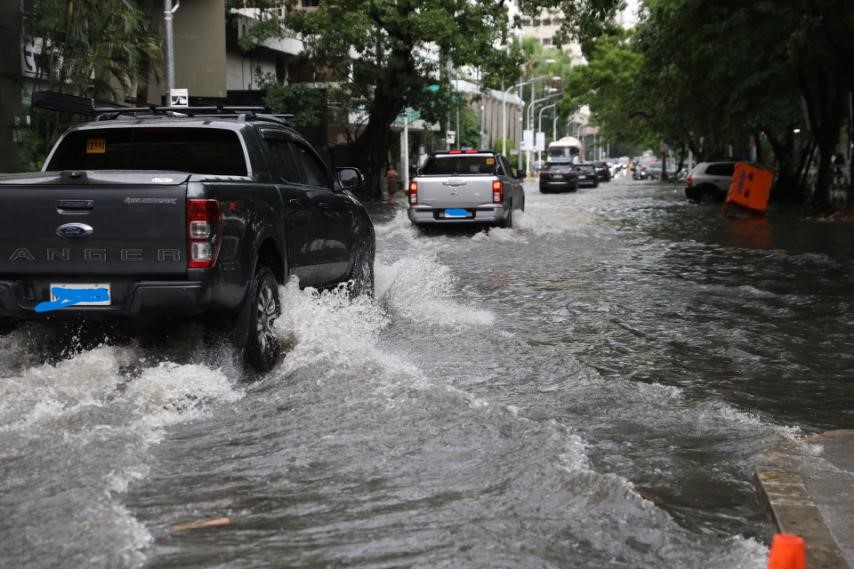
FILE: Areas in Ermita, Manila flooded anew after a brief thunderstorm Sunday afternoon (Aug. 24, 2025), including busy Pedro Gil Street, where a university and a mall are located. (PNA photo by Avito Dalan)
MANILA – Senator Erwin Tulfo on Wednesday urged the government to involve the Climate Change Commission (CCC) more directly in planning and designing flood control projects, warning that stronger typhoons and heavier rains brought by climate change demand longer-lasting and science-based infrastructure.
During a Senate Committee on Environment, Natural Resources and Climate Change hearing, Tulfo noted that most flood mitigation projects are built with a five-year lifespan, which he said is inadequate given worsening weather conditions.
“Pag meron pong dilubyo, talagang dilubyo. Akala mo katapusan na po ng mundo. Milyun-milyon ang ginagastos natin, pagkatapos five years lang po, ‘yung flood control nasisira na (When calamities strike, they’re catastrophic. We spend millions, yet flood control structures last only five years before being damaged),” Tulfo said, adding that projects should be designed to withstand at least 20 to 25 years of use.
CCC Secretary Robert Borje confirmed that the agency had submitted the country’s first National Adaptation Plan in 2024, providing climate projections and data that could guide agencies like the Department of Public Works and Highways (DPWH).
He said, however, that coordination needs to be tightened so the plan does not remain “just a paper” but is implemented across agencies.
Tulfo suggested filing a Senate resolution requiring the CCC’s inclusion in the planning of DPWH and other agencies’ infrastructure projects.
He said tighter coordination with the Department of Agriculture and the National Irrigation Administration is also needed to ensure flood management systems are integrated with irrigation and water use programs.
Meanwhile, Environment Secretary Raphael Lotilla supported the call for integrated water management, noting that flood control, irrigation, hydropower, and other uses should be harmonized to maximize resources.