Technology
Generative AI and deeper thinking: What’s in our heads still matters*

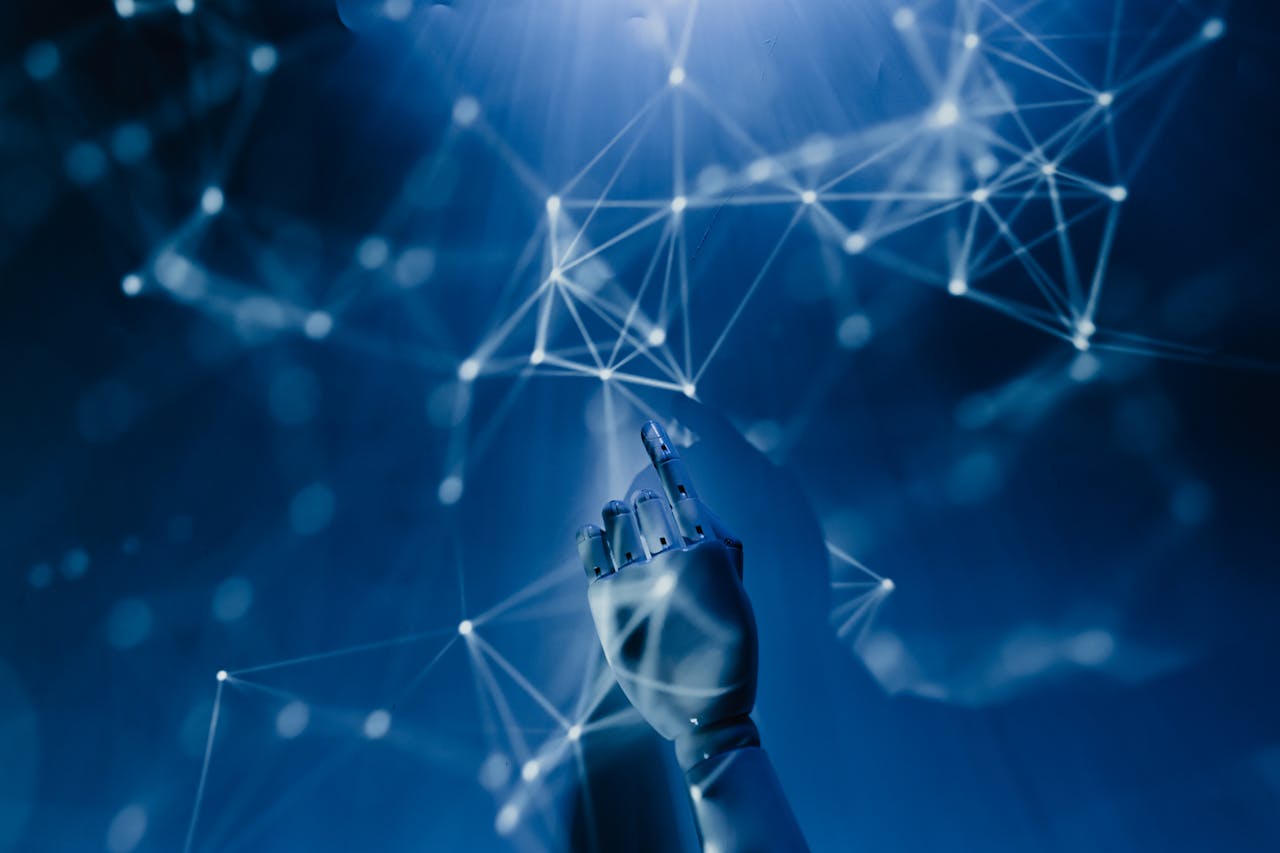
Purely constructivist or discovery‑based teaching, starting with assumptions that “students know best” and need little guidance, can short‑circuit mental muscle‑building, especially in our AI world. (Pexels Photo)
All of these are instances of an underlying problem that can be merely an irritant or a matter of life and death. What happens when brains accustomed to backup from phones and devices must go it on their own?
Increasingly we are relying upon technology to do our thinking for us. Cognitive offloading to calculators, GPS, ChatGPT and digital platforms enables us to do many things without relying on human memory. But that comes with a price.
Leading cognitive science researchers have begun to connect the dots. In a paper entitled The Memory Paradox, released earlier this year, American cognitive psychologist Barbara Oakley and a team of neuroscience researchers exposed the critical but peculiar irony of the digital era: as AI-powered tools become more capable, our brains may be bowing out of the hard mental lift. This erodes the very memory skills we should be exercising. We are left less capable of using our heads.
Collective loss of memory
Studies show that decades of steadily rising IQ scores from the 1930s to the 1980s — the famed Flynn effect — have levelled off and even begun to reverse in several advanced countries. Recent declines in the United States, Britain, France and Norway cry out for explanation. Oakley and her research team applied neuroscience research to find an answer. Although IQ is undoubtedly influenced by multiple factors, the researchers attribute the decline to two intertwined trends. One is the educational shift away from direct instruction and memorization. The other is a rise in cognitive offloading, that is, people habitually leaning on calculators, smartphones and AI to recall facts and solve problems.
AI threatens Indigenous data sovereignty and self-determination
Surveying decades of cognitive psychology and neuroscience research, Oakley and her team show how memory works best when it involves more than storage. It’s also about retrieval, integration and pattern recognition. When we repeatedly retrieve information, our brains form durable memory schemata and neural manifolds. These structures are indispensable for intuitive reasoning, error-checking and smooth skill execution. But if we default to “just Google it,” those processes so fundamental for innovation and critical thinking may never fully develop, particularly in the smartphone generation.
A key insight from the paper is the connection between deep learning behaviours in artificial neural networks (consider “grokking” in which patterns suddenly crystallize after extensive machine training) and human learning. Just as machines benefit from structured, repeated exposure before grasping deep patterns, so do humans. Practice, retrieval and timed repetition develop intuition and mastery.
Atrophy of mental exercise
The researchers sound a cautionary note. Purely constructivist or discovery‑based teaching, starting with assumptions that “students know best” and need little guidance, can short‑circuit mental muscle‑building, especially in our AI world. The team found that when students rely too early on AI or calculators, they skip key steps in the cognitive sequence: encoding, retrieval, consolidation and mastery of the brain’s essential building blocks. The result is individuals whose mental processes are more dependent upon guesswork, superficial grasp of critical facts and background knowledge and less flexible thinking.
Even techno skeptics see a role for digital tools. Oakley and her colleagues argue for what they term cognitive complementarity — a marriage of strong internal knowledge and smart external tools. ChatGPT or calculators should enhance — not replace — our deep mental blueprints that let us evaluate, refine and build upon AI output. That’s the real challenge that lies ahead.
The latest cognitive research has profound implications for educational leaders, consultants and classroom teachers. Popular progressive and constructionist approaches, which give students considerable autonomy, may have exacerbated the problem. It’s time to embrace lessons from the new science of learning to turn the situation around in today’s classrooms. This includes reintegrating retrieval practice (automatic recall of information from memory), spaced repetition and step-by-step skills progression in Grades K-12.
Using your head
What are the new and emerging essentials in the AI-dominated world? Oakley and her team deliver some sound recommendations, including:
- Teaching students to limit AI use and delay offloading.
- Training teachers to design AI‑inclusive but memory‑supportive curriculums, demonstrating that effective AI use requires prior knowledge and the ability to distinguish fact from fiction
- Guiding institutions to adopt AI in ways that build upon, not supplant, the human brain, such as editing original prose or mapping data.
Using our heads and tapping into our memory banks must not become obsolete. They are essential mental activities. Access to instant information can and does foster lazy habits of mind. British education researcher Carl Hendrick put it this way: “The most advanced AI can simulate intelligence, but it cannot think for you. That task remains, stubbornly and magnificently, human.”
The most important form of memory is still the one inside our heads.
*Composed in a fierce dialectical encounter with ChatGPT.
This article first appeared on Policy Options and is republished here under a Creative Commons license.