Canada News
Flight cancelled due to Air Canada strike? You may have more rights than you think

By Sophia Harris, CBC News, RCI
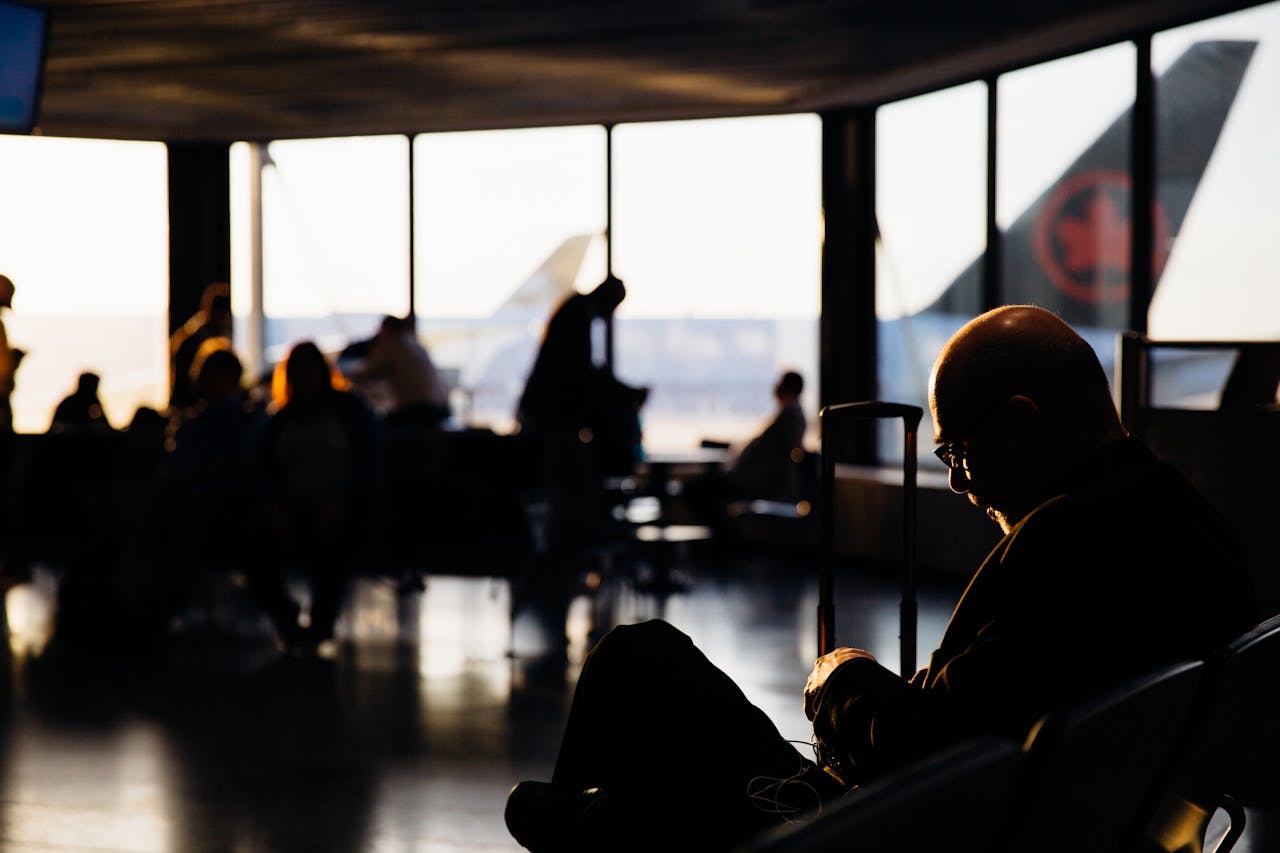
Air Canada announced on Wednesday that passengers affected by flight cancellations between Aug. 12 and Aug. 23, who rebooked and paid for travel on other airlines, can submit claims for reimbursement. (Pexels Photo)
Passengers departing from EU countries can claim compensation for flight disruptions
The Air Canada flight attendants strike disrupted travel for hundreds of thousands of passengers.
As travellers scramble to rearrange their plans, many are seeking answers about their rights. They may be surprised to learn that passengers set to depart from most European countries have more protections than those booked on domestic flights.
Here’s what you need to know about your rights if your Air Canada travel plans have suddenly unravelled.
You have a right to a rebooked flight
Air Canada announced on Wednesday that passengers affected by flight cancellations between Aug. 12 and Aug. 23, who rebooked and paid for travel on other airlines, can submit claims for reimbursement. Passengers who took another mode of transport home, such as a bus, can also submit claims.
We’ve adjusted our policy,
said Air Canada spokesperson Peter Fitzpatrick. We want to take care of the customers and we want to be sure that if they are stranded right now, they can get home.
The adjusted policy aligns with Canada’s Air Passenger Protection Regulations (APPR). The regulations state that when an airline cancels flights due to a labour disruption, they must offer affected passengers a choice between a cash refund or a rebooked flight.
For better or for worse, you don’t have to take the refund,
says Ian Jack, spokesperson for the Canadian Automobile Association (CAA), a non-profit travel agency.
According to the APPR, if a large airline, such as Air Canada, can’t rebook you on a partner airline within 48 hours after your original departure time, the carrier must attempt to rebook you on any airline — even a major competitor.
If there’s nothing available, the airline must search for alternative flights at another nearby airport, and provide transport to that airport.
Airlines that don’t comply face hefty fines. Earlier this year, the Canadian Transportation Agency (CTA) hit Westjet with a $204,000 penalty for failing to rebook passengers whose flights were cancelled during a WestJet mechanics strike in 2024.
During the Air Canada strike, some passengers may have found themselves stranded despite Air Canada’s best efforts. That’s because the carrier is the country’s largest airline, and its flight attendants walked off the job during peak summer travel season.
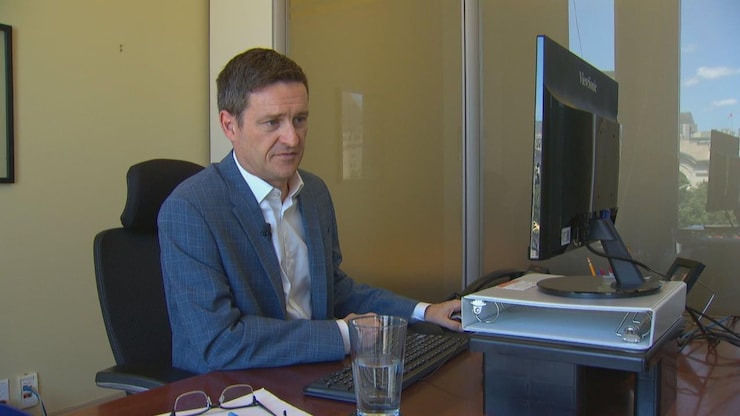
It’s unfortunate Ottawa’s plans for stronger air passenger protections remain in limbo as travellers grapple with the Air Canada strike, says Ian Jack, spokesperson for the Canadian Automobile Association (CAA), a non-profit travel agency. Photo: CBC
Consumer advocate Geoff White argues the lack of alternative flights for disrupted passengers highlights another problem: lack of competition in Canada’s airline industry.
The reason why so many people are stranded right now is we don’t have [enough] competition,
said White, executive director of the Public Interest Advocacy Centre.
This has to be the wake-up call.
In June, Canada’s Competition Bureau stated that the country’s airline industry is highly concentrated with two major carriers — Air Canada and WestJet. It called for increased competition, and recommended relaxing rules that limit foreign ownership of Canadian airlines.
Passengers flying from EU countries have more rights
Under the current APPR, airlines are under no obligation to compensate passengers for their hotel and incidentals if they’re delayed at their destination due to a strike.
Air Canada can choose, for goodwill purposes, to help you out with that, but there’s no legal obligation,
said Jack.
Passengers also can’t claim compensation for flight delays and cancellations; the APPR considers job actions beyond an airline’s control.
However, affected Air Canada passengers can claim compensation for both their added travel expenses and flight disruptions if their cancelled flight departed from the United Kingdom or European Union-member countries. That’s because passengers departing from those countries are covered by EU air passenger rights which provide wider protections compared to the APPR.
WATCH l Passengers’ travel plan disrupted by Air Canada strike:
Similar to the APPR, EU rules dictate that when airines cancel flights, passengers are owed a refund or a rebooking. EU rules also state airlines can deny compensation for flight disruptions caused by a strike. However, they specify that this exemption only applies to disputes that don’t involve the airline.
A strike by an airline’s own staff does not release the airline from its obligation to pay compensation,
the EU states online.
Passengers can choose to file compensation claims under the APPR or EU regulations. Consequently, affected Air Canada passengers who qualify under EU rules can seek reimbursement for added expenses like hotels, plus compensation of up to €600 ($965 CAD). Passengers departing from the U.K. can claim up to £520 ($970 CAD).

The Air Canada strike is a ‘wake-up call’ for more competition in the airline industry, says Geoff White with the Public Interest Advocacy Centre. Photo: CBC / Brian Morris
In Europe, the view is a lot more consumer-friendly by saying,
No, no, the airline certainly could control how it interacts with its unions and the onus should be on the airline,'” said White.
We’ve got a long way to go here in Canada.
Jack agrees.
When it comes to air travel, if something goes wrong in Europe, you’re going to get treated better than you are in Canada,
he said.
Where are the new rules?
More than two years ago, the federal government proposed changes to the APPR that, if they had been enacted by now, might have helped out many Air Canada passengers.
The proposed changes, designed to strengthen the APPR, include a requirement for airlines to cover hotel costs and incidentals during any type of flight disruption — including those caused by labour disruptions.
Jack says it’s unfortunate the proposed rules remain in limbo as passengers grapple with the Air Canada strike.
Sadly, it’s not going to help people in this current circumstance,
he said. People would be in a better position today had the government moved forward with these [rules].
The Canadian Transportation Agency told CBC News consultations for the proposed rules wrapped up in March, and that there’s no timeline yet for when they will take effect. The agency did not directly answer questions about why it was taking so long to implement the new rules.
Any passengers who believe Air Canada — or any other airline — didn’t honour their rights can file a complaint with the CTA. However, they may be in for a long wait for resolution; in June, the federal regulator reported a backlog of more than 87,000 air passenger complaints.
This article is republished from RCI.