Canada News
Air Canada flight attendants to stay on the picket lines after strike deemed illegal

By Catharine Tunney, CBC News, RCI
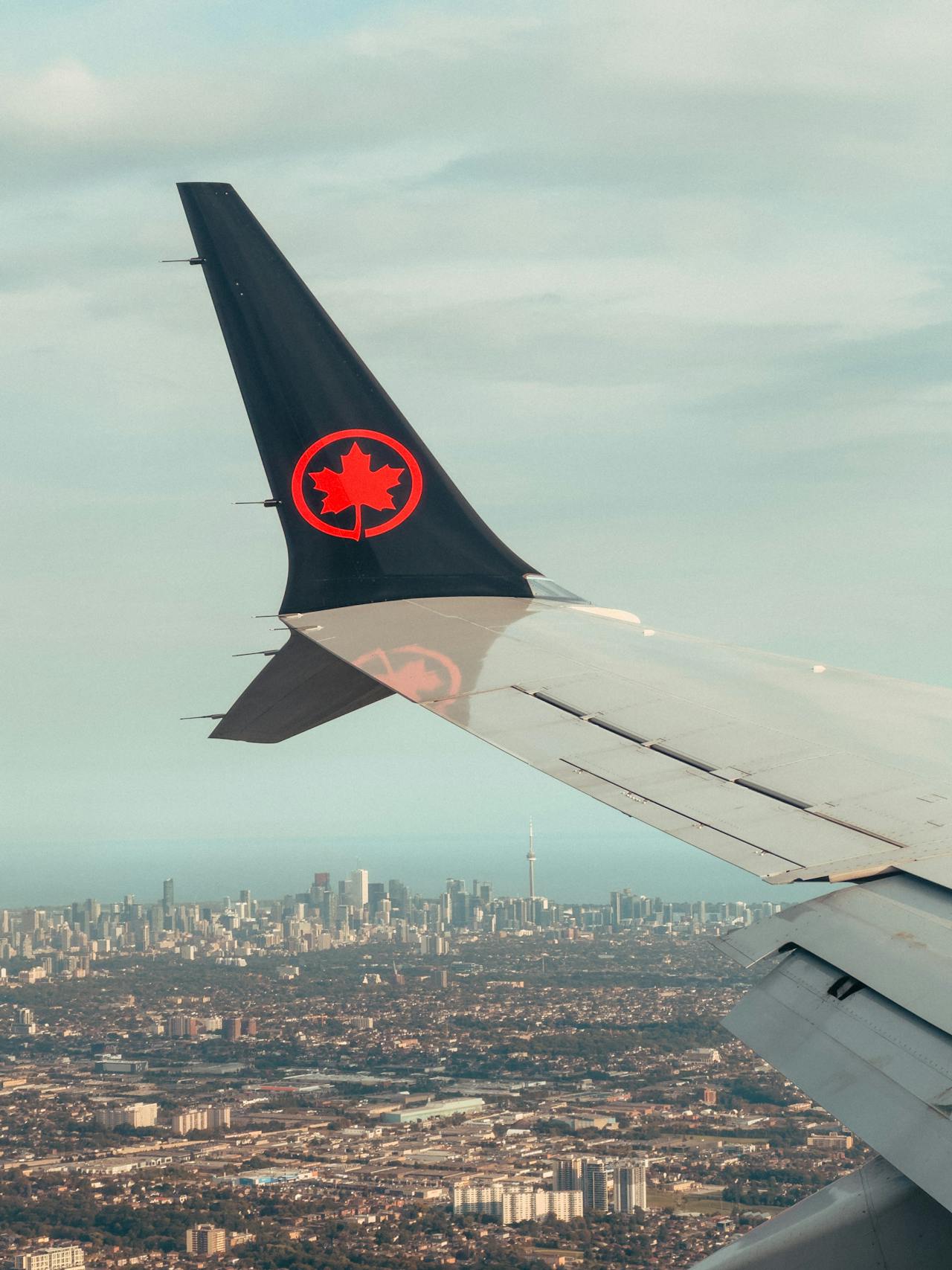
Air Canada and CUPE have been negotiating a new contract for flight attendants after the previous 10-year contract expired in March. (Pexels photo)
Airline hopeful service can resume Tuesday
The union representing thousands of striking Air Canada flight attendants says it will risk jail time and fees but will not order its members back to work, despite the federal labour relations board calling the strike illegal.
We will not be returning to the skies this afternoon,
Canadian Union of Public Employees (CUPE) national president Mark Hancock said at a news conference on Monday.
If it means folks like me going to jail, then so be it. If it means our union being fined, then so be it.
In a decision released Monday morning, the Canada Industrial Relations Board (CIRB) said the union’s defiance of a back-to-work order is unlawful.
WATCH | Union president says strike will continue:
It called on the union to cease all activities that declare or authorize an unlawful strike of its members and to direct the members of the bargaining unit to resume the performance of their duties
by noon Monday — which the union disregarded.
The directive, written by CIRB vice-chairperson Jennifer Webster, also calls on the some 10,000 flight attendants themselves to resume their duties immediately.
Failure to comply with the board’s orders can result in significant fines and penalties.
Despite that, Hancock made it clear that flight attendants will remain on strike as they seek better pay and changes to how they are paid before a plane takes off.
None of us want to be in defiance of the law,
he told reporters. We’re looking for a solution here. Our members want a solution here. But that solution has to be found at a bargaining table.
Air Canada hoping to resume flights Tuesday
Air Canada CEO Michael Rousseau called the union’s stance disappointing
on BNN Bloomberg.
He said the airline hopes to resume service Tuesday and a decision will be made later Monday.
The Montreal-based company estimates 500,000 customers’ flights have been cancelled.
CUPE’s national secretary-treasurer Candace Rennick said striking workers feel for those passengers dealing with chaotic travel.
We deeply deeply regret the impact this is having on your families and on your lives,
she said Monday. Our fight is not with you. We do not want to be here.
The CIRB ruling comes after a hearing on Sunday and a frazzled weekend for travellers.
Flight attendants walked off the job early Saturday morning, leading to hundreds of flights being grounded. Less than 12 hours after the strike and lockout took effect, Ottawa intervened.
Federal Jobs Minister Patty Hajdu invoked the contentious Section 107 of the Canada Labour Code, asking the CIRB to send the two sides to binding arbitration and to order the airline and its flight attendants back to work in the meantime to maintain or secure industrial peace.
The union said in a statement Sunday that its members would remain on strike, defying the back-to-work order.
WATCH | Air Canada passengers in limbo:
CUPE has accused the Liberal government of rewarding Air Canada’s refusal to negotiate fairly by giving them exactly what they wanted.
It also pointed to what it called a staggering conflict of interest
involving the chair of the CIRB, Maryse Tremblay, who according to her LinkedIn profile served as legal counsel for Air Canada from 1998 to 2004.
On Monday, Prime Minister Mark Carney said it’s important that flight attendants are compensated equitably at all times
and called for quick resolution.
It was the judgment of both the union and the company that they were at an impasse. That’s not my judgment, that’s their judgment,
Carney said. So … we are in a situation where literally hundreds of thousands of Canadians and visitors to our country are being disrupted by this action.
He suggested Hajdu will have more to say.
Unpaid work a key sticking point
Air Canada and CUPE have been negotiating a new contract for flight attendants after the previous 10-year contract expired in March.
Among the chief sticking points are wages and ground pay,
which covers the work that flight attendants do before a flight takes off and after deplaning.
WATCH | PM on Air Canada flight attendants’ strike:
According to CUPE, many duties performed by flight attendants prior to boarding and after deplaning, including performing required safety checks and assisting passengers, go unpaid under the current pay structure.
It says the airline proposed ground pay at 50 per cent of a flight attendant’s hourly rate. The union has been pushing for ground work to be paid at 100 per cent.
Air Canada has said publicly that its proposal includes an eight per cent increase in hourly wages in the first year, plus another four to eight per cent bump based on a new ground pay formula.
Under the proposal, the airline says, senior flight attendants would earn $87,000 annually on average by 2027.
CIRB is an independent tribunal that hears and decides labour and employment complaints in federally regulated workplaces. It’s set up to function like a less formal court.
However, labour unions challenging Section 107 have argued the board has not been acting independently.
Chris Roberts, director of social and economic policy at the Canadian Labour Congress, said last week that the board is not simply the stenographer for the government.
The employers’ association Federally Regulated Employers – Transportation and Communications (FETCO) criticized CUPE’s actions and accused it of normalizing the idea that if you don’t like a decision, you can simply ignore it.
FETCO president Daniel Safayeni called the move a reckless path that erodes trust in the labour relations system, weakens our global reputation and undermines economic stability at a moment of heightened geopolitical uncertainty.
With files from Racy Rafique, Marina von Stackelberg and the Canadian Press
This article is republished from RCI.