Canada News
The Canadian drone industry is spinning up — with lessons from Ukraine

By Evan Dyer, CBC News, RCI
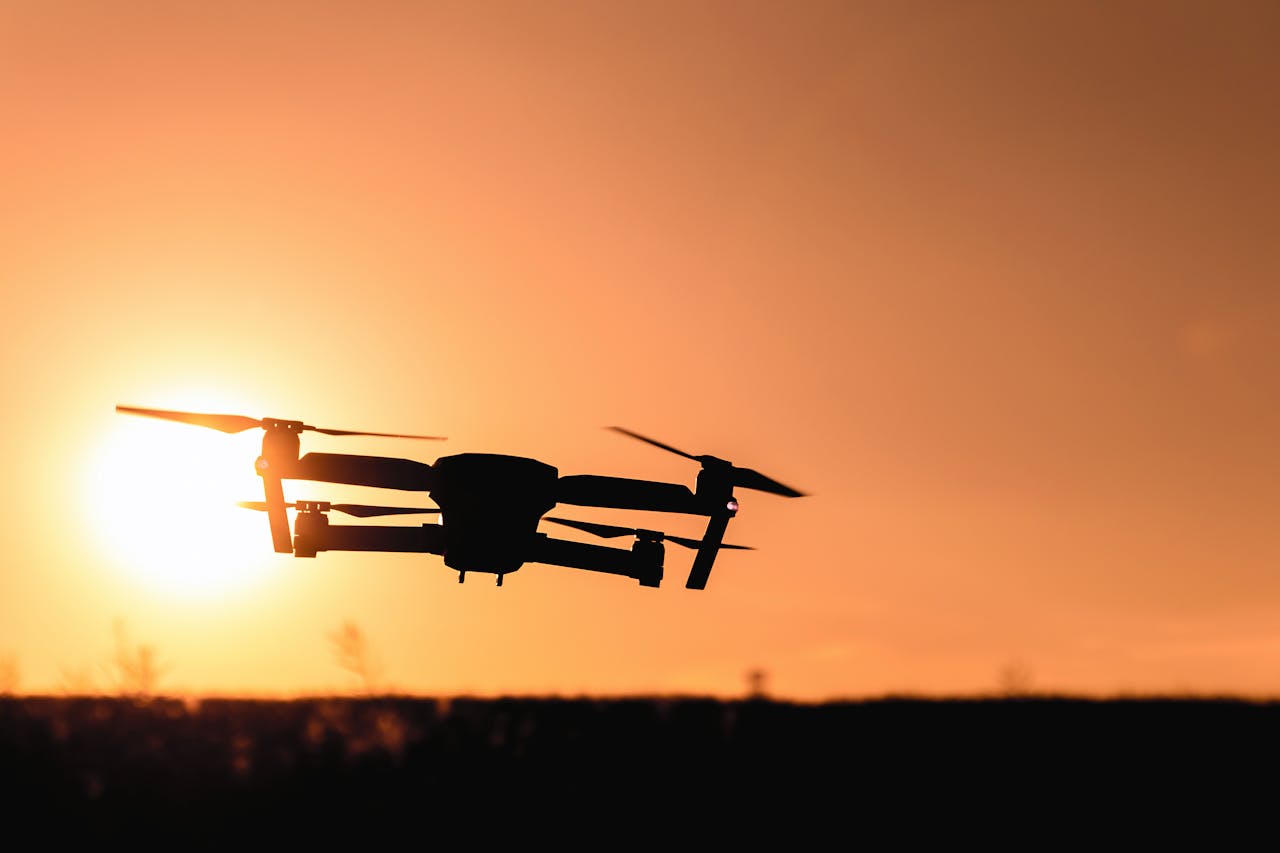
Large, expensive fixed-wing drones such as the Predator and Reaper still have their place. Canada has ordered a fleet of similar drones expected to be up and running in 2033. (Pexels photo)
Canada has started to get serious about developing its drone warfare capabilities
It’s been 24 years since what is widely considered the first lethal drone strike: a Predator UAV attack on an al-Qaeda vehicle convoy in Afghanistan just nine weeks after the Sept. 11 attacks.
The strike killed Mohammed Atef, son-in-law of Osama bin Laden and head of the group’s military operations, and made clear to all that 21st century warfare was going to see a large role for unmanned aerial vehicles (UAVs).
Large, expensive fixed-wing drones such as the Predator and Reaper still have their place. Canada has ordered a fleet of similar drones expected to be up and running in 2033.
But the war in Ukraine has shifted the focus away from multimillion-dollar UAVs to much cheaper, smaller and sometimes disposable drones.
Like militaries around the world, the Canadian Armed Forces saw the Ukraine conflict transform from what was largely an artillery war just 18 months ago into a nightmarish contest between buzzing machines and the operators who guide them.
It’s revolutionizing a part of the battle space,
says Royal Canadian Air Force Lt.-Col. Chris Labbé, who heads the forces’ Joint Counter Uncrewed Aircraft Systems Office. You’ll see different scholars or analysts talk now about the ‘air littoral’ — really the space between the ground and 1,000 metres in the air, maybe above that.
That space used to be dominated by helicopters, said Labbé.
But the Nagorno-Karabakh war, and then the war in Ukraine, have accelerated advances in drone warfare.
The Canadian military is determined to keep pace with that change, he said.
A cottage arms industry
Nearly everything about smaller drones represents a change in direction in military thinking and industrial production. For decades, procurement has trended toward ever higher prices and longer timelines. The F-35, for example, is a weapons system so complicated and expensive that multiple countries had to buy in and invest in advance.
Drones don’t need giant factories with sophisticated production lines.
Instead, said Tom Barton of Janes Defence in London, Ukraine has decentralized production into small workshops.
Some of the ways that guys in their garages are actually streamlining 3D printing and turning out quantities of these UAVs, you wouldn’t have thought was imaginable up to now,
Barton said.
WATCH | Drone capable of carrying an injured soldier:
He says the Russians have also farmed out 3D printing and fabricating to an army of home-based engineers. Their wide distribution makes it impossible to shut production down through bombing or missile strikes.
Labbé says the Ukrainian drone-builders also experiment and share results, driving rapid improvements in surveillance and strike capabilities.
The speed at which that innovation happens is absolutely blistering,
he said.
Labbé said that to further spur innovation, Ukraine has instituted a rewards system for front-line units whereby those who have more success receive points that they can use to buy new drone-related kit online.
Throwing down a challenge
The Canadian Forces would like to capture some of that same innovative energy, and to that end have issued a series of challenges
to Canadian drone makers through the program Innovative Solutions Canada (ISC).
The industry has noticed the change, says Philip Reece, CEO of InDro Robotics — in both the amount of money up for grabs and how quickly the government reviews submissions.
They come back with some pretty well thought out questions, and then it moves through to testing first and then procurement,
he said.
WATCH | More about the Canadian drone industry:
A challenge currently posted by ISC invites makers to submit an attritable interceptor
drone, capable of attacking enemy drones from several hundred grams to several hundred kilograms
that can operate from just above ground level to altitudes over 3,000 metres and reaching speeds in excess of 200 km/h.
The language of the challenge invites designers to seek creative and innovative solutions
for drone interception beyond contacting their target with an explosion.
The Sandbox
Examples of that new approach have already been tested at a site called the Sandbox in Suffield, Alta., including a successful test of a directed energy weapon that caused a target drone to burst into bright green flames in mid-air and crash to the ground.
Another interceptor drone tested at the Sandbox hovered above its target and dropped a net, ensnaring the propellers of the target drone.
Another area of furious research and development inspired by the Ukraine war is the command and control of UAVs in a battlespace where radio and even GPS signals are easily jammed.
The Russians were the first to realize that they could defeat jamming by attaching spools of fibre optic cable to their drones. Command signals travel along that hair-thin filament, rather than through the air where they can be jammed. Ukraine recently flew a drone with a 50-kilometre-long fibre optic spool.
Those innovations in turn drove innovation in the counter-drone world, said Reece.
Now they’re doing more kinetic response,
he said. Radio and GPS jamming just doesn’t cut it anymore when you’ve got a drone that’s got fibre optics. So that’s definitely been moving forward very fast.
Air, land and sea
Canadian drone development is not confined to the air. The navy adapted its Hammerhead naval gunnery targets to create an explosive-laden marine attack drone. It was tested successfully (and explosively) last month.
Labbé says Ukrainian drone and anti-ship missile operations in the Black Sea are an incredible achievement that speaks highly of the potential of uncrewed systems.
WATCH | Navy tests marine attack drone:
He says a current interest is in the area of mid-sized aerial drones, weighing hundreds of kilograms, that can evacuate a casualty on a stretcher or supply forward troops from rear areas.
And Reece said his company is experimenting with land-based drones that can move faster than a car and work with air-based drones for reconnaissance.
They can also go ahead and set up mesh networks, so secure communications that can’t be hacked can be moved forward,
he said.
One of the advantages of drones is that they often cost a lot less than their targets — acting as a battlefield equalizer against opponents with greater strength in vehicles, aircraft and vessels.
Barton said drones in Ukraine have been used to knock out elements of expensive Russian air defence systems, and that a well-equipped drone force with sufficient skilled operators would make even the strongest opponent hesitate to launch an armoured attack.
He said that for a country like Canada with vast borders to defend, drones are potentially a great solution.
Canadian drones for Europe?
Drones could also offer a way into European defence procurement agreements that Canada would like to access, if Canada can develop an industry that produces drones desirable for European militaries.
Now is the inflection point between drones and robots and AI,
said Reece. Canada knows we are. You can see by all of the responses, commercial and government, that now is the time to move forward.
Reece says Canada is in a strong position partly because Transport Canada has been ahead of most national regulators in recognizing the potential of the industry and creating conditions permissive enough to allow drone use to flourish.
We’ve got the skills here, we’ve got the know-how and we’ve certainly got the need,
he said. So if we’re already ahead in drones and robots and we can keep pace with AI, putting those together definitely makes us an international powerhouse.
This article is republished from RCI.