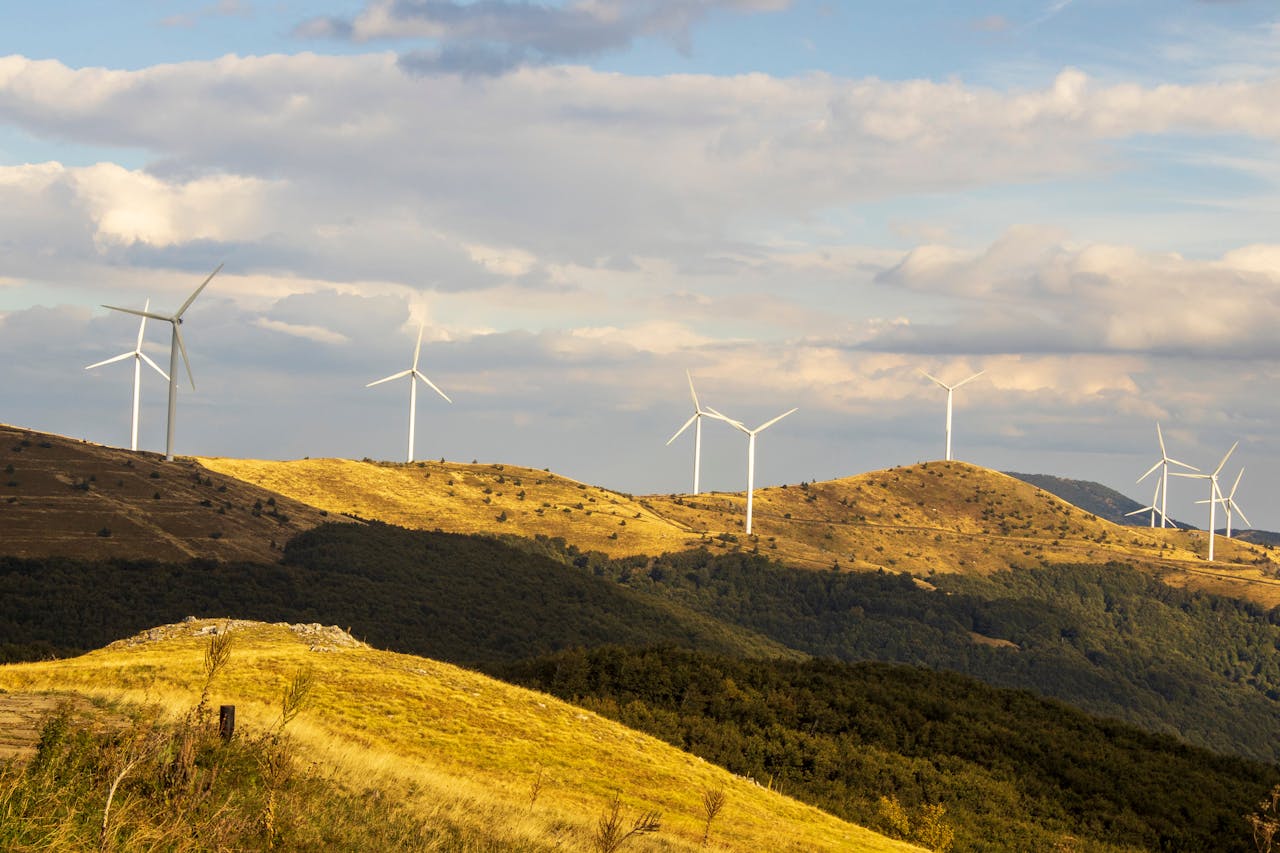
Over the past six months, the Trump administration has upended half a decade of green industrial policy. (Pexels Photo)
By Stephen Lezak, University of Oxford, The Conversation
During the cold war, the US and Soviet Union were locked in a desperate race to develop cutting‑edge technologies like long-range missiles and satellites. Fast forward to today and the frontiers of global technology have pivoted to AI and next‑generation energy.
In one domain, AI, the US has far outpaced any other nation – though China looks to be closing the gap. In the other, energy, it has just tied its shoelaces together. The reason isn’t technology, economics or, despite the government’s official line, even national security. Rather, it is politics.
Since returning to the White House in January, Donald Trump has handed out huge wins to the coal and oil and gas industries. This is no great surprise. Trump has long been supportive of the US fossil fuel industry and, since his reelection, has appointed several former industry lobbyists to top political positions.
According to the Trump administration, national security requires gutting support for renewable energy while performing political CPR on the dying coal industry.
The reality is that, since 2019, the US has produced more oil, gas and coal annually than Americans want to use, with the rest exported and sold overseas. It is currently one of the most prolific exporters of fossil fuels in the world.
In short, the US does not have an energy security problem. It does, however, have an energy cost problem combined with a growing climate change crisis. These issues will only be made worse by Trump’s enthusiasm for fossil fuels.
Over the past six months, the Trump administration has upended half a decade of green industrial policy. It has clawed back billions of US dollars in tax credits and grants that were supercharging American energy innovation.
Meanwhile, China has roared forward. Beijing has doubled down on wind, solar and next‑generation batteries, installing more wind and solar power in 2024 than the rest of the world combined. To China’s delight, the US has simply stopped competing to be the world’s clean energy powerhouse.
Roughly one-in-five lithium‑ion batteries, a key component in clean energy products, are made in China. Many of the newest high‑tech batteries are also being developed and patented there. While Trump repeats the tired mantra of “drill, baby, drill”, China is building factories, cornering the market for critical minerals such as lithium and nickel, and locking in export partners.
At the same time, household energy spending in the US is expected to increase by US$170 (£126) each year between now and 2035 as a result of Trump’s One Big Beautiful Bill Act. The bill, which includes sweeping changes to taxes, social security and more, will raise energy costs mainly because it strips away support for cheap and abundant renewables like wind and solar.
Household energy costs could go up even more as Trump threatens to make large‑scale clean energy development much more onerous by putting up bureaucratic hurdles. The administration recently issued a directive requiring the secretary of the interior to approve even routine activities for wind and solar projects connected to federal lands.
Meanwhile, climate change is hitting American communities harder with each passing year. As recent flooding in Texas and urban fires in California and Hawaii have shown, fewer Americans still have the luxury of ignoring climate change.
As the cost of these disasters mount – US$183 billion in 2024 – the grifting of the oil and gas industry will become an increasingly bitter pill for the nation to swallow.
China’s foresight
China, with its authoritarian government, is less susceptible to the petroleum-obsessed dogma fueling the Republican party. It does not have prominent leaders like US politician Marjorie Taylor Greene, who previously warned that Democrats are trying to “emasculate the way we drive” by advocating for electric vehicles. Rather, China’s leaders are seeing green – not in the environmental sense, but in a monetary one.
It is generally cheaper nowadays to build and operate renewable energy facilities than gas or coal power stations. According to a June 2025 report by Lazard, an asset management company, electricity from new large-scale solar farms costs up to US$78 per megawatt hour – and often much less. The same electricity from a newly built natural gas plants, by comparison, can cost as much as US$107 per megawatt hour.
Across the world, utilities are embracing clean energy, choosing lower costs for their customers while reducing pollution. China saw the writing on the wall decades ago, and its early investments are bearing a rich harvest. It now produces more than half of the world’s electric vehicles and the vast majority of its solar panels.
The US can still compete at the leading edge of the energy sector. American companies are developing innovative new approaches to geothermal, battery recycling and many other energy technologies.
But in the battle to become the world’s 21st-century energy manufacturing powerhouse, the US seems to have walked off the playing field.
In Trump’s telling, the US may have simply exited one race and reentered another. But the fossil fuel industry – financially, environmentally and ethically – is obviously a dead end.
Don’t have time to read about climate change as much as you’d like?
Get a weekly roundup in your inbox instead. Every Wednesday, The Conversation’s environment editor writes Imagine, a short email that goes a little deeper into just one climate issue. Join the 45,000+ readers who’ve subscribed so far.
Stephen Lezak, Programme Manager at the Smith School of Enterprise and the Environment, University of Oxford
This article is republished from The Conversation under a Creative Commons license. Read the original article.