Canada News
Trump Imposes Sweeping Tariffs: Canada 35%, PH 19%—Impact Felt by Businesses and Small Sellers

@realDonaldTrump/TruthSocial
By Arianne Lacanilao, Philippine Canadian Inquirer
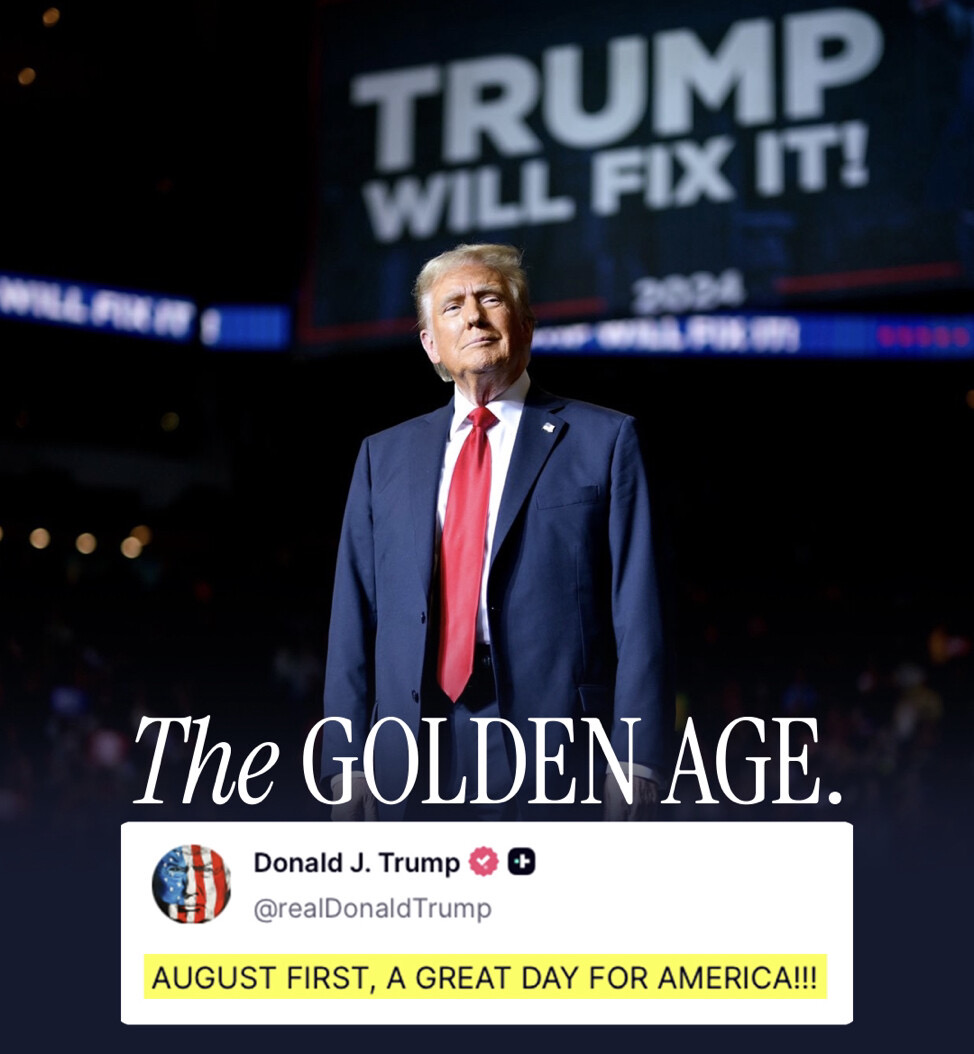
U.S. President Donald Trump has introduced a major tariff escalation beginning August 1, targeting imports from multiple countries. At the center of this move is a sharp 35% tariff on Canadian goods not covered by the USMCA—a decision widely seen as retaliation for Canada’s public support for Palestinian statehood.
@realDonaldTrump/TruthSocial
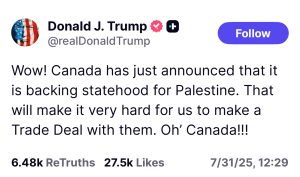
Trump criticized Canada’s stance on social media, saying it would make trade talks with Ottawa “very hard.” The White House later confirmed that Canada’s foreign policy shift played a significant role in the tariff decision, alongside what Trump described as “continued inaction and retaliation” on trade matters.
Meanwhile, the Philippines was hit with a 19% tariff under a newly signed bilateral trade agreement. In return, U.S. goods can now enter the Philippines duty-free.
Note: These tariffs primarily apply to business and commercial imports. Personal shipments, gifts, and traveler-carried items remain exempt under standard customs rules. However, small e-commerce parcels under $800 USD may now face duties based on their origin, especially if intended for resale.
Canada: How the 35% Tariff Could Affect Cost
The new rate impacts Canadian exports like steel, aluminum, lumber, machinery, and automotive parts.
- A Canadian auto part priced at $1,000 USD would now face a $350 USD tariff (approx. ₱20,300).
- A lumber shipment worth $5,000 USD would incur $1,750 USD in tariffs (₱101,500).
- Since only around 38% of Canadian exports are covered by USMCA, most goods—especially raw materials and industrial parts—will be affected.
The Canadian dollar weakened slightly following the announcement. Businesses worry that the added cost may be passed on to U.S. buyers or reduce demand for Canadian goods.
Philippines: How the 19% Tariff Impacts Exports
After President Ferdinand Marcos Jr.’s meeting with Trump in Washington, the U.S. imposed a 19% tariff on Philippine goods. In return, U.S. products can now enter the Philippines duty-free.
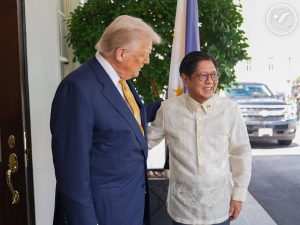
Marcos, in his arrival message, said the visit, held at the invitation of US President Donald Trump, reaffirmed the “breadth and depth” of the Philippines–US alliance across security, economic, and geopolitical cooperation. (PCO Photo)
Key affected exports include electronics, semiconductors, garments, coconut products, processed food, seafood, and fresh fruits.
- A ₱500,000 shipment of electronics would now face a ₱95,000 tariff.
- A ₱120,000 batch of garments or canned goods would incur ₱22,800 in added cost.
- For small exporters, especially in the agriculture and textile sectors, this could mean tighter margins or the need to raise prices.
Industry groups have urged government support to help local producers remain competitive, particularly in sectors already burdened by rising shipping and material costs.
@realDonaldTrump/TruthSocial
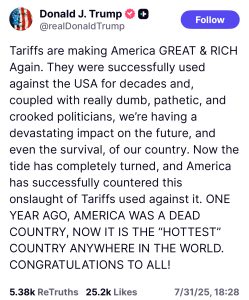
The U.S. has also imposed “reciprocal” tariffs on dozens of other countries, citing unfair trade practices and the absence of finalized agreements. These new duties vary widely, with some countries facing rates of up to 50% or more.
Confirmed affected countries include:
-
Brazil – 50%
-
Switzerland – 39%
-
India – 25%
-
South Africa – 30%
-
Taiwan – 20%
-
Thailand – 26%
-
Indonesia – 23%
-
Vietnam – 24%
-
Lesotho – 15% (adjusted during negotiations)
-
China – subject to multiple tariffs, with some categories exceeding 50%
This list is not exhaustive. U.S. officials have confirmed that scores of countries are included in the broader tariff rollout, many with a baseline rate starting at 10% unless a separate deal has been reached.
What to Expect
- Canadian exporters must check whether their goods qualify for USMCA exemptions or prepare for significant cost increases.
- Philippine businesses will need to factor the 19% rate into pricing strategies, especially for U.S. clients.
- U.S. importers may face higher landed costs across multiple product categories.
- Governments of affected countries are expected to push for negotiations or subsidies to support their industries.
The full tariff changes take effect August 1, marking a major shift in U.S. trade strategy with implications for both local economies and global supply chains.