Canada News
Police in Nunavik involved in 73 times more fatal shootings than provincial average

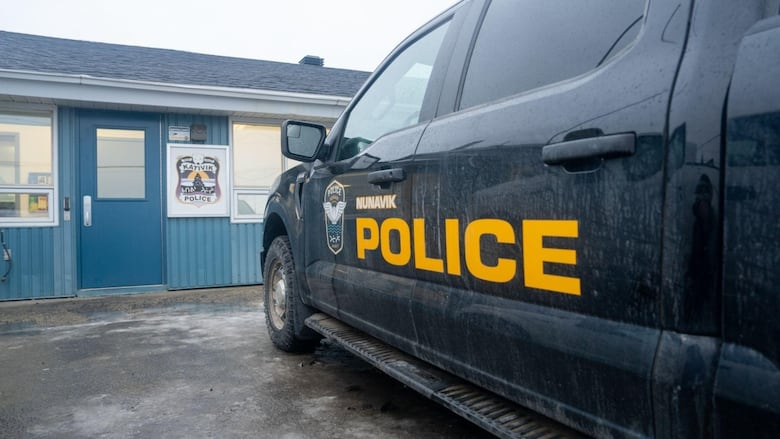
The Nunavik Police Service station in Kuujjuaq. (Félix Lebel/Radio-Canada)
Recent deaths have sparked calls for reform, and some policing experts say officer training should be examined
The rate of fatal shootings by police officers in Nunavik is roughly 73 times higher than the Quebec average, according to numbers from the provincial police watchdog.
CBC looked at data from the Bureau des enquêtes indépendantes (BEI), which starts from 2017. The BEI investigates any injuries or deaths of a person other than a police officer during a police intervention. The organization has recorded six fatal police shootings in Nunavik, which has a population of under 15,000, compared to 51 across the province of roughly nine million.
The most recent shooting by police in the province was in Inukjuak earlier this month. It prompted calls for reform across the region including from the families of two other men who were fatally shot by police.
The number of people fatally shot by police in Nunavik is also higher than in the territories of Yukon and N.W.T., which both have larger populations than Nunavik. Since 2017, Yukon had one “police-involved shooting fatality”, and the N.W.T. had none, according to their Coroner’s offices. Nunavut’s Coroner’s office hasn’t responded to CBC’s requests.
Temitope Oriola, a criminology professor at the University of Alberta, said there is a tendency across the country of police officers deploying lethal force over de-escalation techniques, but the situation in Nunavik appears to be extraordinary.
“There’s something fundamentally broken there, with all due respect,” he said, adding that lethal force is allowed, but it depends on the necessity of deployment.
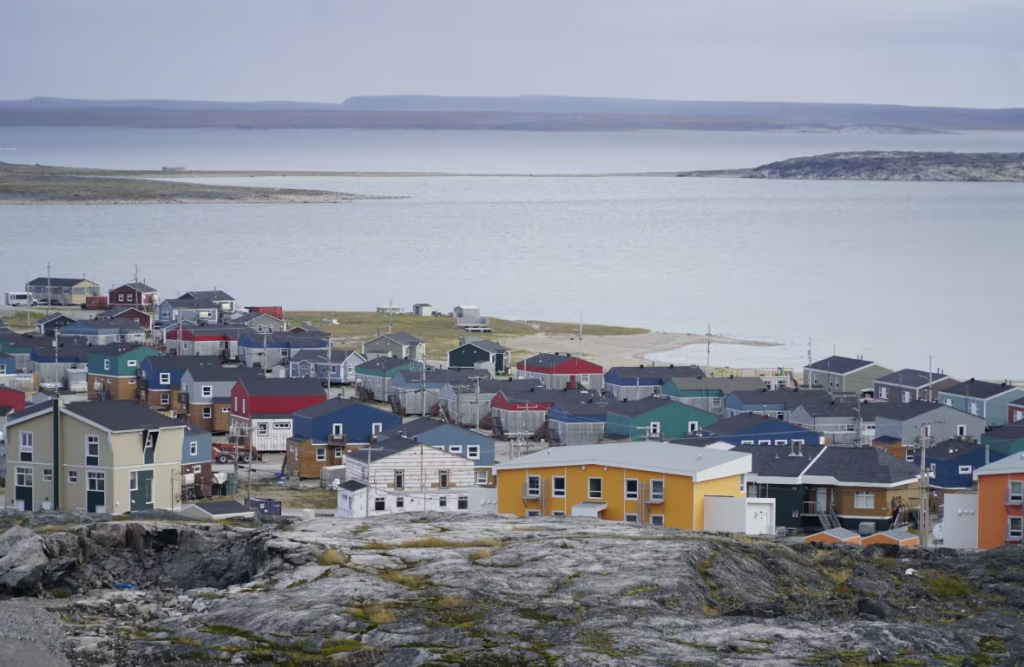
But there are also troubling figures police face in Nunavik. In 2024, crime rates in the region were roughly 15 times higher than the rest of the province, according to Statistics Canada. The Canadian Centre on Substance Use and Addiction 2021 report also details the heavy struggles Nunavimmiut face with substance use and suicide rates. That’s all compounded by intergenerational trauma and a lack of housing.
People can become officers in Nunavik with a diploma from the École nationale de police du Québec, or, like others in the country, they can complete the cadet program at the RCMP depot division in Regina, which takes half a year. There lies the problem for Oriola.
“I know people who joined the police because they have a heart of service. They wish to serve, they want to be their utmost best for all their community. But are we giving them a chance of doing this with only six months [of] training,” he said.
Training timeline ‘fundamentally insufficient’
Oriola said much of the training at the RCMP depot is focused on target practice and defensive driving. That is all and well, he said, but the six months timeframe for training leaves little room for the social, human side to policing.
“It flies against the face of what many of our peer jurisdictions in the world are doing, countries such as Finland, Norway and Germany … where individuals with recruiters spend anything from two to four years being given various forms of education. Things like human rights, police and citizen encounters, psychology, and mental health issues,” he said.
“That timeline is fundamentally insufficient for 21st century policing. We are in an environment where police officers are being called to deal with issues that quite frankly have little to do with policing.”
He also wants to see more de-escalation techniques, a sentiment echoed by Patrick Watson. The assistant professor of criminology at the University of Toronto points to examples of that proving successful, like in the case of a Toronto Police Service officer who successfully apprehended a suspect in a deadly van attack in 2018.
However, he said he often hears new recruits being dismissive of de-escalation techniques. He also believes that depot often prioritizes training on “high-end” policing — such as SWAT teams — over community-based policing.

“The police service that employs the officer … should be doing some additional training to get their new recruits… prepared to serve a community. So there is an element of co-responsibility here. But through multiple reports, depot has been singled out, and those are items that I think the government of Canada really needs to focus on,” he said.
RCMP Depot division said all cadets, including from the Nunavik Police Service (NPS), get the same initial standardized training. It did not respond to further questions about its training curriculum. ENPQ said it cannot provide a response until late in August.
ENPQ does offer other training sessions dedicated to de-escalation that NPS offers to its recruits. NPS officers also undergo 12 hours of Inuit cultural training online prior to arrival in Nunavik, and a spokesperson said it’s working on a third form of training that will consist of a more hands-on approach to Inuit culture.
‘A shield protects everyone’
Watson said time and space are crucial determinants in a police officer’s response to a person bearing a weapon. Tasers and pepper spray can be useful deterrents, but only at close range.
There are several studies — often taught in police academies — that tell officers to draw their firearms when confronted by a subject with a knife. One of them is the “21-foot rule,” or Tueller Drill, developed by Salt Lake City Police Department Sgt. Dennis Tueller.
“He found that an average police officer takes about 1.5 seconds to draw, aim and fire their gun from their belt to a subject. Whereas somebody running at full speed, an average person running at full speed can cover about 21 feet,” Watson said.
Watson notes that science has been challenged, and there are calls for de-escalation first. However, what Watson would like to see implemented is the use of lightweight shields.
They are a fixture among some police services in Europe, and was a recommendation from a coroner’s inquest in Toronto in 2017.
“Firearms, Tasers, or pepper spray – all three of those things are going to harm an individual. A shield protects everyone. It protects the police officer, and it protects the person who is presumably in crisis,” he said.