Canada News
Canadian wildfire smoke ruining Americans’ summer, says letter from Congress members

By Jenna Benchetrit, CBC News, RCI
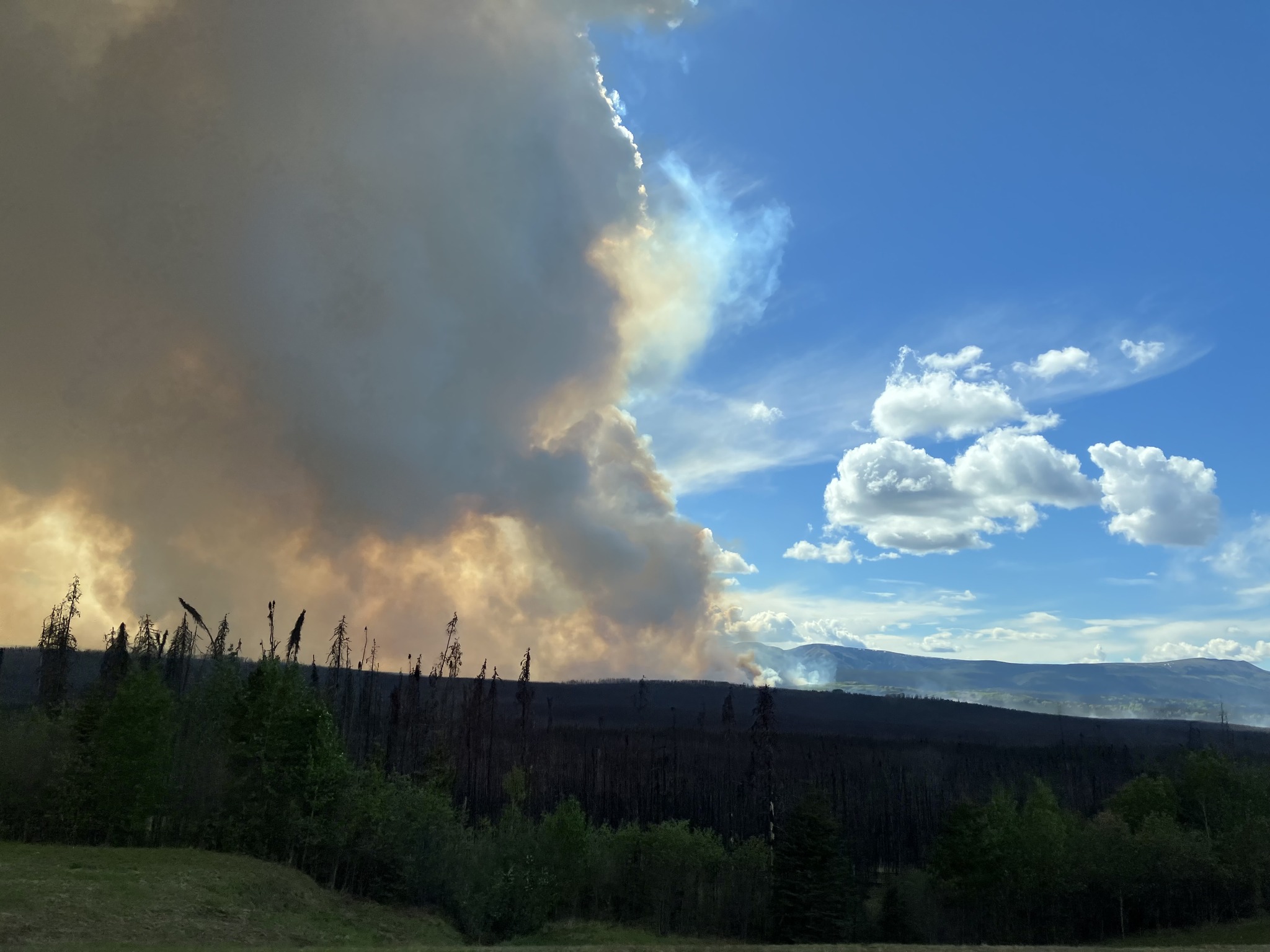
(File Photo: BC Wildfire Service/Facebook)
Letter signed by 6 House representatives from Minnesota and Wisconsin
Canadian wildfire smoke is travelling south and making it difficult for some Americans to enjoy their summer, according to a letter from six members of Congress to Canada’s U.S. ambassador.
We write to you today on behalf of our constituents who have had to deal with suffocating Canadian wildfire smoke filling the air to begin the summer,
begins the letter, published Monday and addressed to Ambassador Kirsten Hillman.
It was signed by Republican House representatives Tom Tiffany and Glenn Grothman of Wisconsin and Brad Finstad, Michelle Fischbach, Pete Stauber and Tom Emmer of Minnesota.
In our neck of the woods, summer months are the best time of the year to spend time outdoors recreating, enjoying time with family, and creating new memories, but this wildfire smoke makes it difficult to do all those things,
says the letter, which can be read in full here.
The representatives ask how the federal government plans to mitigate the wildfire smoke, attributing a lack of active forest management
as a major driver of Canadian wildfires, and suggesting that some of the fires began with arson.
Research shows that climate change, which is largely driven by fossil fuel use, is exacerbating wildfires in both Canada and the United States.
While a proportion of wildfires are caused by human activity — like unattended campfires — and a Quebec man pleaded guilty to arson last year after he was arrested for igniting 14 fires, there is no indication that widespread arson is behind the wildfires.
Lightning causes about half of wildfires and burns the most area, per the Canadian National Fire Database. There are currently 526 active wildfires in Canada, according to the Canadian Interagency Forest Fire Centre.
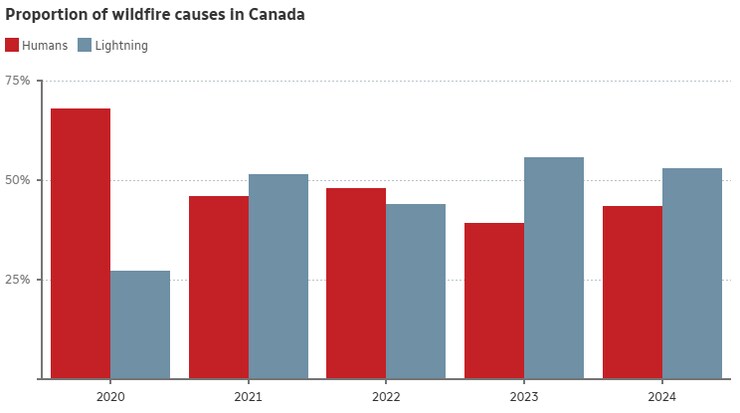
Source: Canadian National Fire Database Photo: CBC
See interactive chart here (new window)
Canada takes the prevention, response, and mitigation of wildfires very seriously,
the Canadian Embassy to the U.S. said in a statement, responding to the letter. [It] has been shared with the relevant Canadian agencies. We will respond in due course.
CBC News has reached out to all six representatives for an interview, and is also seeking a response from Minister of Energy and Natural Resources Tim Hodgson. A spokesperson for Rep. Stauber declined the interview request.
‘Smoke blows both ways’
Lightning-caused fires are often in remote areas that are difficult to get to and then very difficult to control,
said Lori Daniels, a wildfire scientist at the University of British Columbia’s Department of Forest and Conservation Sciences.
Some of the wildfires currently raging in Canada began in 2023 and are ongoing, she added.
Because of global warming, it is so hot and dry in the north that those fires [are] burning underground in the winter,
Daniels said. And then, in the spring and summer, coming back up to the surface again in these very remote areas and in ecosystems where it’s incredibly difficult to stop the fires.
So it’s not that it’s for lack of effort, but we’re looking at extreme situations in very remote areas for those fires.
The representatives’ letter does not mention that thousands of Canadians have evacuated their homes this wildfire season, or that two Canadians died in Manitoba’s Lac du Bonnet in May as a result of the fires.
Smoke blows both ways across that border,
added Daniels, noting the impact of recent California wildfires on air quality in Western Canada.
Wildfire smoke is an air pollutant that can impact a person’s health, according to the B.C. Centre for Disease Control.
It recommends a number of mitigation strategies to lessen the effects of wildfire smoke, like wearing an N-95 mask if working outdoors, limiting outdoor exercise, using a HEPA air cleaner in your home, drinking water, and monitoring local air quality indices.
This article is republished from RCI.