News
Oath-taking of new senator-judges eyed July 29

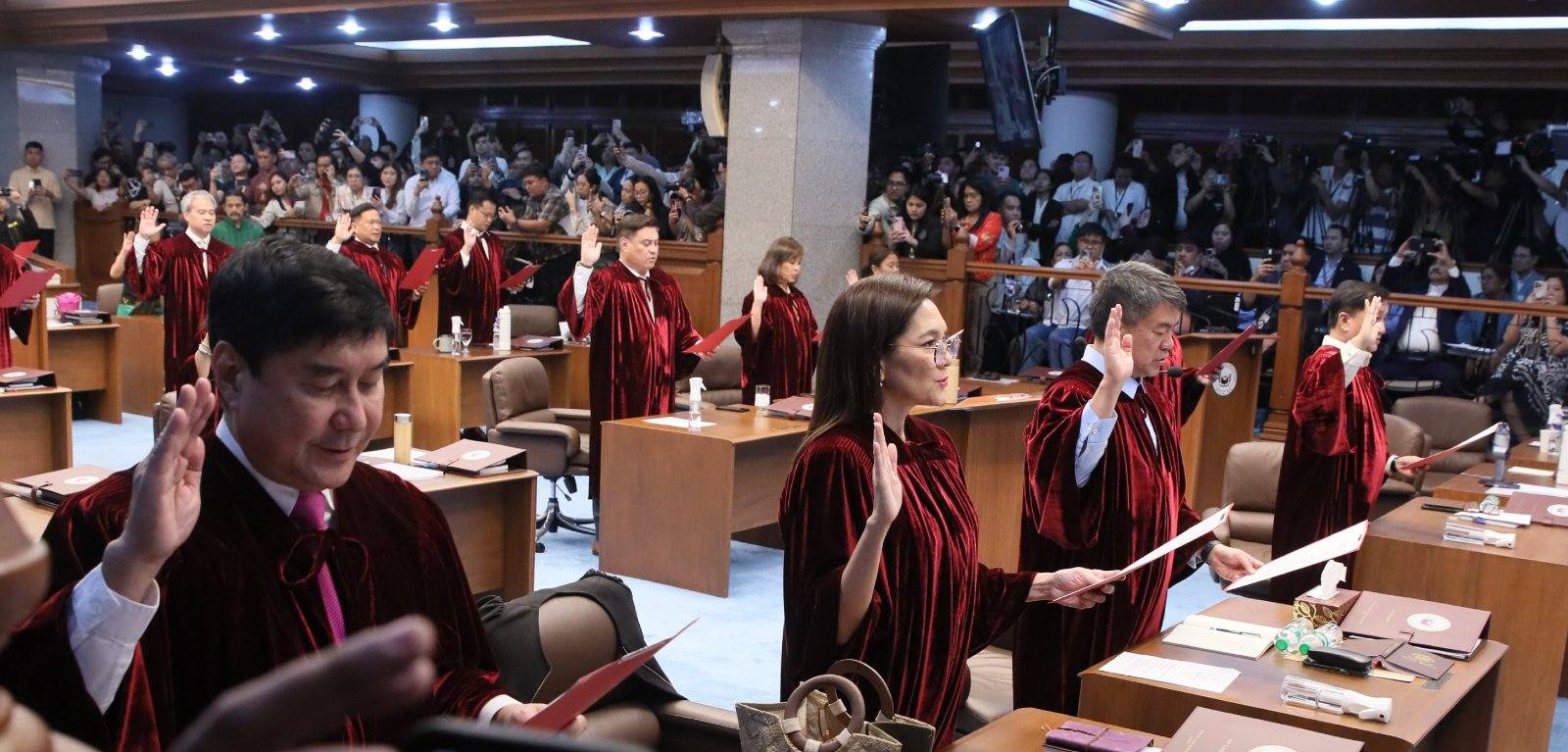
SENATOR JUDGES. Senators take their oath as judges as the Senate formally convenes as an impeachment court in the impeachment trial of Vice President Sara Duterte on Tuesday (June 10, 2025). Senate President Francis Escudero reaffirmed the upper chamber’s role in ensuring a fair and impartial process. (PNA photo by Avito Dalan)
By Wilnard Bacelonia, Philippine News Agency
MANILA — The new senator-judges in the impeachment trial of Vice President Sara Duterte are expected to take their oath before the Senate President no earlier than July 29, as the Senate impeachment court continues preparations for “transparent, fair, and legally sound” process, its spokesperson said Wednesday.
Senate impeachment court spokesperson Regie Tongol told reporters in a press briefing that 6 of the 11 major steps in the procedural framework—about 55 percent—have been completed.
However, he said the formal oath-taking of senator-judges cannot proceed without the presence of a presiding officer, who will only be elected after the opening of the 20th Congress on July 28.
“As you know, if one Congress adjourns, another begins. The Senate President is going to be elected or re-elected again,” Tongol said.
“The senator-judges will have to take their oath before the presiding officer… Ayaw po ng presiding officer na magkaroon ng kwestyon doon sa proseso o step ng panunumpa na maaari pang ma-kwestyon (The presiding officer does not want any questions or doubts to arise about the oath-taking process or step that could later be challenged),” he added.
The new senator-judges are Erwin Tulfo, Camille Villar, Bam Aquino, Kiko Pangilinan, Ping Lacson, Tito Sotto and Rodante Marcoleta.
Tongol said July 28 is typically reserved for the ceremonial opening of Congress, making July 29 the earliest possible date for the swearing-in.
Tongol reiterated the importance of the certification and authorization documents being required from the House of Representatives, which he stressed are “not procedural traps,” but safeguards intended to preserve the legality and legitimacy of the trial.
“These certification processes help prevent any legal impediments or technicalities that could undermine the impeachment process once it starts rolling. The disrespect for or attempts to undermine the impeachment court processes threaten the independence and credibility of the court and jeopardize public trust in the process itself,” he said.
He compared the requirement to common practices in corporations, where authority is memorialized through board resolutions and secretary certificates.
“So Congress, as a collegial body, is expected to also do the same,” he said.
Asked if the House could submit both the certification to proceed and the authorization of the new set of prosecutors at the same time, Tongol said: “As a matter of efficiency, the House may elect whatever they want to do on how to comply with those two processes.”