News
Senate court rebuts delay claims, cites progress in impeachment

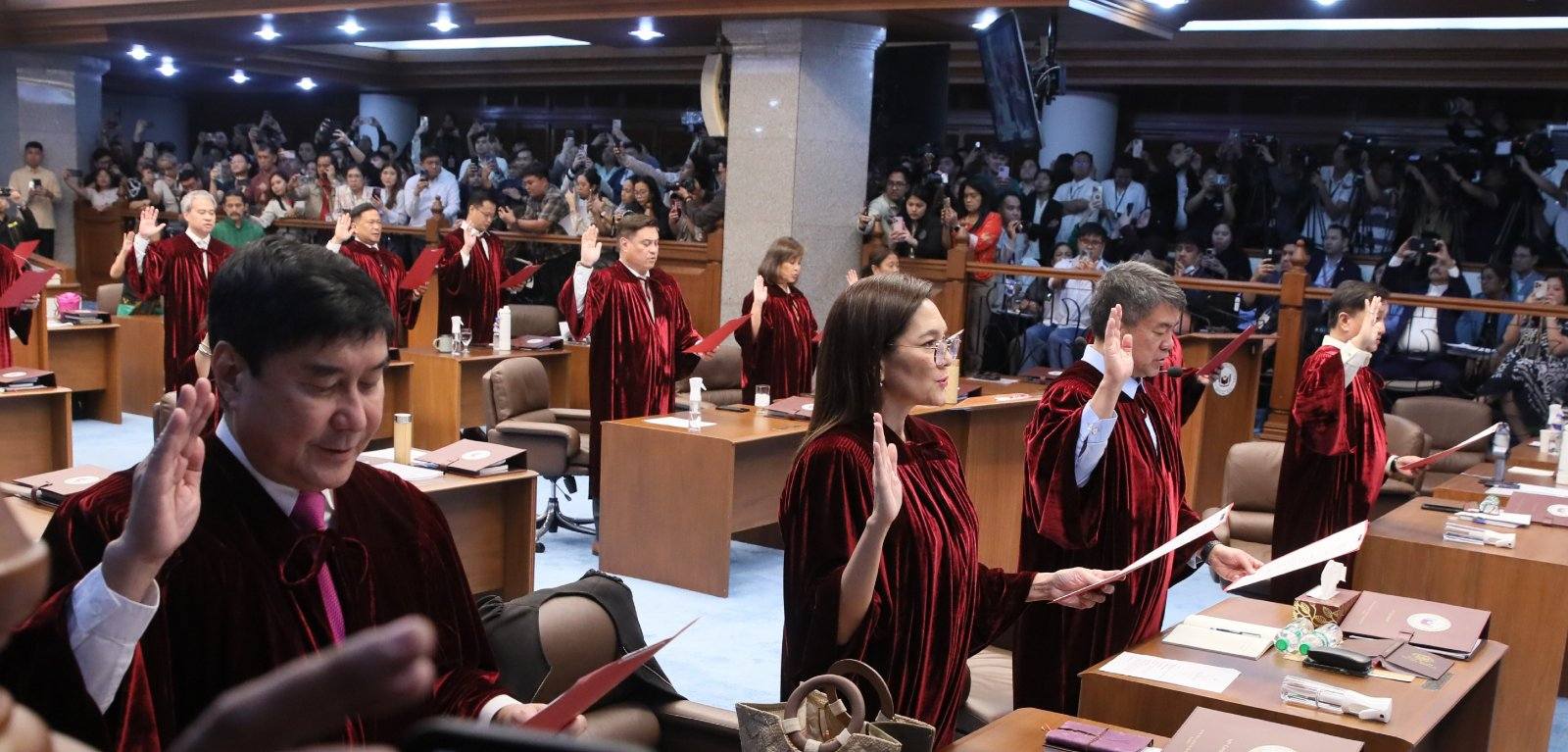
Senators take their oath as judges in the impeachment trial of Vice President Sara Duterte on Tuesday (June 10, 2025). Senate President Francis Escudero, serving as presiding officer, led the oath-taking ceremony, marking the chamber’s assumption of its constitutional mandate to try the impeachment complaint transmitted by the House of Representatives. (PNA photo by Avito Dalan)
By Wilnard Bacelonia, Philippine News Agency
MANILA – The Senate impeachment court has accomplished more than critics suggest, its spokesperson said Tuesday, countering allegations that proceedings against Vice President Sara Z. Duterte are being deliberately slowed down.
In a statement, lawyer Regie Tongol cited the court’s key actions since it convened last week — formal organization of the impeachment court, adoption of procedural and supplemental rules, issuance of a compliance order to the House of Representatives to address jurisdictional issues, release of summons to Duterte, and receipt of her defense counsels’ formal entry of appearance.
“Claims of foot-dragging are baseless as actions speak louder than words,” he said.
Tongol pointed out that routine filings such as motions for clarification, manifestations or compliance could have been easily submitted since the court convened.
“Mayroon bang nagtanong kung bakit pitong araw na ang lumipas mula ng unang convening ng korte, wala pang anumang ganyang sinasabi nilang gagawin nila ang na-file na sa korte? Kung sa madali at maliit na bagay na mga ganyan may katagalan na sila gumalaw at kailangang umabot pa ng isang linggo, paano na ang mas mga malalaking filing o mosyon pa kaya (Has anyone asked why seven days have already passed since the Court was first convened and yet none of those filings they said they would submit have actually been filed? If it takes them that long to act on small and simple matters like these, needing a whole week, how much longer will it take for bigger filings or motions)?” he said , questioning the sincerity of those publicly criticizing the process.
“It is disrespectful for litigants to question the court with the end goal of merely discrediting it instead of doing their job.
”
Tongol urged critics to bring their grievances before the court rather than the public, stressing that if their goal is to expedite proceedings, they should file the necessary pleadings instead of “spending their time attacking the court.”