Business and Economy
Inflation further eases to 1.3% in May, lowest since Nov. 2019

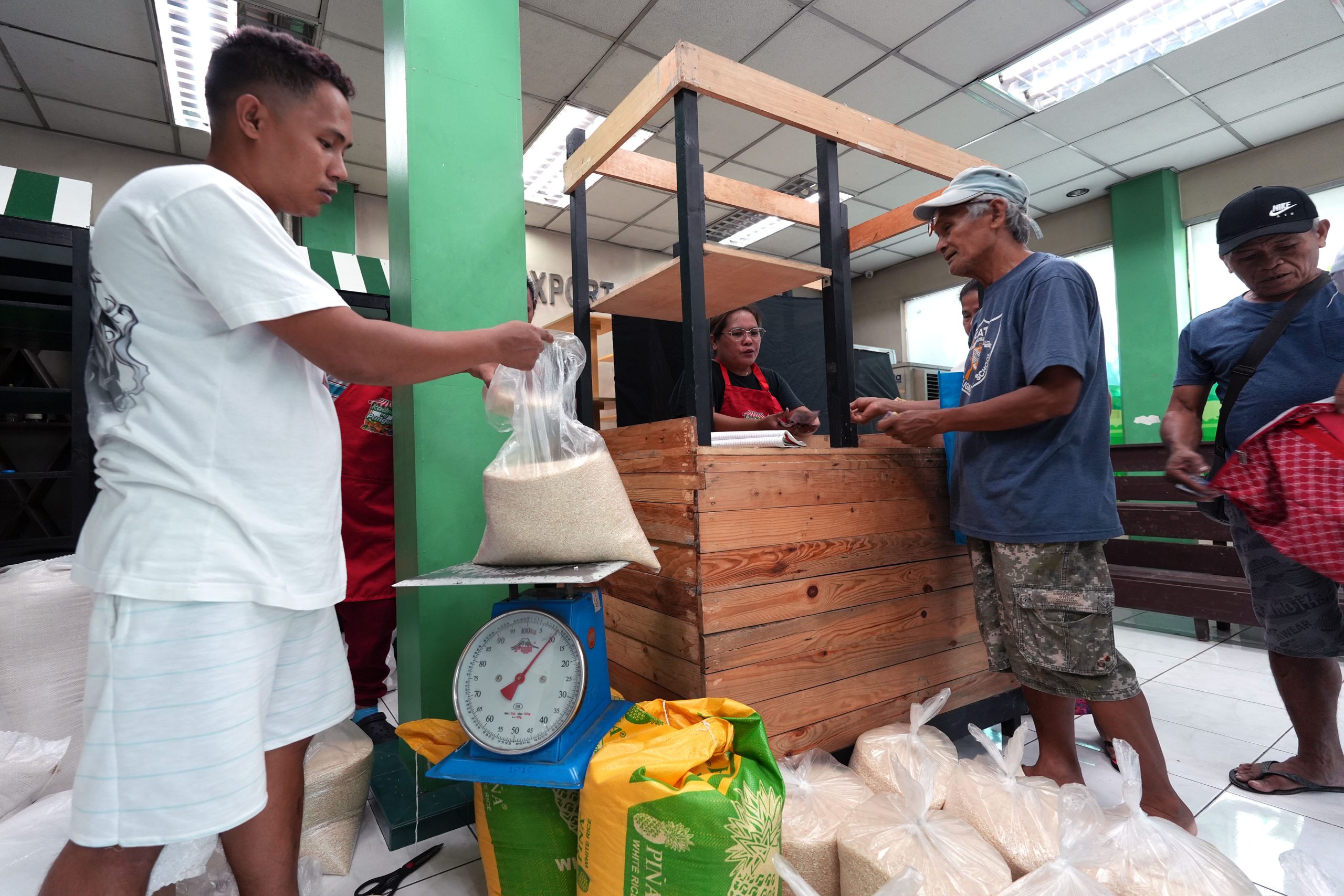
BBM RICE. A staff of the Department of Agriculture – Agribusiness Development Center (left) repacks the PHP20-per-kg. rice into 10-kg. bags, at the Kadiwa ng Pangulo store along Elliptical Road, Diliman, Quezon City on Wednesday (June 4, 2025). The “Benteng Bigas Meron (BBM) Na” rice is available in Kadiwa centers in Metro Manila and select provinces in Luzon and the Visayas. (PNA photo by Ben Briones)
By Anna Leah Gonzales, Philippine News Agency
MANILA – Headline inflation further slowed to 1.3 percent in May this year from 1.4 percent in April, the lowest recorded since the 1.2 percent in November 2019, the Philippine Statistics Authority (PSA) said Thursday.
In a briefing, National Statistician Dennis Mapa said this brought the year-to-date average inflation to 1.9 percent which is at the lower end of the government’s 2 to 4 percent target range.
Mapa said the downtrend was primarily brought about by the slower increase in the index of housing, water, electricity, gas, and other fuels at 2.3 percent from 2.9 percent in April.
Restaurant and accommodation services also recorded a slower inflation of 2 percent from 2.3 percent in April.
Mapa said the faster annual decline was likewise recorded in the transport index, at 2.4 percent in May from 2.1 percent in the previous month.
Food inflation meanwhile remained at 0.7 percent.
Mapa, however, said rice inflation was at -12.8 percent from -10.9 percent in April.
According to Mapa, the rollout of the PHP20 per kilogram rice program in line with the directives of President Ferdinand R. Marcos Jr., the “Benteng Bigas Meron Na” helped lower rice prices.
In May, the average price of regular milled rice declined to PHP43.19 per kg from PHP51.11 in May 2024.
The average price of well-milled rice likewise fell to PHP49.45 per kg from PHP56.06 per kg while special rice also declined to PHP59.80 from last year’s PHP64.41 per kg.
The bottom 30 percent income households experienced zero percent inflation in May 2025, a sharp decline from 5.3 percent in the same month last year.
The National Capital Region also posted a slower inflation rate of 1.7 percent in May, down from 2.4 percent the previous month while other regions maintained a low average inflation rate of 1.2 percent.
More stable cost of living
In a separate statement, the Department of Economy, Planning, and Development (DEPDev) said the continued decline in the country’s headline inflation shows progress toward easing price pressures and achieving a more stable cost of living for Filipinos.
“We are encouraged by this development. It reflects the success of our sustained efforts to protect the purchasing power of Filipinos and ensure a more affordable cost of living,” said DEPDev officer in charge and Undersecretary for Policy and Planning Rosemarie Edillon.
To sustain this downward trend, DEPDev said the Marcos administration is committed to implementing targeted policies aimed at mitigating inflationary pressures and safeguarding the purchasing power of Filipino families.
The Food and Drug Administration (FDA) and the Department of Agriculture (DA) are strengthening their collaboration to ensure the availability of safe and effective animal vaccines amid ongoing African Swine Fever (ASF) and Avian influenza outbreaks.
The Bureau of Animal Industry is assessing the controlled ASF vaccination campaign.
The DA and the Food and Drug Administration remain optimistic that a commercial rollout of the ASF vaccine could be achieved before the end of the year.
The DA also extended the deadline for the issuance of fish import permits to the end of June 2025 to provide more time for importers to comply with the revised guidelines.
DEPDEv said that for the PHP20 per kg rice, Phases 2 and 3 will be implemented in July and September, covering more areas across Visayas and Mindanao.
“We remain committed to executing the necessary measures to keep prices low and stable. With this, we are optimistic about the government meeting its headline inflation target of 2 to 4 percent for the year,” Edillon said.