News
Aussie envoy: ASEAN COC must not ignore rights of 3rd party states

By Joyce Ann L. Rocamora, Philippine News Agency
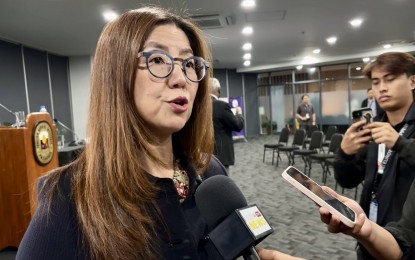
Australian Ambassador HK Yu made the comment as talks on an effective code between China and the Association of Southeast Asian Nations (ASEAN) progress, with negotiators looking to finish the agreement by 2026. (PNA photo by Joyce Rocamora)
MANILA – Australia renewed its call for a South China Sea code of conduct (COC) that would not prejudice the rights of third party states on the vital sea lane.
Australian Ambassador HK Yu made the comment as talks on an effective code between China and the Association of Southeast Asian Nations (ASEAN) progress, with negotiators looking to finish the agreement by 2026.
“Once again, our position on that has always been clear — whatever is achieved through the code of conduct, it has to ensure that it protects all, not just the members, but all who use those waterways, including non-participants like Australia,” she told reporters on the sidelines of the Foreign Service Institute Ambassadors’ Lecture Series in Pasay City on Thursday.
During the 46th ASEAN Summit in Malaysia on May 26, leaders of member states agreed to conclude an “effective and substantive” COC early, and ensure it is in accordance with international law, including the 1982 United Nations Convention on the Law of the Sea.
In the most recent round of negotiations in Manila, ASEAN and Beijing finally tackled the so-called “milestone issues,” which included the relation of the COC to the Declaration of Conduct on the South China Sea.
At present, there is no explicit announcement from both parties if they are set to come up with a legally binding COC, which would differentiate it from the non-binding DOC.
Yu said Australia has long been a champion of freedom of navigation and overflight over international waters, including the South China Sea, and would continue to do so.
“Australia is a country that depends on exports for our economic growth, and quite a big portion of the exports are through those waterways,” Yu said.
“So, I think it goes really without saying that it’s really important that we protect the freedom and we ensure that whatever is done (at sea) is in accordance with UNCLOS.”
Yu said Canberra envisions a role in the region that ensures it remains “peaceful, stable, and prosperous.”
“This is an issue that is almost bipartisan in Australia, and there is a strong sense by Australians that we live in Asia,” she said.
“When we look up, we see Southeast Asia, and when we look around, we have our Pacific island country friends, and so our vision is to really work with our friends and partners in the region to ensure that the rules-based order that served us so well for many, many decades actually continue and that we can all live in peace, stability and prosperity.”