Health
DOH to UNAIDS: PH committed to HIV sustainable response

By Ma. Teresa Montemayor, Philippine News Agency
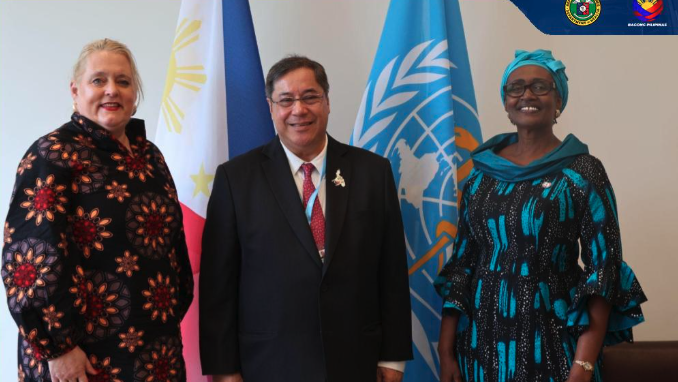
HIV RESPONSE. Department of Health Secretary Teodoro Herbosa (center) on Thursday (May 22, 2025) poses for a photo with United Nations Undersecretary General and Joint UN Programme on HIV/AIDS Executive Director Winnie Byanyima (right) and UNAIDS Policy, Advocacy, and Knowledge Branch Deputy Executive Director Christine Stegling (left) after a meeting at the 78th Session of the World Health Assembly in Geneva, Switzerland. Herbosa told UNAIDS representatives that the Philippines is committed to HIV prevention, testing, diagnosis, treatment, and control. (Photo: Department of Health (Philippines)/Facebook)
MANILA – The Philippines has assured the international community that it remains steadfast in its commitment to attaining sustainability and progress in its HIV (human immunodeficiency virus) response, the Department of Health (DOH) has said.
In a statement issued Thursday night, the DOH said Secretary Teodoro Herbosa conveyed this message when he sat down with representatives of the Joint United Nations Programme on HIV/AIDS (UNAIDS) at the 78th Session of the World Health Assembly in Geneva, Switzerland.
Herbosa said the Philippines has been strengthening its active participation in the Global AIDS Monitoring process in collaboration with the UNAIDS.
This allows the country to track progress toward global commitments and make data-driven decisions.
The Philippines is also committed to a multi-sectoral, rights-based, and community-centered approach to HIV prevention, Herbosa said.
This came after the country recorded an average of 55 new HIV cases daily in 2024, underscoring the urgency for coordinated and sustained interventions.
However, recent global developments have presented significant challenges.
The termination of the agreement between the United States government and UNAIDS, following a freeze on foreign aid, has disrupted UNAIDS-led activities. This impacted the technical support and advocacy for the HIV response in the country.
To address setbacks, the national government strengthened key initiatives to ensure the sustainability of its campaign against HIV, the DOH secretary said.
These include drafting amendments to the Implementing Rules and Regulations (IRR) of Republic Act 11166 or the Philippine HIV and AIDS Policy Act, and proposing an executive order to declare HIV an urgent public health concern.
Herbosa said this EO would mandate nationwide action for accelerated prevention, testing, diagnosis, treatment, and control.
As a member of the UNAIDS Programme Coordinating Board for a three-year term, Herbosa said the Philippines takes part in the global HIV response and is set to join its first meeting in June 2025.