News
P20/kg rice possible due to reforms, record harvest – PBBM

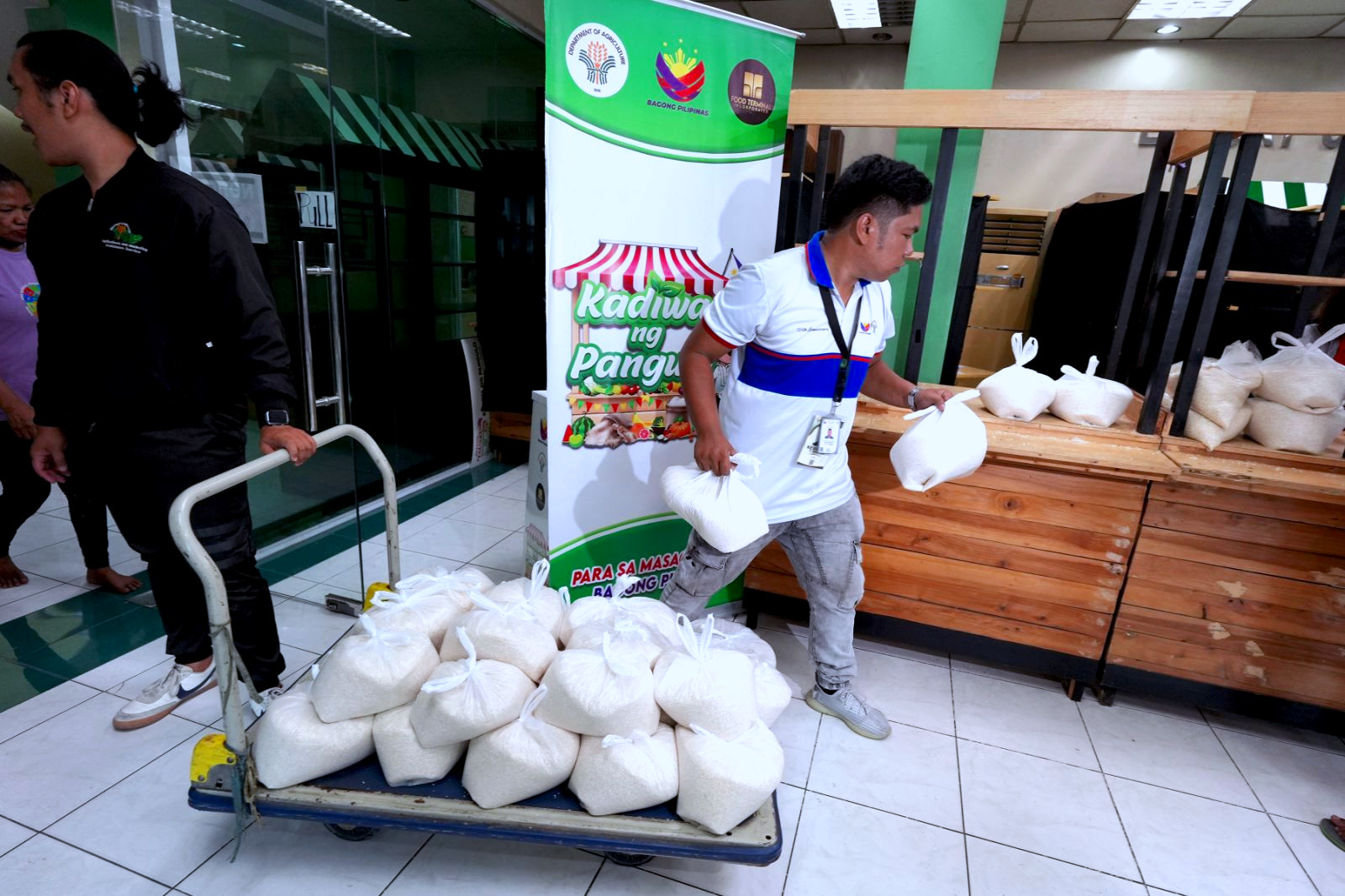
Solo parents Mikaela Avellano, 27 carry her 8 month old son Akiro from Old Capitol Site in Quezon City purchase 5 kilos of “Benteng Bigas Meron Na” program at the Department of Agriculture-Agribusiness Development Center (DA-ADC) Kadiwa ng Pangulo Store, Elliptical Road, Diliman, Quezon City on Monday (May 19, 2025). The program benefits marginalized sectors, including persons with disabilities (PWDs) and members of the Pantawid Pamilyang Pilipino Program (4Ps).(PNA photo by Ben Briones)
By Darryl John Esguerra, Philippine News Agency
MANILA – President Ferdinand R. Marcos Jr. on Monday said the government’s rollout of PHP20-per-kilo rice was made possible due to ongoing reforms in agriculture and record-high rice production in the past years.
Speaking in the first episode of his “BBM Podcast,” Marcos addressed criticisms over the timing of the program, which was launched days before the May 12 midterm elections.
The President said the initiative could not have been done earlier because the necessary groundwork were yet to be laid.
“Kung kaya niyo pa lang gawin, ba’t ‘di niyo ginawa noong 2022 o noong 2023? Dahil hindi pa namin kayang gawin (If it could be done then, why didn’t we do it in 2022 or 2023? Because we weren’t capable of doing it yet),” Marcos said.
He cited major investments in irrigation, farm machinery and rice production support as keys to achieving the target price.
“[Year] 2023 ang ani ng palay sa Pilipinas, pinakamataas sa kasaysayan ng Pilipinas. Nalampasan pa ‘yun noong 2024 (The 2023 rice harvest was the highest in Philippine history. That was even surpassed in 2024),” Marcos said.
The Chief Executive emphasized that strengthening local production was essential to avoid overreliance on rice importation, which he said had long been abused.
He also pointed to smuggling and hoarding as factors that previously distorted prices, noting that even government officials were involved in illegal rice imports.
“Ang nag-i-i-smuggle, mga opisyal din ng gobyerno. Kumikita sila (Those behind smuggling rice were also government officials. They were profiting from it),” he said.
Marcos said reforms in agencies like the National Food Authority, stricter enforcement, and structural changes in policy enabled the government to offer low-cost rice.
“May batas na kailangang palitan. Mayroong mga taong kailangang palitan (Some laws had to be changed. Certain people had to be replaced),” he said.
He added that the PHP20-per-kilo rice program is part of a broader strategy to stabilize supply and support farmers, and not a temporary or election-driven measure.
The program, officially named “Benteng Bigas Meron Na!” (BBM Na!) was initially launched in Cebu and parts of Metro Manila on May 1 but was temporarily suspended after the Commission on Elections raised concerns over the ayuda (assistance) ban leading to the midterm elections.
The launch in other areas pushed through on May 13.
The program allows families of vulnerable individuals such as senior citizens, solo parents, persons with disabilities, and beneficiaries of the government’s Pantawid Pamilyang Pilipino Program, to purchase 10 kg of rice weekly or 40 kg monthly.