News
PH, Morocco celebrate 50 years of enduring friendship, stronger ties

By Joyce Ann L. Rocamora, Philippine News Agency
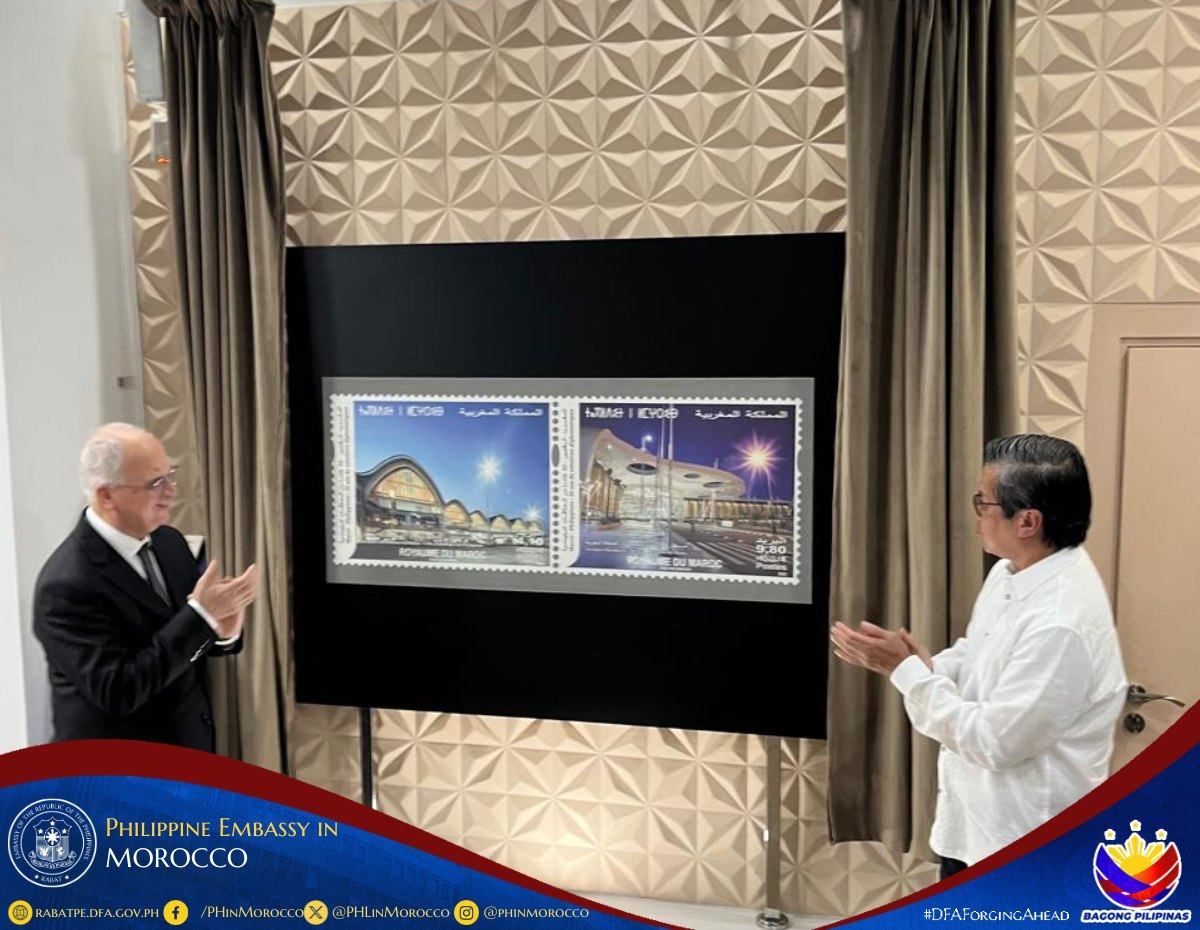
Commemorative Stamps for 50th anniversary of Philippine-Moroccan relations launched in Rabat (Photo: Philippine Embassy in Morocco/Facebook)
In an interview, Philippine Ambassador Leslie Baja called 2025 a milestone year as the two states celebrate five decades of friendship where cooperation in people-to-people, economic, and political fields are much closer and stronger.
“One can only hope that we can have a stronger and more strategic partnership in the next 50 years, I think we have done the spade work in the last five and we can use the last 50 years as foundation to build an even greater partnership between our two countries in the next 50 years,” Baja said.
Since reopening the Philippine Embassy in Rabat in 2020, the two countries have identified key areas for cooperation, including trade, labor, education, and cultural exchanges.
“Given our shared vision of peace and prosperity, one can only hope that these are what will bring our two countries closer than ever before,” Baja said.
On the economic space, Baja said he sees huge potential for greater trade and investment, especially as Morocco has free trade deals with the United States and the European Union.
“There is really a very good potential here. Morocco is one of those politically and economically stable countries in the North African region, and its economy is very modern. It’s very close to Europe, and it can be accessed very easily from any part of the world,” he said.
“So, it has the environment that would be conducive to greater trade and investment between our two countries, just like the Philippines is for Morocco.”
Trade between the two countries has tripled from USD17 million in 2017 to USD57 million in 2023.
On labor cooperation, a draft memorandum of understanding on employment and training is awaiting Morocco’s approval.
Though not intended for immediate worker deployment, it may open opportunities for Filipino professionals, including healthcare workers.
The Moroccan government has yet to specify which sectors it plans to focus on, but according to Baja, the Philippine Embassy has received interest from the Moroccan private sector, particularly in the healthcare field.
“I understand this is a long way to go, but that is one area that has been identified at least by the private sector. We were approached by a medical association here,” he said.
There are about 4,300 Filipinos in Morocco, the majority employed as household service workers, while a smaller number works as professionals.
Baja also noted that several bilateral agreements are being prepared for signing once both governments meet, including those related to energy, the environment, and sustainable development.
To commemorate the anniversary, both countries launched special stamps featuring the Marrakesh-Menara and Mactan-Cebu international airports, symbolizing the growth of their bilateral ties since 1975.