By Heather Whiteside, University of Waterloo; The Conversation
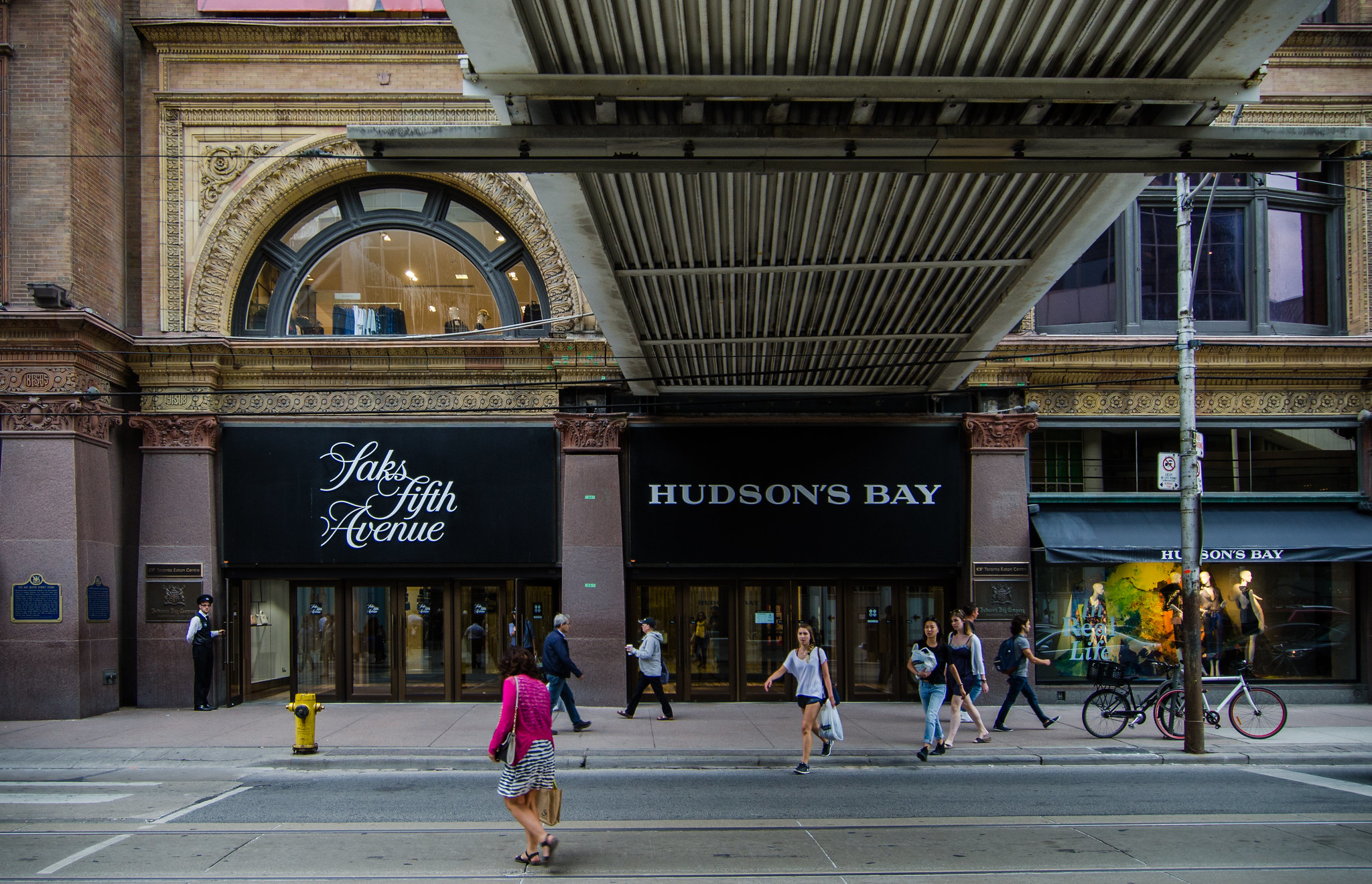
Hudson’s Bay kept roughly seven million acres after the sale, ensuring it would remain a significant force well into the 20th century. (File Photo: Jeff Hitchcock/Flickr, CC BY 2.0)
The bankruptcy of the Hudson’s Bay Company (HBC) is often framed as the fall of “Canada’s oldest company.” Media narratives typically treat HBC as if it were a straightforward retail firm, albeit one with an exceptionally long history.
But HBC was always more than a hinterland mercantile fur trader in earlier centuries, just as it was more than a department store anchoring downtown shopping in the 20th century.
Like the beaver it nearly wiped out, HBC made Canada into its home by fundamentally transforming its environment, and no bankruptcy court will liquidate that legacy. Still, that legacy is more complex than many might assume.
HBC and the making of Canada
HBC’s initials have sometimes been jokingly elaborated as “here before Christ.” But if we were to take a more secular tone, we might instead say it was “here before Canada,” initiating some of the country’s basic economic and political institutions.
In 1670, England’s King Charles II granted 18 investors the power to make laws, monopolize trade, enforce penalties and establish colonies in Rupert’s Land. Some four million square kilometres, this land grant centred on Hudson Bay but ranged from Labrador in the northeast to the Prairies in the southwest.
Along with establishing fur-trading posts populated by transient servants, the company created its own colonies. In 1811, HBC shareholder Thomas Douglas (Lord Selkirk) organized the first settlers in the Prairies at Red River, now Winnipeg. Forty years later, in 1851, HBC’s former chief factor James Douglas took charge of developing Victoria on Vancouver Island.
Of course, Indigenous Peoples were in these areas before long before Canada and long before HBC was. To secure its investments and protect its settlers, HBC representatives negotiated the first treaties with Indigenous Peoples west of the Great Lakes.
The 1817 Selkirk Treaty at Red River and the 14 Douglas Treaties on Vancouver Island in the 1850s are examples of HBC’s expansive role in settler colonialism. Overlooked for some time, the Douglas Treaties are now shaping jurisprudence.
Whereas the infamous HBC striped point blankets may be living room décor for some, for others they represented currency exchanged for long-ignored Indigenous land rights.
Likewise, transferring the six-storey, 94-year-old HBC department store in downtown Winnipeg to 34 First Nations in 2022 might be seen as a form of reconciliation. However, the company itself indicated “shifting consumer behaviour” was the reason for the handover.
Land and sovereignty
Beyond its treaties with Indigenous Peoples and support for settler farmers, HBC is further implicated in the formation of Canadian sovereign territory writ large.
If asked to name famous real estate transactions formative for state-making in North America, one might readily think of Louisiana or Alaska, but Canada, too, was created through purchase. HBC sold Rupert’s Land to the government of Canada for $1.5 million in 1869, forming a significant portion of what we now know as modern-day Canada.
Hudson’s Bay kept roughly seven million acres after the sale, ensuring it would remain a significant force well into the 20th century. Writing of its lands in the Success Belt in the Prairies, HBC argued:
“This land, with a cash payment, was retained as recompense for over 200 years of exploration, pioneering, and trading which the Company had done and without which Canada, as she is today, would not exist.”
Incremental HBC land sales over the coming decades were accompanied by catchy slogans like Victoria as “The Garden of Canada” or Edmonton as Canada’s “Farthest West.”
HBC pamphlets advertised wharves, orchards, gardens, houses, estates, seashore lots, residential subdivisions, hotels and businesses in coastal and interior British Columbia, Alberta, Saskatchewan, Manitoba and northern Ontario.
It wasn’t until the mid-20th century that the company parted with its remaining residential acreages in Winnipeg in 1954 and Victoria in 1961.
A legacy that outlasts a ledger
The timing of the HBC’s bankruptcy dovetails with renewed anxieties about American annexation as U.S. President Donald Trump repeatedly threatens to turn Canada into the 51st state.
Such annexation anxieties are nothing new for Canada.
In the 1850s, United Kingdom parliamentary support for the HBC monopoly was driven in part by a desire to counter American influence. One English MP warned in 1857 that if the HBC’s trade between the Red River colony and London were to end, “the whole of it would be transferred to the United States.”
Later, the Canadian federal government would use HBC to shore up its sovereignty claims in the High Arctic. In 1953 and 1955, more than 90 Inuit from northern Québec were forcefully relocated to the High Arctic. A government apology in February acknowledged the harm caused by the relocations, but the HBC’s decades-long role in instigating and organizing Inuit relocations was conspicuously omitted.
As Canadians look to protect the country from foreign threats, it helps to know how the country came to be in the first place. The long-running and multi-faceted role of the HBC is an integral part of Canada’s story; it has always been more than just a company.
Now saddled with $1 billion of debt, HBC’s demise seems inevitable. But its endurance beyond the original 1670 stockholders’ £4,720 investment speaks to its lasting impact. The HBC legacy will surely shape whatever’s next in store for Canada.
Heather Whiteside, Associate Professor of Political Science, University of Waterloo
This article is republished from The Conversation under a Creative Commons license. Read the original article.