By Felix Arndt, University of Guelph, Barak Aharonson, University of Guelph; The Conversation
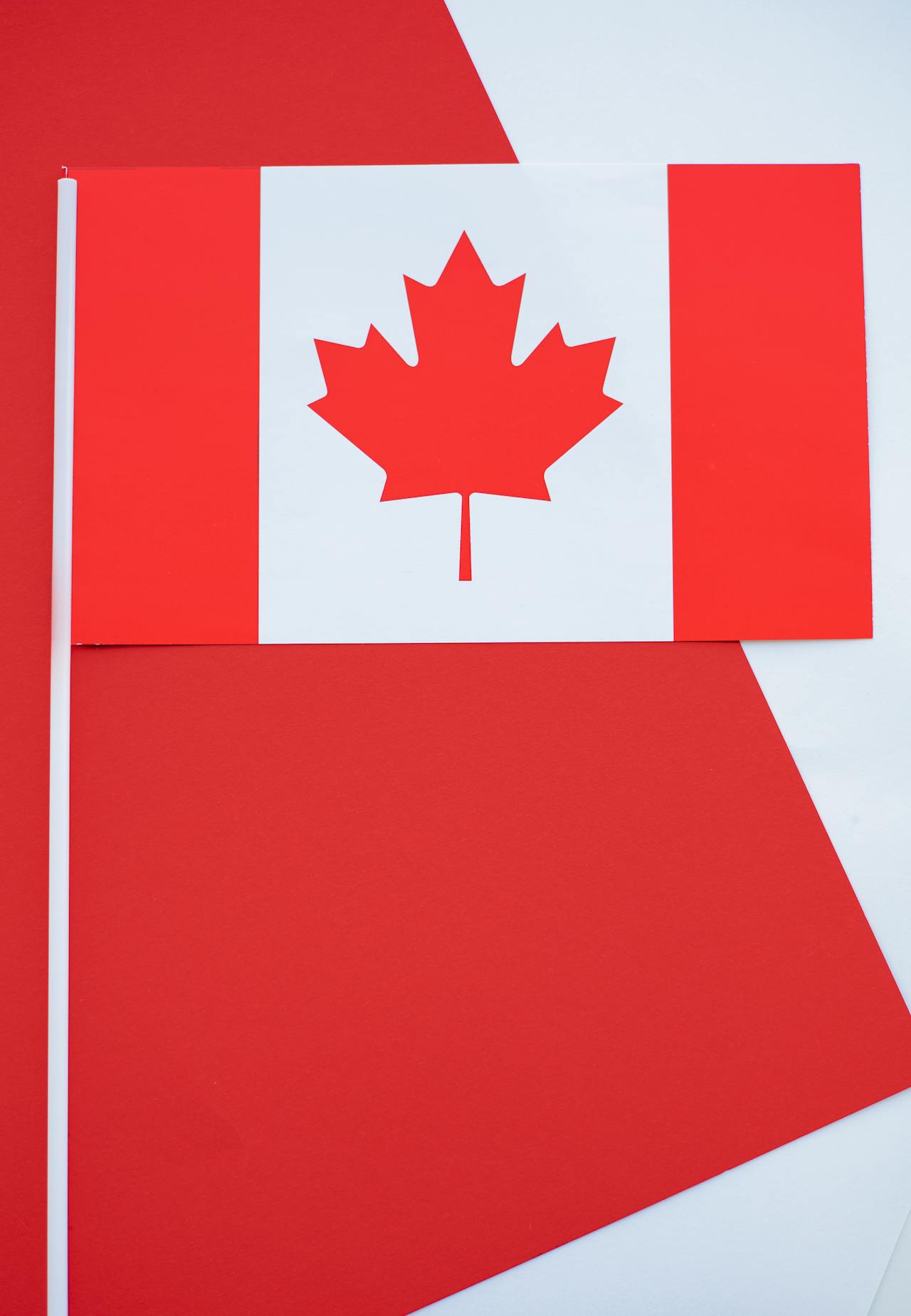
The idea of the U.S. merging with Canada outright has not been received well in Canada, especially because Trump’s threats have been accompanied by economic warfare aimed at forcing Canada into submission. (Pexels Photo)
When United States President Donald Trump first floated the idea of annexing Canada, many observers rolled their eyes. The common assumption was that this proposal, like much of Trump’s bombast, amounted to little more than a fleeting soundbite.
Yet, amid continuing public remarks about Canada becoming the 51st state and suggestions of genuine intent, the idea has become part of a broader conversation about North America’s future.
The idea of the U.S. merging with Canada outright has not been received well in Canada, especially because Trump’s threats have been accompanied by economic warfare aimed at forcing Canada into submission. After all, the U.S. already has 50 states. Canada, with its population of about 40 million and its immense geographic size, would be an outsized “51st” by any comparison.
But any serious analysis of this proposition quickly reveals that annexation would be far more complicated — and far less one-sided — than the label “51st state.”
Our analysis is premised on an assumption that the U.S. remains a democratic system that has not turned into a pseudo-monarchy, in keeping with a Trump social media post in early February proclaiming “long live the King.”
The most important takeaway from our analysis is that a unified country would need to inaugurate a new president and Parliament. The path towards the integration of the countries would have to start with closer economic integration, not the alienation currently in place.
A multi-state reality
As we argue in our newest self-published book Make America Greater? A Scenario of a Friendly Canada-U.S. Merger, Canada would not simply become part of the U.S. as a single state under the provisions of the American Constitution.
Based on population and the distribution of power in U.S. Congress, Canada’s 10 provinces and three northern territories would almost certainly be carved into multiple states, perhaps nine or more.
This is no small detail.
America’s unique electoral arithmetic grants each state two senators, while seats in the House of Representatives depend on population size. With around 40 million new citizens, a unified North America would reshape the balance of power in both the Senate and the House.
Critically, the new country formed via unification might end up looking far more like Canada than many Americans imagine.
Why? Canadian voters lean more centrist — or even centre-left — than the average American does. Over time, that could tilt congressional priorities in favour of policies reflecting Canada’s taste for universal health care, stricter gun control and robust social welfare.
The longstanding political tug-of-war in the U.S. could see its centre of gravity shift, likely to the chagrin of some more conservative segments of the existing union.
Tariffs, politics and tensions
Officials on both sides of the border are already locked in a dance of retaliatory tariffs.
Each new measure escalates anxieties, threatening to derail one of the world’s largest bilateral trading relationships.
Some might argue that if tariffs are putting negative pressures on the economy and roiling the markets, perhaps deeper integration — or even full-blown unification — could serve as a release valve. But the path towards a friendly merger is best taken step-by-step and starts with stronger economic integration, not alienation.
Forging a genuine union goes well beyond removing trade barriers. Canada and the U.S. differ on far more than just economics: from bilingualism laws to gun regulations, from health care to environmental policy, the two countries embody contrasting visions of how society should function.
Canadians would expect to preserve elements of their social contract that many regard as superior to American norms — particularly their single-payer health-care system and comparatively strict firearms restrictions.
A process genuinely aimed at integrating the two countries would take this into account. It would extend the United States-Mexico-Canada trade deal further to strengthen economic integration, elevate the rights of French and Spanish speakers in the U.S. in order to signal compatible cultural values and extend Medicare to show an appreciation of the common denominators of the two societies.
Trump’s current rhetoric, however, does not seem to indicate a genuine desire for a unification.
Why a merger could favour Canada
As surprising as it seems, our analysis suggests that a unified North America could lean Canada’s way over time.
Even if the American Electoral College were reimagined — or scrapped — Canadian provinces transformed into states would wield significant power, influencing everything from budget allocations to Supreme Court appointments.
What’s more, cultural convergence has an asymmetrical pull. Younger Americans show a growing appetite for social safety nets, while Canadians remain broadly wedded to their publicly funded health-care model.
Over a few election cycles, these forces could converge into a more expansive welfare regime, something that would astonish traditional conservatives across the current 50 states.
A combined North America would boast one of the largest economies on Earth, including abundant natural resources and technological innovation.
The promise of frictionless trade, a single currency and vast internal markets might delight big business and certain multinational interests. Yet the path would be fraught.
Constitutional arrangements, Indigenous rights, linguistic protections and environmental regulations — all areas in which Canadian norms diverge significantly from American precedents — would have to be reconciled.
Canadians, proud of their universal healthcare, progressive climate policies and lower rates of gun violence, would worry about being subsumed by a more rambunctious, militarized neighbour. Americans, meanwhile, would fear they would be forced to adopt new taxes and policies at odds with their historic emphasis on individual freedoms.
A country more closely resembling Canada
Regardless of whether Trump’s annexation talk proves more than just bluster, the notion of a friendly U.S.–Canada merger invites reflection. It reminds us that North America’s two largest nations remain economically interlocked and geographically co-located, though culturally distinct.
With tariffs in place and cross-border tensions mounting, creative solutions are worth examining, even if a merger can — at best — be seen as a long-term vision.
A genuine offer of a merger would require that Canadians to be assured that if such a union did transpire, their voices might echo far more loudly than expected in the halls of Washington, D.C.
And Americans — facing shifting demographics and changing societal values — may discover that the annexation Trump initiated could bring surprises that tilt the new country much closer to its northern neighbour’s ideals than to the status quo below the 49th parallel.
Felix Arndt, Professor and John F. Wood Chair in Entrepreneurship, University of Guelph and Barak Aharonson, Professor, Chair of Innovation Management, University of Guelph
This article is republished from The Conversation under a Creative Commons license. Read the original article.