Business and Economy
Hudson’s Bay Company nearly $1B in debt, with court filings painting dire financial portrait

By Jenna Benchetrit, CBC News, RCI
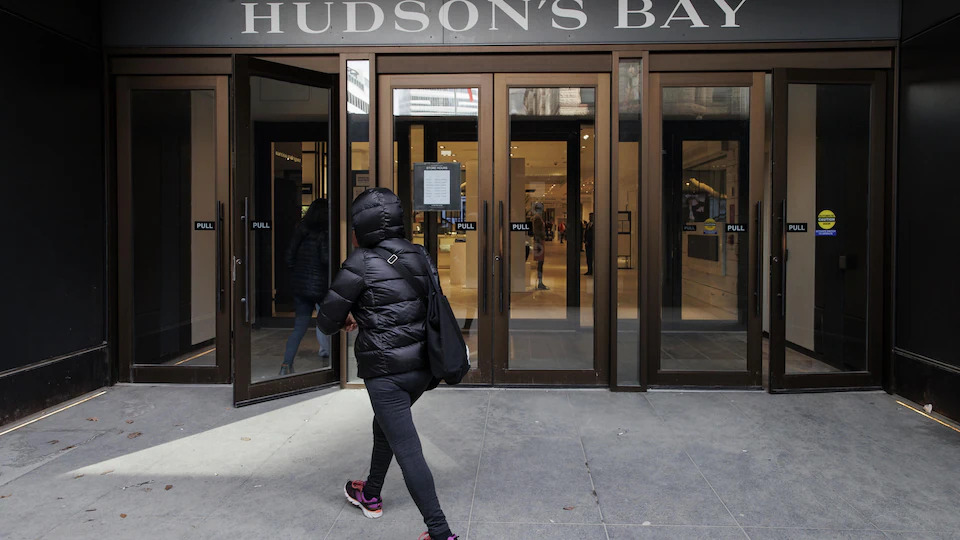
Outside Hudson’s Bay department store in Toronto. Canada’s oldest company filed for creditor protection as the company undergoes restructuring. Photo: Radio-Canada / Evan Mitsui
Company owes $950M to creditors including Estée Lauder, Nike Canada, Ralph Lauren
Hudson’s Bay Company is nearly a billion dollars in debt, according to court filings that paint a dire portrait of the struggling Canadian department store chain’s finances.
The documents were submitted as part of its creditor protection filing last week. The company owes a total of $950 million to nearly 2,000 secured and unsecured creditors, including well-known apparel and beauty brands like Adidas Canada, Estée Lauder, L’Oréal Canada, Levi Strauss Canada, Michael Kors Canada, Nike Canada and Ralph Lauren.
The company also owes more than $1 million to Canada Post, and is in debt to over a dozen municipalities. The list doesn’t include debts owed to government agencies, a figure that the filing says is unknown at this time. The amount owed to employees is to be determined, per the filing.
At the beginning of the year, Hudson’s Bay had just $3 million in cash and cash equivalents, the documents show. The secured debt it owes includes $724.4 million in mortgages.
The Bay announced last week that it was seeking creditor protection, with its chief executive pointing to the COVID-19 pandemic and an ongoing trade war with the U.S. as external factors that have put financial pressure on the company.
Experts say that Hudson’s Bay had been in decline long before then, some tracing its issues back to its 2008 acquisition by the American investment firm NRDC Equity Partners, and saying that the company’s new ownership prioritized its real estate over a cohesive retail strategy.
The company’s lack of investment in its stores became evident in recent years, with floors understaffed, escalators and elevators in disrepair and faulty HVAC systems leading to temporary closures last summer.
This article is republished from RCI.