Canada News
Mark Carney’s Political Ascension: A New Era for Canada

PCI
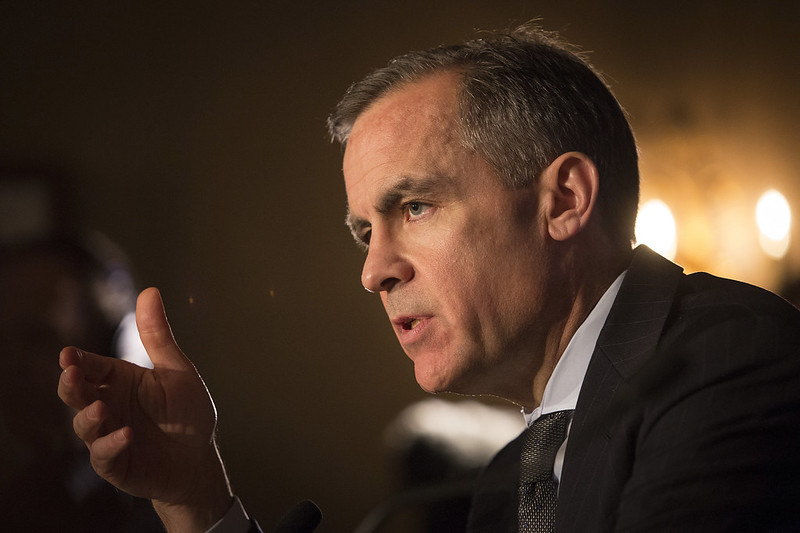
FILE: Mark Carney, Governor at the Scottish Council for Development & Industry, Edinburgh (Photo: Bank of England/Flickr, CC BY-ND 2.0)
Mark Carney, a former central banker, is now the leader of Canada’s ruling Liberal Party. This change could lead to significant shifts in Canadian politics. Carney received 86% of the votes in a party election with nearly 152,000 members participating. He is set to replace Justin Trudeau as prime minister during political and economic uncertainty.
Carney’s rise is unusual. A 59-year-old man with no political experience is ready to lead the country. He has a strong background in banking and has served as the governor of both banks, the Bank of Canada and the Bank of England. This experience has built his reputation as an economic strategist who can handle global financial challenges. He believes his experience makes him the right person to lead Canada through its current economic problems. These problems include a growing trade dispute with the United States under President Donald Trump’s government.
While the Liberal Party’s internal battle unfolded, the political backdrop in Canada has been marked by rising tensions with the U.S., with Trump’s aggressive trade policies impacting Canadian industries. Carney has been vocal in his criticisms of Trump and has positioned himself as the staunch defender of Canadian economic interests. He has said he will keep tariffs on U.S. goods until Canada gets the respect it deserves. He is taking this strong stand because the U.S. has imposed tariffs on Canadian exports, hurting Canada’s export-driven economy.
This bold positioning has not only bolstered Carney’s standing within the Liberal Party but also resonated with the Canadian public. Trump’s repeated comments, including ideas about making Canada the 51st state, have stirred up national pride and unexpectedly boosted the Liberal Party’s support. Just a year ago, the Liberals were trailing significantly in the polls, but as 2025 progresses, their numbers have surged, putting them neck-and-neck with the Conservative Party, now led by Pierre Poilievre.
Political analysts say the recent shift in public opinion is due to people coming together during a crisis. This often happens when the country faces challenges or threats. Richard Johnston, a politics professor at the University of British Columbia, pointed out that many Canadians, especially those unhappy with Trudeau’s leadership, feel a new hope with Carney taking charge. For them, Carney offers a new, transparent way forward that focuses on economic strength and national unity in facing outside challenges.
Carney’s promise of a “new way forward” is a clear break from the current situation, which many see as ineffective in addressing U.S. trade issues and domestic needs. His approach moves away from traditional politics. Carney understands that we need significant changes and faster action. He has gained support from Canadians who were unsure about his leadership because he is open to new ideas. However, he still faces many challenges. Even though Carney is becoming more popular, polls show that neither the Liberal nor Conservative parties will likely win a majority in the upcoming federal election. The deadline is October 20. A hung parliament can occur, meaning parties must collaborate and compromise to pass laws. Carney’s lack of political experience can be a plus and a minus. His quick rise to the Liberal leadership shows the ongoing instability in Canadian politics. This instability comes from frustrations at home and uncertainty in international relations. His leadership marks a new phase for the Liberal Party. He knows much about the economy and uses practical diplomacy to show national pride. He deals with trade conflicts, campaign efforts, and changing public opinions.
Carney will likely call for an early election in the coming weeks. This could help him strengthen his political power at a critical time in Canada’s history. Whether he can bridge the divides between political factions, restore confidence in Canada’s future, and successfully confront the U.S. trade conflict will define his tenure—and perhaps the future trajectory of Canadian politics.