By Spyros A. Sofos, Simon Fraser University, The Conversation
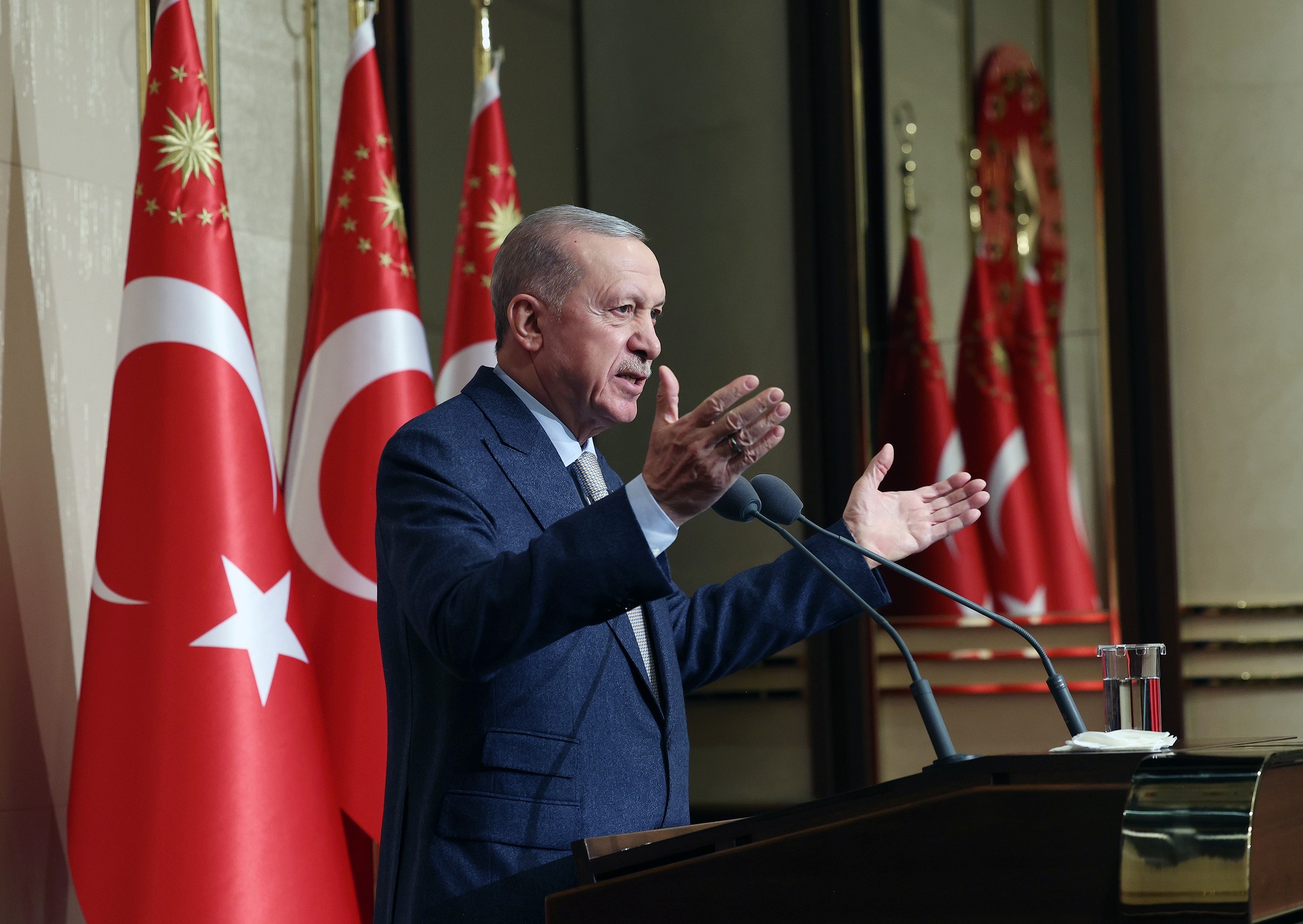
Erdoğan’s speech suggested not only a willingness to re-engage with Kurds but also the possibility of a broader political compromise. (File Photo: Recep Tayyip Erdoğan/Facebook)
Though seemingly unexpected, this call for peace — made a few weeks before Nowruz, the Kurdish New Year, on March 20 — followed months of negotiations between Turkey’s ruling coalition made up of President Recep Tayyip Erdoğan’s Justice and Development Party (AKP), Devlet Bahçeli’s Nationalist Action Party (MHP) and Kurdish officials.
In a political landscape long shaped by conflict, Erdoğan’s recent overtures to Kurdish political forces mark a striking shift. In his speech during his party’s congress in Trabzon earlier this year, Erdoğan emphasized the unity and shared history among Turks and Kurds — the latter of whom have long been victims of imperialist designs of dividing the region and have been a mainstay of his populist rhetoric.
Change of course on the Kurds
Erdoğan’s speech suggested not only a willingness to re-engage with Kurds but also the possibility of a broader political compromise.
In October 2024, Erdoğan ally and MHP leader Bahçeli, in a move carefully choreographed with the Turkish president’s change of course, opened the way to such a rapprochement by inviting Öcalan to parliament. Bahçeli also proposed Öcalan’s release in exchange for a ceasefire.
This is not Erdoğan’s first attempt to resolve the Kurdish issue. In 2009, he launched the “Kurdish Opening,” aimed at ending the conflict through dialogue. Similar initiatives followed in 2008–11 and 2013–15.
But all initiatives ultimately collapsed due to political disagreements, shifting alliances and Erdoğan’s increasingly authoritarian approach to governance.
This latest initiative follows the same transactional logic that marked the earlier processes. Erdoğan’s renewed interest in engaging with the Kurds appears driven less by a desire for peace-making and more by political necessity.
Domestically, Erdoğan’s AKP has grown increasingly reliant on its alliance with ultra-nationalist MHP. While this partnership secured his 2023 re-election as president, its fragility became evident in the country’s 2024 local elections, when opposition candidates won key mayoral races throughout the country. They were aided by the tacit support of the pro-Kurdish Peoples’ Equality and Democracy Party (DEM.)
Destabilizing the opposition
The process that led to Öcalan’s statement from prison is quite likely to bring significant realignments to Turkish politics.
By engaging with the broader Kurdish movement, Erdoğan seeks to destabilize the fragile and fractured opposition coalition, whose unity hinged on their shared opposition to him. Their continued relevance also depends on the tacit support of DEM and its Kurdish voters.
By opening a new dialogue, Erdoğan may tip the balance in his favour by positioning DEM as a privileged negotiating partner. Drawing Kurdish political support away from the opposition and securing Kurdish backing for constitutional reforms would allow him to seek another presidential term.
With 57 parliamentary seats, DEM holds significant sway and can make all the difference if Erdoğan initiates a constitutional amendment process.
Regional and strategic implications
Erdoğan’s overtures also carry significant regional implications. Turkey’s military operations in Syria and Iraq have strained relations with Kurdish factions across the region.
At the same time, Turkey has strengthened ties with Iraq’s Kurdistan Regional Government, highlighting Erdoğan’s pragmatism when dealing with Kurdish entities.
By addressing the Kurdish issue domestically, Erdoğan could strengthen his hand regionally, perhaps replicating his co-operation with Iraq in relations with the Democratic Union Party in Northern Syria, positioning Turkey as a stabilizing force in both Iraq and Syria.
What comes next?
Despite Erdoğan’s conciliatory tone, the future of this peace process remains highly uncertain. Previous negotiations unravelled due to unresolved questions about Kurdish political autonomy, cultural rights and power-sharing.
The AKP’s emphasis on disarmament without addressing broader Kurdish political demands resulted in the eventual breakdown of dialogue.
Internal divisions within Kurdish political forces also complicate the process. While Öcalan’s influence remains strong, some Kurdish factions may resist concessions without meaningful political guarantees. And despite Bahçeli’s recent statements, Erdoğan’s MHP allies remain deeply skeptical of any reconciliation efforts.
As Nowruz approaches, Erdoğan’s engagement with Kurdish political forces could culminate in a new phase of dialogue — or serve as a strategic manoeuvre to consolidate power ahead of the next election cycle.
Whether his shift leads to genuine reconciliation or remains a political gambit will depend on Erdoğan’s willingness to address Kurdish demands for autonomy and cultural recognition.
If the past is any indicator, pro-Kurdish parties and civil society organizations currently engaged in negotiations may once again be discarded if they no longer serve Erdoğan’s interests. For now, the Kurdish question remains one of the most critical — and volatile — fault lines in Turkish politics.
Whether lasting peace is on the horizon, or another cycle of repression and conflict, will depend on how any potential peace process unfolds in the coming months.
Spyros A. Sofos, Assistant Professor in Global Humanities, Simon Fraser University
This article is republished from The Conversation under a Creative Commons license. Read the original article.