By Brittany Friedman, University of Southern California; Raquel Delerme, University of Southern California; The Conversation
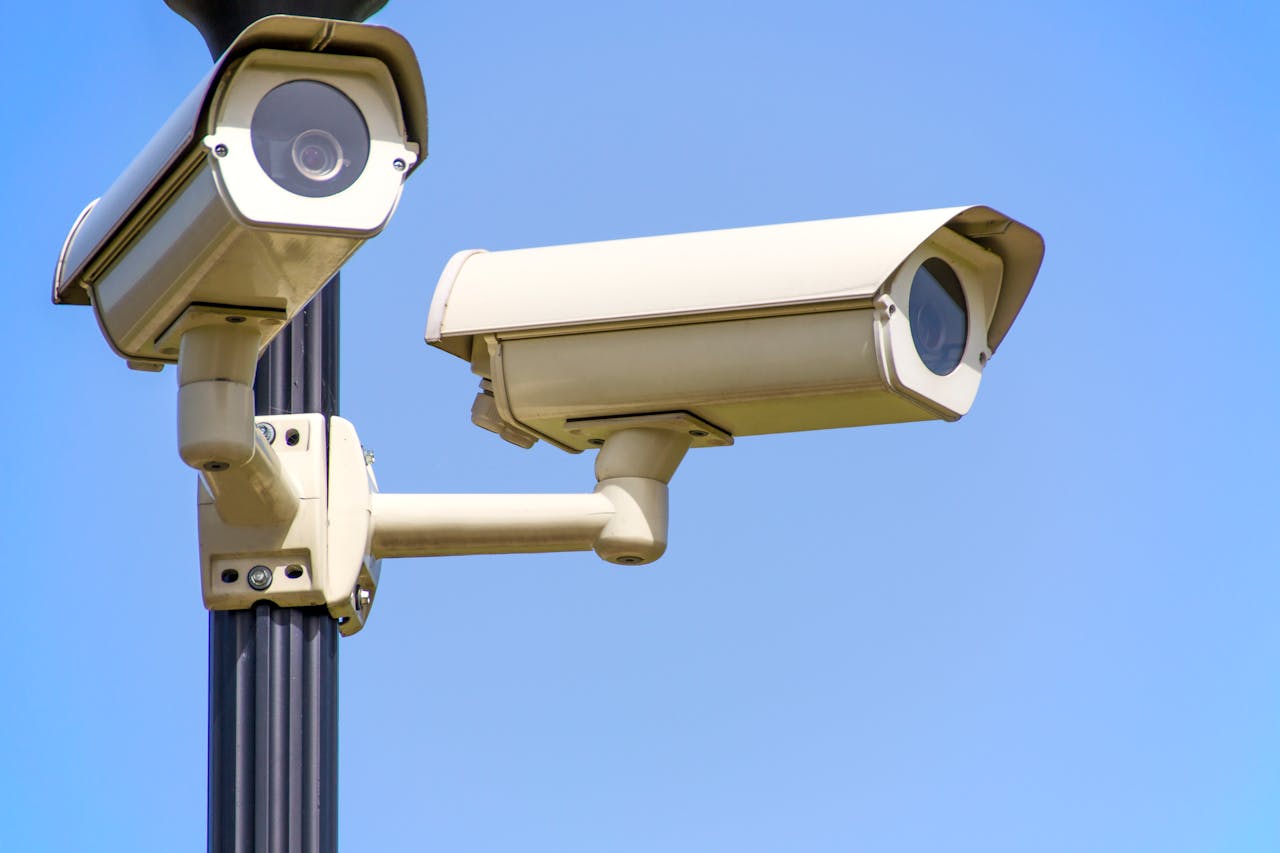
Trump is already actively deploying a key tactic in expanding mass surveillance: causing moral panics. (Pexels Photo)
President Donald Trump has vowed to target his political enemies, and experts have warned that he could weaponize U.S. intelligence agencies to conduct mass surveillance on his targets.
Mass surveillance is the widespread monitoring of civilians. Governments typically target specific groups – such as religious minorities, certain races or ethnicities, or migrants – for surveillance and use the information gathered to “contain” these populations, for example by arresting and imprisoning people.
We are experts in social control, or how governments coerce compliance, and we specialize in surveillance. Based on our expertise and years of research, we expect Trump’s second White House term may usher in a wave of spying against people of color and immigrants.
Spreading moral panic
Trump is already actively deploying a key tactic in expanding mass surveillance: causing moral panics. Moral panics are created when politicians exaggerate a public concern to manipulate real fears people may have.
Take Trump on crime, for example. Despite FBI data showing that crime has been dropping across the U.S. for decades, Trump has repeatedly claimed that “crime is out of control.” Stoking fear makes people more likely to back harsh measures purportedly targeting crime.
Trump has also worked to create a moral panic about immigration.
He has said, for example, that “illegal” migrants are taking American jobs. In truth, only 5% of the 30 million immigrants in the workforce as of 2022 were unauthorized to work. And in his Jan. 25, 2025, presidential proclamation on immigration, Trump likened immigration at the southern border to an “invasion,” evoking the language of war to describe a population that includes many asylum-seeking women and children.
The second step in causing moral panics is to label racial, ethnic and religious minorities as villains to justify expanding mass surveillance.
Building on his rhetoric about crime and immigration, Trump frequently connects the two issues. He has said that migrants murder because they have “bad genes,” echoing beliefs expressed by white supremacists. During the 2016 campaign, Trump’s coinage “bad hombre” invoked stereotypes of dangerous migrants crossing the U.S.-Mexico border to steal jobs and sell drugs.
The president has similarly connected Black communities with crime. At an August 2024 rally in Atlanta, Georgia, Trump called the majority-Black city “a killing field.” The month prior, he said the same thing about Washington, D.C.
Primary targets
History shows that in the U.S. moral panics are most likely to target Latino, Indigenous and Black communities as a precursor to surveillance and subjugation.
In the 18th century, Colonial politicians passed legislation likening the Indigenous people of the American colonies to “savages” and passed laws identifying Indigenous tribes as political enemies to be assimilated. If “killing the Indian” out of people didn’t work, they were to be tracked down and removed from the population through imprisonment or death.
Another early form of moral panics escalating to spying and mass surveillance were southern slave patrols, which emerged in the early 1700s after pro-slavery politicians proclaimed that Black escapees would terrorize white communities. Slave patrols tracked down and captured not only Black escapees but also free Black people, whom they sold into bondage. They also imprisoned any person, enslaved or not, suspected of sheltering escapees.
Once a group of people becomes the subject of moral panics and targeted for government surveillance, our research shows, the effects are felt for generations.
Black and Indigenous communities are still arrested and incarcerated at disproportionately high rates compared with their percentage in the U.S. population. This even affects children, with Indigenous girls imprisoned at four times the rate of white girls, and Black girls at more than twice the rate of white girls.
Low-tech methods
These 21st-century numbers reflect decades of targeted surveillance.
In the 1950s, the FBI under Director J. Edgar Hoover created the counter-intelligence programs COINTELPRO, allegedly for investigating communists and radical political groups, and the Ghetto Informant Program. In practice, both programs broadly targeted people of color. From Martin Luther King Jr. to U.S. Rep. John Lewis, Black activists were identified as a threat, spied on, investigated and sometimes jailed.
President Lyndon Johnson’s “war on crime,” a sweeping set of federal changes that militarized local police in urban communities, continued this mass surveillance in the 1960s. Later came the “war on drugs,” which an aide to President Richard Nixon later said was designed explicitly to target Black people.
In subsequent decades, politicians would stir up new moral panics about Black communities – remember the “crack babies” who never really existed? – and use fear to justify police surveillance, arrests and mass incarceration.
These early examples of mass surveillance lacked the technology that enables spying today, such as CCTV and hacked laptop cameras. Nonetheless, past U.S. administrations have been remarkably effective at achieving social control by creating moral panics then deploying mass surveillance to contain the “threat.” They enlisted droves of police officers, recruited informants to infiltrate groups and locked people away.
These textbook surveillance methods are still routinely used now.
Police fusion centers
For many Americans, the term “mass surveillance” evokes the Department of Homeland Security, which was founded after the 9/11 terrorist attacks. This national agency, which forms part of a federal intelligence apparatus of more than 20 agencies focused on surveillance, has played a key role in mass surveillance since 2001, especially of Muslim Americans.
But it has local help in the form of police units known as fusion centers. These units feed identification information and physical evidence such as video footage to federal agencies such as the FBI and CIA, according to a 2023 whistleblower report from Rutgers Law School.
The New Jersey Regional Operations Intelligence Center, for example, is a police fusion center overseeing New York, New Jersey and Connecticut. It employs advanced military technology to gather massive amounts of personal data on people perceived as potential security threats. According to the Rutgers report, these “threats” are highly concentrated in Black, Latino and Arab communities, as well as areas with a high concentration of political organizing, such as Black Lives Matter groups and immigrant aid organizations.
The New Jersey police fusion approach leads to increased arrest rates, according to the report, but there’s no real evidence that it prevents crime or terrorism.
Guantanamo and black sites
Given Trump’s pledges to further militarize border enforcement and expand U.S. jails and prisons, we anticipate a rise in spending on fusion centers and other tools of mass surveillance under Trump. The moral panics he’s been stirring up since 2015 suggest that the targets of government surveillance will include immigrants and Black people.
Sometimes, victims of mass surveillance go missing.
The Guardian reported in 2015 that Chicago police had been temporarily “disappearing” people at local and federal police “black sites” since at least 2009. At these clandestine jails, under the guise of national security, officers questioned detainees without attorneys and held them for up to 24 hours without any outside contact. Many of the victims were Black.
Another infamous black site was housed at the Guantanamo Bay military base in Cuba, where the CIA detained and secretly interrogated suspected terrorists following the Sept. 11 terrorist attacks.
Trump seems to be reviving the Guantanamo black site, flying about 150 Venezuelan migrants to the base since January 2025. It’s unclear whether the U.S. government can lawfully detain migrants there abroad, yet deportation flights continue.
The administration has not shared the identities of many of the people imprisoned there.
Brittany Friedman, Assistant Professor of Sociology at the USC Dornsife College of Letters, Arts and Sciences, University of Southern California and Raquel Delerme, PhD candidate, Department of Sociology, University of Southern California
This article is republished from The Conversation under a Creative Commons license. Read the original article.