
Business and Economy
Can Canada just build its own cars? Experts say no — here’s why, and what we could do instead

By Heather Kitching, CBC News, RCI
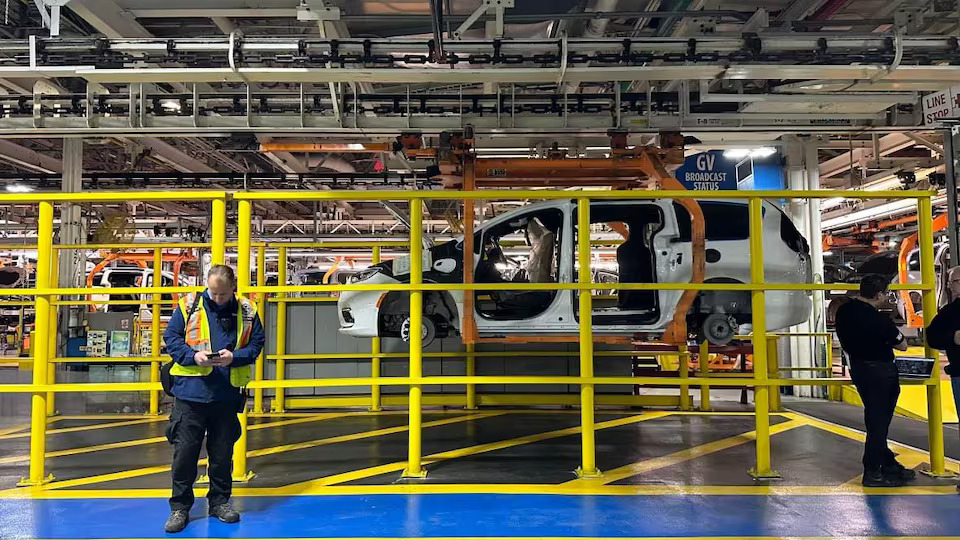
The Windsor Assembly Plant is gearing up to soon start assembling electric vehicles, though a specific vehicle has yet to be announced by the company. Photo: (Katerina Georgieva/CBC)
One industry expert says he tried to design a Canadian-made car but manufacturers weren’t interested
U.S. President Donald Trump’s threats of tariffs on Canadian products and his imposition of tariffs on imported steel and aluminum have triggered alarm in the Canadian auto sector, with experts warning of possible work stoppages and supply chain disruptions.
But experts say building cars in Canada for the Canadian market isn’t the answer — instead, Canada could look outside the north-south
corridor in the face of tariffs.
Canada has a strong and thriving manufacturing sector with five global auto manufacturers, said Brian Kingston, the president and CEO of the Canadian Vehicle Manufacturers Association.
But the whole industry has been designed around this north-south integration,
he said.
If we are entering an era of highly protected domestic markets … that is highly inefficient. It’s extremely costly to do because Canada is a relatively small market.
Canadians purchase under two million vehicles each year – about the same number the country assembles, he said.
But the cars assembled in Canada are largely destined for the U.S. market.
Trump wants Canadian-assembled vehicles made in Detroit
Trump has expressed his disdain for those exports, saying he’d rather build the cars in Detroit.
The U.S. president has three times since his Jan. 20 inauguration threatened tariffs that would affect the North American auto industry.
He first promised 25 per cent tariffs on all Canadian goods and a 10 per cent tariff on energy, all of which have been suspended for 30 days while Canada seeks to address U.S. concerns about border security.
Then on Monday, Trump told a Fox News reporter that he would levy a tariff of up to 100 per cent on Canadian-made automobiles, if [the U.S. doesn’t] make a deal with Canada.
That same day, he announced a 25 per cent tariff on imported steel and aluminum to take effect March 12.
But the auto industry has become so integrated over the past 60 years as a result of successive free trade agreements that car components travel across the Canada-U.S. border multiple times before a final vehicle rolls off the assembly line, said Dimitry Anastakis (new window), a professor in the Rotman School of Management at the University of Toronto.
Tariffs preventing the free flow of parts between Canada and the U.S. could lead to work stoppages due to cross-border supply chain disruptions, Kingston has said (new window).
However, building vehicles for the Canadian market in Canada is a cute idea
but not a sustainable alternative, according to a mechanical and automotive engineering professor at the University of Windsor.
Peter Frise was part of a team that tried to design a Canadian car and said they couldn’t get industry to touch it.
Australia unable to sustain domestic auto industry, expert says
It was absolutely out of the question,
said Frise, who founded the National Automotive Research Network in 2000.
As soon as we talked to industry about it, they started slamming the door as hard as they could on that. … They said that is absolutely impossible. We would never do that. We don’t even want to talk about it. …We could never afford to do that.
For example, Australia tried for many years to compete in the auto sector, said Dennis Darby, the president and CEO of Canadian Manufacturers and Exporters.
This article is republished from RCI.




















