News
CWC seeks stronger drive vs. child abuse despite drop in cases

By Marita Moaje, Philippine News Agency
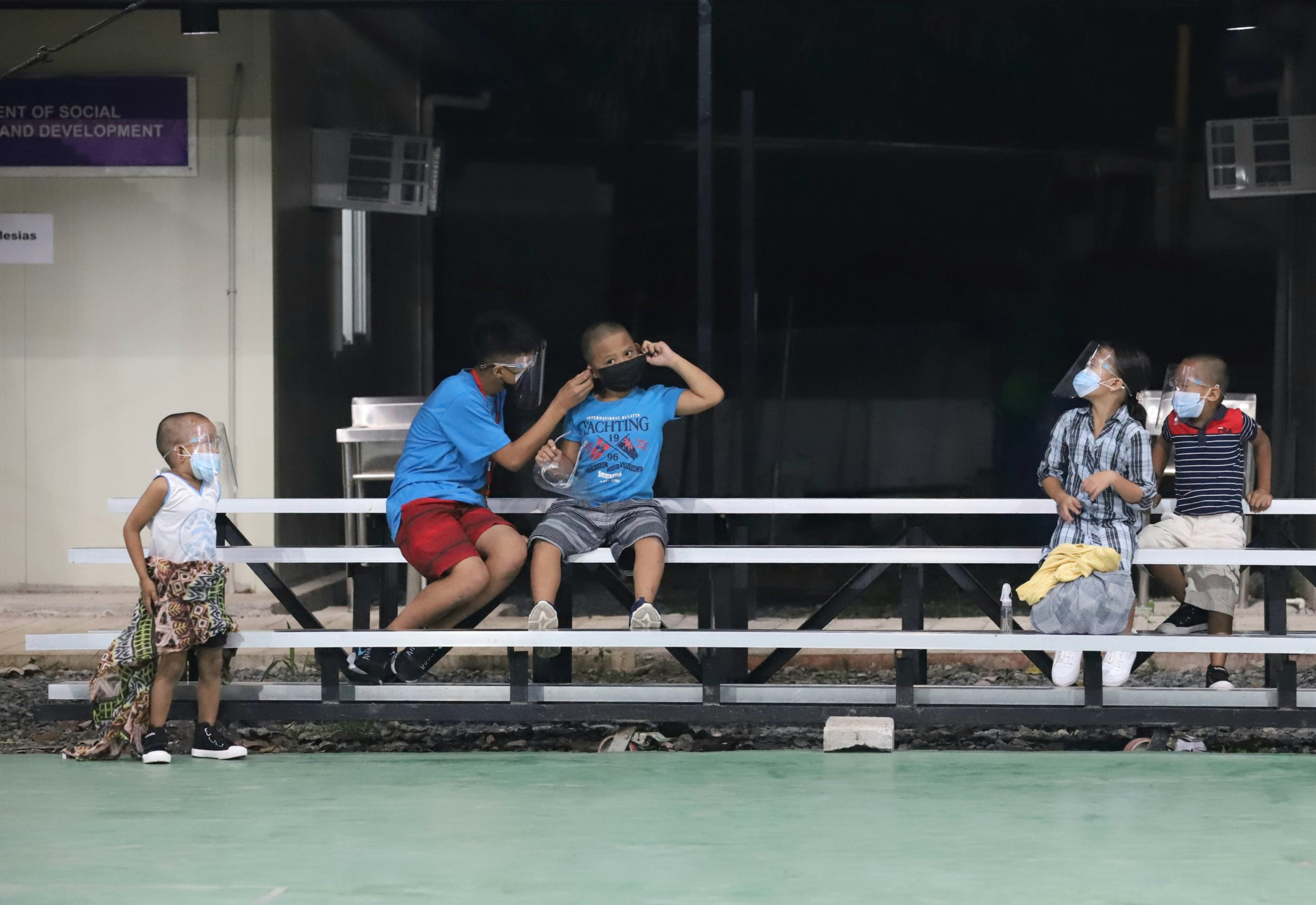
FILE: Balik Probinsya beneficiaries’ children play as they wait for their parents to process some documents for their send-off at Multi-purpose court 1, BP2 depot, Quezon City on Thursday night (July 1, 2021). (PNA photo by Robert Oswald P. Alfiler)
MANILA – The Council for the Welfare of Children (CWC) has underscored the urgent need for stronger child protection measures despite a slight drop in reported cases of child abuse.
In a media briefing at the Philippine Information Agency (PIA) on Friday, CWC Undersecretary Angelo Tapales said the fight against child abuse should take a whole-of-government and whole-of-society approach through strong cooperation between government agencies and private stakeholders.
Tapales said data from the Philippine National Police Women and Children Protection Center (PNP-WCPC) showed that a total of 18,089 cases of child rights violations were reported in 2024 –slightly lower than 18,756 cases recorded in 2023.
He, however, said there is “nothing to be happy about” as the number of cases remain high.
“Top three child rights violations po kasi is child abuse, rape and acts of lasciviousness, or sexual abuse ng mga bata. So talagang nakakarimarim po yan. Kunyari po, for 2024, out of the 18,089 reported cases, 17,077 ay violation ng RA (Republic Act) 7610 or yung child abuse law natin, yung anti-rape law natin (of children. So that’s really disgusting. For example for 2024, out of the 18,089 reported cases, 17,077 are violations of RA 7610 or our child abuse law, our anti-rape law), acts of lasciviousness under the Revised Penal Code,” he said.
Tapales said these figures do not include cases handled by other law enforcement agencies, such as the Department of Justice (DOJ), the National Bureau of Investigation (NBI), local government units, or barangay offices.
Tapales said part of the government’s intensified efforts to combat child abuse is Executive Order 79, signed in December 2024, which institutionalized the Mahalin at Kalingain ang Mga Bata (Makabata) Program and the Makabata Helpline 1383 as the central reporting mechanism for child protection issues.
Moreover, local government units (LGUs) will now be required to implement ordinances against OSAEC and train personnel to handle such cases.
“Ang gusto lang pong gawin ng executive order na ito ay i-harmonize lahat ng ginagawa ng pamahalaan para tumugon at tumulong sa children in need of special protection (This EO seeks to harmonize all government efforts pertaining to children in need of special protection),” he said.
“Starting 2025, LGUs must have clear referral mechanisms to ensure that no case of child abuse —whether online or offline— is ignored, silenced, or settled outside the justice system.”
Tapales said the CWC is currently working with the Department of Social Welfare and Development (DSWD) for the drafting of the implementing guidelines.
He said implementing agencies would include the LGUs up to barangay levels.
Online exploitation on the rise
The CWC said that while physical abuse cases showed a slight decline, the alarming prevalence of online child abuse and exploitation remain a pressing issue.
Tapales said that in 2023, the DOJ received about 2.72 million cyber tipline reports from the National Center for Missing and Exploited Children (NCMEC), up from 2.54 million in 2022.
“Ang mga cyber tipline po ay hindi naman actual kaso kaagad ng online sexual abuse o OSAEC, yan po ay mga leads na pwede pong tuntunin, imbestigahan at talagang i-prosecute eventually, yan po ay mga child sexual abuse or exploitation materials na talagang tinutugis ng ating pamahalaan (The cyber-tiplines are not actual cases of online sexual abuse or OSAEC, those are leads that can be ruled out, investigated and actually prosecuted eventually, those are child sexual abuse or exploitation materials that our government is really pursuing),” he said.
Meanwhile, Tapales said the Anti-Money Laundering Council (AMLC) has also flagged a worrying trend in the volume of suspicious transactions linked to OSAEC, which has increased from 68,000 to 92,000 between 2021 and 2022.
The CWC said this indicates an oversupply of exploitative content, making such materials cheaper and more accessible.
He also said that in many cases, the perpetrators of abuse are the parents themselves or close relatives.
He said DOJ data revealed that 42 percent of OSAEC cases were facilitated by parents, while another 41 percent involved close relatives.