By Hassan Wafai, Royal Roads University; Juan Navarro, Royal Roads University; Kimberly Tholl, Royal Roads University; The Conversation
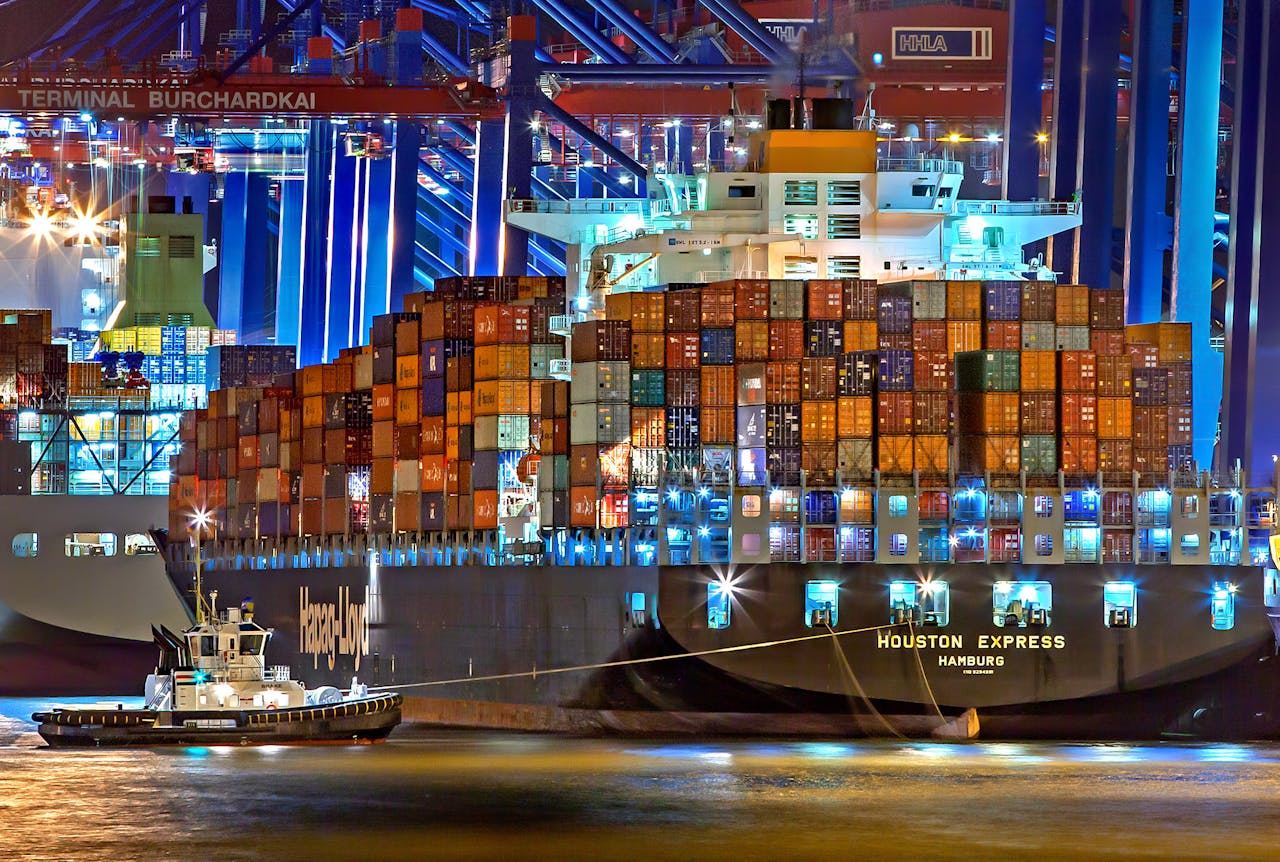
With approximately $3.6 billion in trade crossing the U.S.-Canada border daily, a sweeping 25 per cent tariff on non-energy goods would have catastrophic effects on the Canadian economy, including shaving 2.6 per cent off Canada’s GDP. (Pexels Photo)
United States President Donald Trump has temporarily halted his trade war with Canada and Mexico, agreeing to pause his proposed tariffs for at least 30 days.
Regardless of whether Trump will impose the tariffs once the 30 days are up, Canadian supply chains have become the epicentre of these looming disruptions. The country urgently needs to strengthen its supply chain resilience.
If the tariffs were to go into effect, they would reshape the geo-political ecosystem of North America and beyond by disrupting global supply chains. These supply chains are a direct reflection of the geo-political ecosystem in which they operate, and they require stability to establish and thrive.
With approximately $3.6 billion in trade crossing the U.S.-Canada border daily, a sweeping 25 per cent tariff on non-energy goods would have catastrophic effects on the Canadian economy, including shaving 2.6 per cent off Canada’s GDP.
While the list of affected goods and services would be long, the auto industries are likely to be among the hardest hit sectors. Businesses on both sides of the border would be seriously hurt, including major U.S. automakers General Motors, Ford and Stellantis.
The outlook is equally bleak for Mexico, where 83 per cent of exports go to the U.S.
Canadian supply chain resilience
Trump’s potential trade war represents an unconventional, top-down approach to redesigning North American supply chains, which took decades to establish. His aggressive trade policies are disrupting the status quo with devastating and irreversible effects.
Canadian supply chains have historically been prone to major disruptions. Past responses to these disruptions have focused on helping firms build resilience. While this is important, insufficient attention has been given to establishing effective provincial and national governance structures to support and guide supply chain resilience.
There is growing recognition that supply chain resilience should be addressed at the system level. This resilience emerges from both the actions of individual organizations and from the relationships and interactions between them.
System-level supply chain resilience is influenced by governmental or regulatory bodies that set policies to manage long-term supply risks. These are known as governance structures or mechanisms.
Canada’s long-term strategic response must go beyond helping Canadian companies integrate into alternative global supply chains outside the U.S. The country must also explore new governance structures that can strengthen the collective resilience of Canadian firms.
Improving supply chain resilience
Trump has been a destabilizing force for international trade and free trade agreements, particularly the Canada-United States-Mexico Agreement, which may have a shorter lifespan than initially agreed upon.
One of the most effective ways for Canada to strengthen its supply chain resilience is to reduce its heavy trade reliance on the U.S., which can be done through free trade agreements. Despite this, Canada has been slow to diversify beyond the U.S., which remains its largest trading partner, accounting for 76 per cent of exports and 64 per cent of imports.
Canada is currently part of 15 free trade agreements that collectively cover 61 per cent of the world’s GDP and provide access to 1.5 billion consumers globally. However, it’s not yet clear how free trade agreements can enhance supply chain resilience.
Canada must look beyond its existing free trade agreements and pursue new markets such as the ASEAN (Association of Southeast Asian Nations) and the Pacific Alliance. Expanding into these regions would allow Canadian companies and supply chains to join global value chains, creating opportunities for knowledge spillovers and productivity boosts.
As Canada diversifies its trade, it must do so with a supply chain mindset, carefully considering the implications of specific trade policies and how they will enhance the resilience of Canadian supply chains.
Future free trade agreements should incorporate clear and specific clauses that anticipate disruptions and help with swift supply chain recovery. A prime example of such an agreement is the Indo-Pacific Economic Framework for Prosperity, which came into effect in October 2024.
Beyond international trade, Canada should also eliminate interprovincial trade barriers to facilitate easier business operations across Canadian provinces and territories.
Stronger supply chain governance
More research is needed to determine exactly which governance structures should be put in place to support Canada’s supply chain resilience.
The Canadian government may need to establish a multi-level governance structure encompassing sectoral, provincial and national levels, such as supply chain councils.
Supply chain councils could connect supply chains with small and medium-sized enterprises, leverage existing networks, co-ordinate resilience strategies and address supply chain and trade policy issues of national significance.
With Trump back in the White House, Canada must be prepared to protect its supply chains against an evolving trade war. Whether his policies are driven by his imperialist ideology, a protectionist agenda, border security concerns or the pursuit of more revenue from slapping tariffs on America’s closest allies, the threat to Canadian supply chains is real.
To withstand these pressures, Canada must build resilience at the systemic level, where top-down governance ensures the private sector can respond quickly and effectively to disruptions. It is never too late to start, but waiting any longer is no longer an option for Canada.
Hassan Wafai, Associate Professor, Faculty of Management, Royal Roads University; Juan Navarro, Associate Faculty, School of Business, Royal Roads University, and Kimberly Tholl, Associate Faculty, Faculty of Management, Royal Roads University
This article is republished from The Conversation under a Creative Commons license. Read the original article.