By Anne Lusk, Boston University; The Conversation
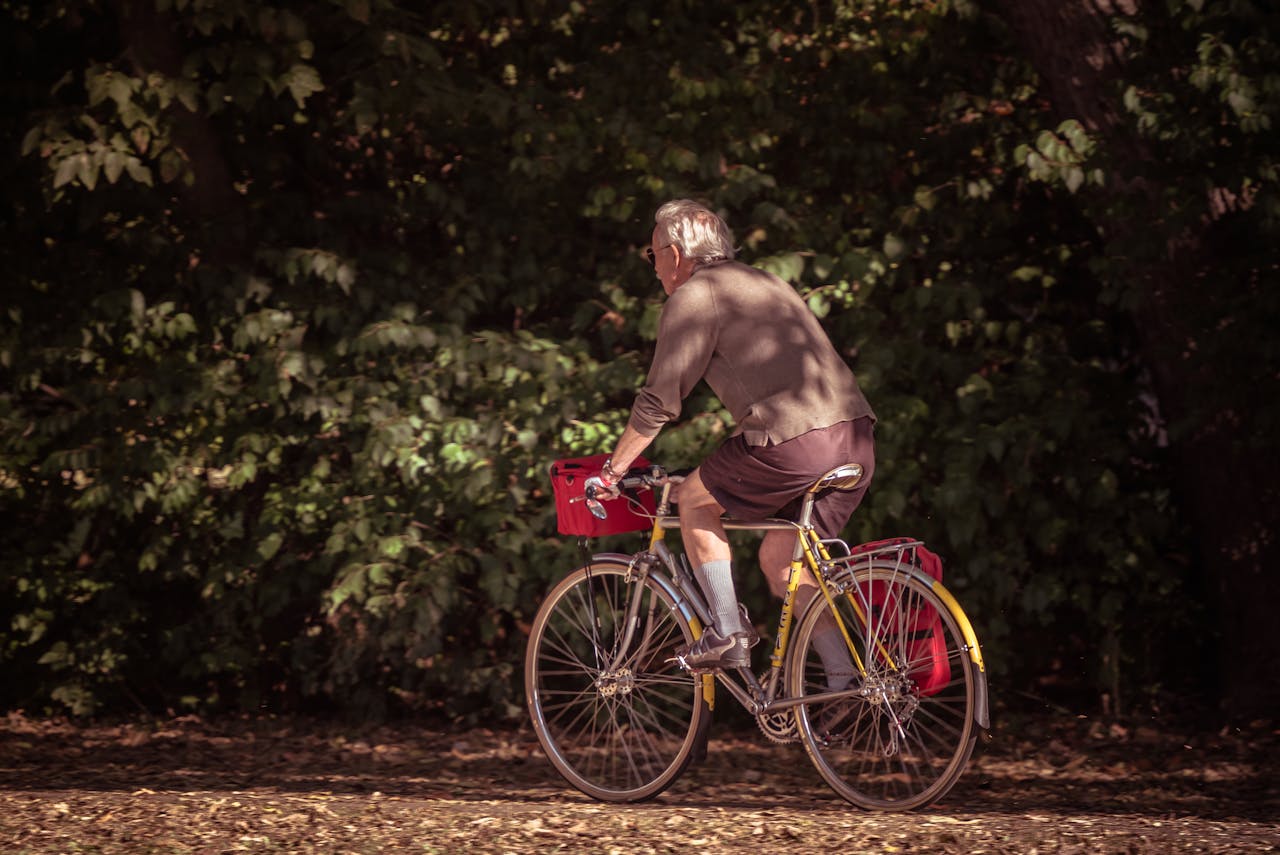
At a time when cycling is growing in the U.S. and the overall population is aging, seniors’ preferences for bike designs and bike networks are very relevant. (Pexels Photo)
Most senior citizens get around in their daily lives by driving, walking or using public buses and subways. But many people in their 60s and 70s could potentially be interested in other options, such as cycling. At a time when cycling is growing in the U.S. and the overall population is aging, seniors’ preferences for bike designs and bike networks are very relevant.
Older people may have concerns about riding a two-wheeled bike if they are afraid of falling – a risk that increases with age and causes many seniors to become less active. Many cities and communities are working to create safer bike networks, but these are designed for young, physically fit bikers, who are less afraid to bike near cars and don’t need an occasional bathroom break.
Some seniors live in assisted living complexes or memory care facilities that have roads, sidewalks and paths for residents pushing walkers. However, these complexes don’t usually have bike storage rooms, bike loops or safe bike pathways to local parks and stores.
I am a researcher in architecture – with a focus on environment and behavior – and a senior, and I have studied bikes and bike networks for over 43 years. In my latest project, I worked with Seth Gale, a behavioral neurologist; Linda Mazie, a health and wellness coach who works with seniors; and Heidi Savage, a fitness director who also works with seniors, to learn from older people what kinds of bicycles and bike networks would help them stay active and independent through cycling.
We found that a majority of the seniors whom we surveyed and who test-rode three bikes preferred a three-wheeled adult tricycle or a two-seat model that lets riders sit side by side. For infrastructure, their key requirements included bike loops, separation from cars and nearby bathrooms.
Benefits of biking for seniors
Many older people in the U.S. don’t get enough physical activity for healthy aging. A 2016 study by the Centers for Disease Control and Prevention found that more than one-fourth of all adults over 50 did not engage in any physical activity outside of work. This share increased with age and was higher among people with chronic diseases such as cancer, diabetes and depression. Inactivity was significantly higher among women than men, and among Black and Hispanic seniors compared with white seniors.
Biking provides many health benefits, including cardiovascular exercise, stronger muscles, better coordination and lower stress levels. It also offers benefits that are particularly relevant for seniors. For example, one study found that cycling for at least one hour per week significantly improved older people’s balance, potentially making them less vulnerable to falls.
There also are findings suggesting that exercise may help slow the progression of Alzheimer’s disease. For example, one study showed that when mice exercised on a wheel, their muscles produced irisin, a hormone that supports cognitive function. The irisin passed into their brain, improving memory and spatial awareness.
Senior-friendly bikes
For our study, we distributed surveys with pictures of senior-friendly bikes and questions about bike networks to 178 seniors in four senior communities in Massachusetts and New Hampshire. Participants ranked the pictures according to how well they liked the various bike designs and offered more comments while seeing the pictures on a large screen.
We also borrowed three senior-friendly bikes made by Van Raam, a Dutch company that designs bikes for a wide range of special needs. These models included:
- A three-wheeled bike for side-by-side riders who each have handlebars and who can pedal together while one steers.
- An adult tricycle with a back rest and low center of gravity.
- A two-wheeled bike with a low center bar that makes it easy to step through when getting on or off.
Fifty seniors at RiverWoods-Exeter, a senior living complex in New Hampshire, and Fox Hill Village, an independent living community for seniors in Westwood, Massachusetts, were invited to test-ride the three models and complete a survey about their experiences.
Designing bike networks for older riders
Based on photos, participants were most enthusiastic about the adult tricycle and also were interested in the two-seat three-wheeler. Adult tricycles are harder to pedal than bikes with two wheels, and rounding corners involves turning the handlebars without leaning, so these models have a learning curve. However, they offer stability, which clearly was important to the people in our study.
Among seniors who did test rides, the most popular model was the single-seat three-wheeled bike. Unlike a low recumbent bicycle, this bike’s seat is about as high as a chair, and unlike an adult tricycle, it has a back rest.
Participants’ second choice was the three-wheeled two-seater bike, which has seats with backs, arm rests and seat belts. Fewer participants were willing to test-ride the two-wheeled regular bike with a low center bar; those who tried it were already comfortable riding two-wheeled bikes.
Comments were enthusiastic, especially for the two-seater bike. Seniors wrote, “I like the social aspect and teamwork”; “I see this as an asset to our community”; and, simply, “Awesome!!!”
Some noted that the two-seater could work for seniors who were caregivers for their spouses. One husband wrote, “This would be great to ride with my wife, who hasn’t ridden a bike for 50 years.”
In response to survey questions about the most important features of a senior-friendly bike network, participants said they wanted to be able to bike for 30 minutes at a stretch, ride twice a week and have a bathroom available.
For a network added to their assisted living complexes, they wanted a cycling loop on-site; a route to a destination outside the complex; a smooth, flat riding surface with grass shoulders; and picnic tables and water nearby. Participants felt that cars traveled too fast in their residential complexes, so they wanted to ride on separated paths rather than on existing roads.
Our findings echo other studies that have shown that senior cyclists want to ride in protected bike lanes or separate paved paths, rather than in street traffic. Because many seniors have limited vision, another feature that can make bike paths safer for them is light-colored demarcation strips at the edges of the path to help older riders avoid veering off the main cycle path, especially at night.
Pedaling ahead
Here are the key steps that I believe would be required to develop findings like ours into scalable bicycling programs for seniors in the U.S.
Some seniors might appreciate having classes to relearn how to ride a two-wheeled bike, or to ride with another person on a two-seater model. Assisted living complexes could install bike storage sheds and buy several senior-friendly bikes for residents to ride.
Protected bike lanes could be made more senior-friendly by building them level with the adjoining sidewalk, so that a third wheel could rest on the edge of the parallel sidewalk. Lanes optimized for senior riders would be continuous and have bicycle traffic signals, raised crosswalks and nearby public bathrooms with signs leading to them.
Routes could run from residential neighborhoods to destinations such as coffee shops, post offices, grocery and drugstores, and parks. Destinations could provide space to park and lock the bikes while riders shopped or had coffee.
The U.S. has an aging population, and seniors’ health is an important concern for seniors themselves, their caregivers and taxpayers. There is strong evidence that increased bicycle use by seniors could help many people live healthier and more independent lives well into their golden years.
Anne Lusk, Lecturer in Urban Agriculture, Boston University
This article is republished from The Conversation under a Creative Commons license. Read the original article.