By Myles Allen, University of Oxford; The Conversation
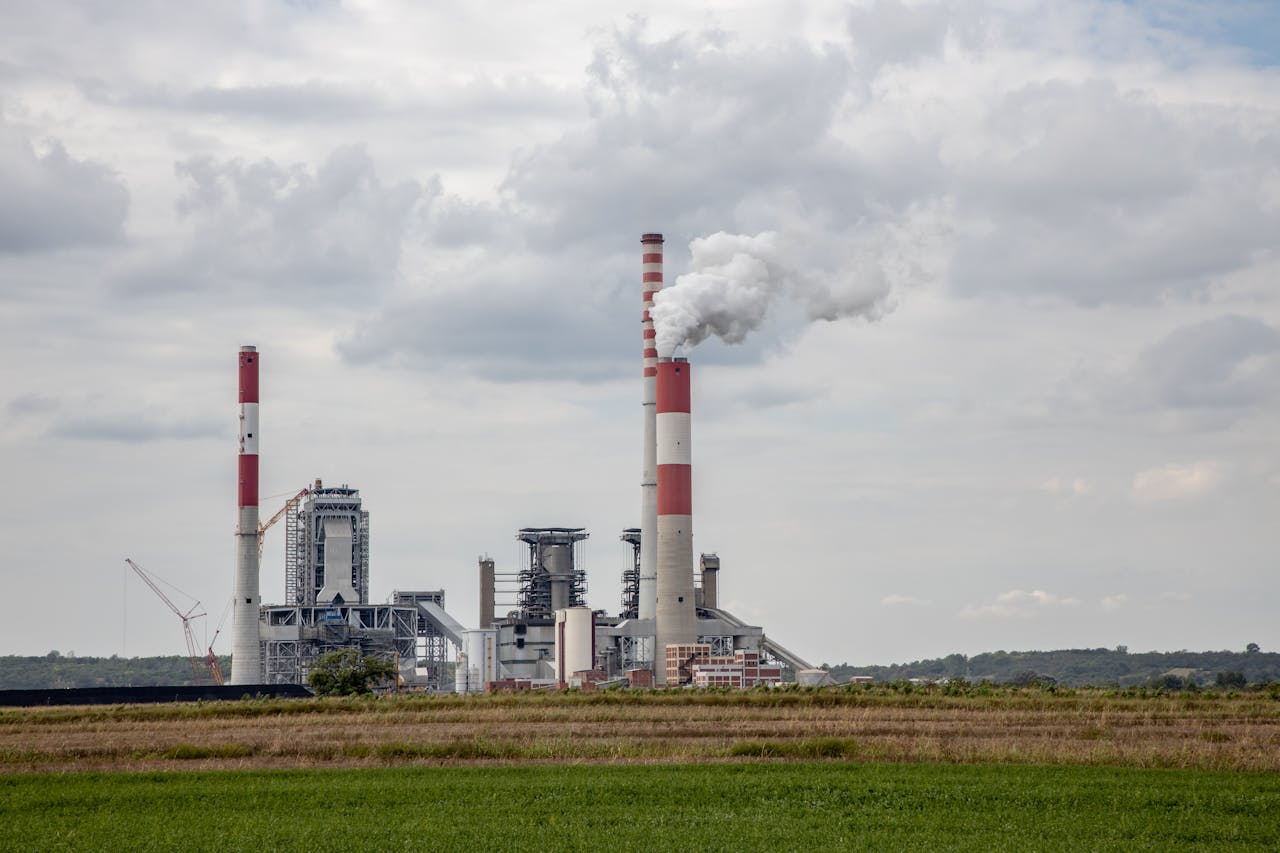
The case for CCS boils down to waste disposal: we are going to make too much carbon dioxide (CO₂), so we need to start getting rid of it. (Pexels Photo)
The UK government has given the go-ahead to carbon dioxide capture and storage (CCS) schemes worth £22 billion (US$28.6 billion). Critics are insisting that this technology – which involves capturing carbon as it is emitted or taking it back out of the atmosphere, then pumping it into rocks deep underground – is unsafe, unproven and unaffordable. Defenders are responding with painstaking rebuttals.
Could the whole debate be missing the point? I think it is better to focus on the big picture – why we need CCS to work – rather than playing whack-a-mole with every objection to individual projects.
The case for CCS boils down to waste disposal: we are going to make too much carbon dioxide (CO₂), so we need to start getting rid of it.
By burning fossil fuels and producing cement alone, we will generate more CO₂ than we can afford to dump into the atmosphere to have any chance of limiting global warming to close to 1.5°C – even after accounting for the capacity of the biosphere and oceans to mop it up.
So, we need to start disposing of that CO₂, safely and permanently, on a scale of billions of tonnes a year by mid-century. And the only proven way of doing this right now is to re-inject it back underground, through CCS.
Keep our options open
The world is not giving up fossil fuels any time soon, and the transition is going to be difficult enough without tying our hands by ruling out CCS.
The questions we should be asking are: will enough “green hydrogen” – produced from water using renewable electricity – be available to power all the industries that will need it, given all the other new demands on the electricity grid? Will we still need gas as a back-up to deal with the vagaries of the weather in a renewable-dominated grid? Can we get by entirely on recycled steel, and eliminate the use of conventional cement in construction (steel and cement are notoriously hard to produce without generating CO₂)?
If the answer to any of these questions, anywhere in the world, turns out to be “no” – or even “not by 2050” – then we need CCS.
Would taking CCS off the table focus minds and make us abandon fossil fuels faster? It could equally make us abandon climate targets – ultimately, the most expensive option of all.
Nature is maxed out
What about offsetting continued fossil fuel use with nature-based solutions, such as restoring ecosystems and rewilding? Unfortunately, we are already planning on maxing out nature’s credit card.
In the Intergovernmental Panel on Climate Change’s (IPCC) scenarios in which warming is kept close to 1.5°C, we eliminate deforestation almost immediately, and restore a cumulative total of some 250 billion tonnes of CO₂ to the biosphere by 2100 – by restoring forests and wetlands, for example.
Over the same period, we dispose of four times that amount of CO₂ back underground through various forms of CCS – as well as slashing fossil fuel use by 75%-80%.
We cannot bank on stuffing an additional trillion tonnes of CO₂ into the biosphere over the next 75 years – especially as carbon stored at the Earth’s surface is increasingly at risk of being re-released to the atmosphere as the world warms, forests burn, and peatlands dry out.
Invest, but invest wisely
The fact that we need CCS is no excuse for doing it badly. It makes little sense, for example, to manufacture “blue hydrogen” – produced from natural gas with CCS to limit emissions – from high-emission LNG. UK rules would prohibit this, and there are cleaner gas supplies available, but rules need to be enforced. Above all, we need to make sure the availability of CCS does not encourage yet more CO₂ production.
This is where critics of government policy may have a point. If CCS is widely available and heavily subsidised, could that just encourage individuals and companies to use more fossil fuels? The danger is real, but it doesn’t mean we should abandon CCS. We need to be smart about how it is implemented.
An injection of government money is, by now, essential to kickstart our CO₂ disposal industry. But this should not become an endless subsidy which allows private industry to keep profiting from selling the stuff that causes global warming, while taxpayers pay for the clean-up.
Fortunately, there is another way. The EU has shown, in its Net Zero Industry Act, how regulation can force the fossil fuel industry to contribute to the cost of CCS without relying on US-style subsidies.
The UK government could go further, making it clear that, by mid-century, anyone selling fossil fuels in the UK will be responsible for geological disposal of all CO₂ generated by their activities and the products they sell.
Pricing in permanent CO₂ disposal would make fossil fuels more expensive, potentially adding 5p per kWh to the cost of natural gas over the next 25 years. That’s cheap compared with the cost of just dumping that CO₂ into the atmosphere, and would encourage everyone to use fossil fuels more sparingly, which is precisely what needs to happen.
Building a global industry to dispose, safely and permanently, of every tonne of CO₂ still generated by any remaining fossil fuel use by 2050 will be hard. But if we want to meet our climate goals, we just have to get on with it.
Fortunately, the UK has the right geology, skills and expertise, as well as a history of innovation in climate policy. It also has a clear interest in getting involved in what should become one of the major industries of the second half of this century. And it has a moral obligation, having pioneered taking fossil carbon out of the Earth’s crust, to join the first wave of countries putting it back.

Don’t have time to read about climate change as much as you’d like?
Get our award-winning weekly roundup in your inbox instead. Every Wednesday, The Conversation’s environment editor writes Imagine, a short email that goes a little deeper into just one climate issue. Join the 35,000+ readers who’ve subscribed so far.
Myles Allen, Professor of Geosystem Science, Director of Oxford Net Zero, University of Oxford
This article is republished from The Conversation under a Creative Commons license. Read the original article.