By Ian Parmeter, Australian National University, The Conversation
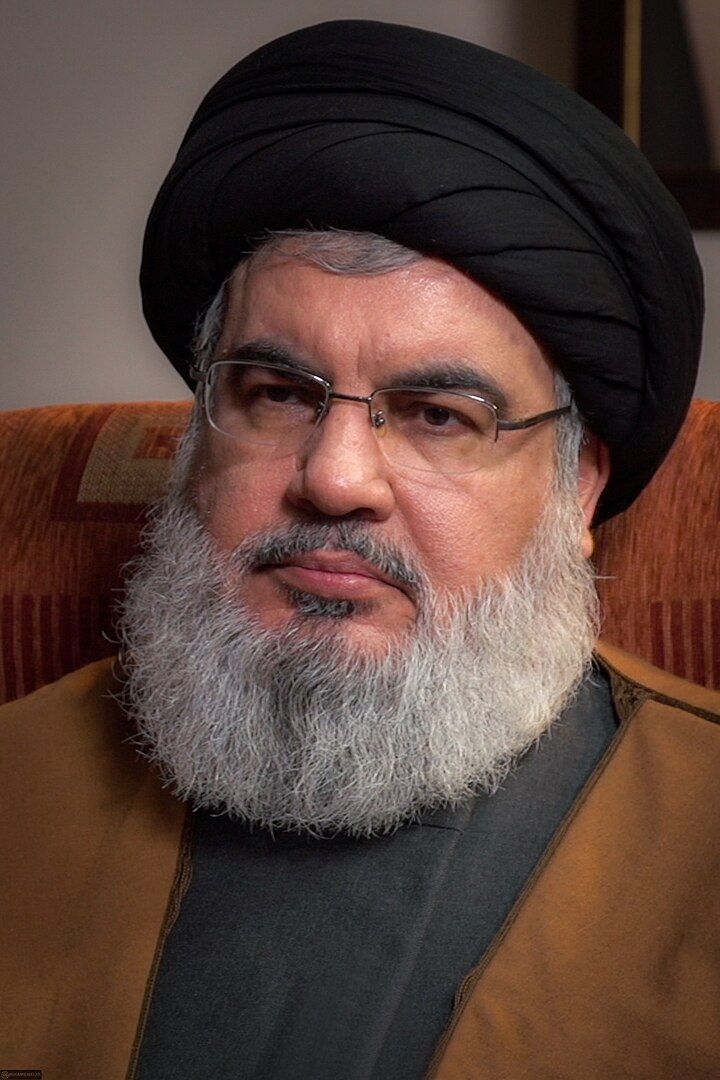
Israeli Prime Minister Benjamin Netanyahu has claimed a major victory following the assassination of longtime Hezbollah leader Hassan Nasrallah, saying it would change “the balance of power in the region for years to come”.
This may be going further than the circumstances warrant, however. Certainly, the killing of Nasrallah is a remarkable personal victory for Netanyahu, who ordered the strike so he could claim direct responsibility for the action. And it goes a long way towards restoring the Israeli public’s faith in Netanyahu as a security guarantor for Israel.
But there are many questions that now follow this action. Will Israel, for example, launch a ground invasion against Hezbollah in Lebanon?
If it does, it would certainly find Hezbollah at its weakest point because of the destruction of its communications network in the Israeli attack on its pagers and walkie-talkies earlier this month.
Israel has also killed eight of Hezbollah’s nine most senior military commanders and about half of its leadership council.
To ensure this is a lasting victory, Israel really needs to follow up somehow. It needs to take the opportunity of Hezbollah’s disarray to destroy as much of the organisation and its arsenal of 150,000 missiles, rockets and drones as it can.
By the same token, Hezbollah would certainly be able to inflict serious losses on Israeli ground forces if they go into southern Lebanon, not least because Hezbollah is reported to have an extensive tunnel network in the border area.
And Hezbollah is a large organisation that claims to have as many as 100,000 fighters, though US intelligence believes it’s probably somewhere closer to 40,000–50,000. Even so, that is a formidable number of militants.
Hezbollah, however, does not want to get involved in further fighting with Israel at this stage, if it can avoid it. It’s significant that, even after Israel’s most recent attacks, Hezbollah has not been firing thousands of missiles, rockets and drones daily into Israel, which it is believed to be capable of doing.
Can Hezbollah regroup?
There is no doubt this is an unprecedented blow to Hezbollah’s leadership and to the organisation itself.
The first thing the group needs to do is re-establish its leadership. There are two names that have already been suggested: Hashem Safieddine, Nasrallah’s cousin, and Naim Qassem, Hezbollah’s deputy secretary-general.
Then, the new leadership needs to investigate how deeply Hezbollah has been penetrated by Israeli intelligence. The killing of Nasrallah and the explosion of the pagers and walkie-talkies illustrate that Israel has extraordinarily good intelligence on the internal workings of Hezbollah.
Lastly, Hezbollah has lost a lot of face in the eyes of the Lebanese public. Those in Lebanon who are against Hezbollah’s standing as a state within a state will oppose it even more now because they’ll say it’s simply not doing what it claims to do, which is protecting Lebanon from Israel.
Hezbollah has never faced a critical situation like this before. That’s why whoever takes over is going to have a massive job to re-establish its credibility as a fighting force.
But that said, it does have the capacity to re-establish itself because Hezbollah is a major organisation and very much a part of the Lebanese political scene. The Hezbollah-led coalition has a bloc of more than 60 seats in the Lebanese parliament – not a majority but significant nonetheless. It also provides social services for poor Shi’a residents in southern Beirut and southern Lebanon.
The other major question is whether Iran, Hezbollah’s military backer, will react to the killing of Nasrallah.
When Israel assassinated Hamas political leader Ismail Haniyeh in July, Iran promised retaliation, but has not taken it yet.
After the US assassination of Qassem Soleimani, the commander of the Quds Force in the Islamic Revolutionary Guards Corps, in Baghdad in 2020, Iran fired more than a dozen missiles at two bases in Iraq housing US troops, and that was it.
In April, its reaction to the Israeli killing of some Islamic Revolutionary Guard personnel in the Iranian consulate in Damascus, Syria, was more intense. Tehran launched about 300 missiles, drones and rockets at Israel. But it also telegraphed its retaliation well in advance, and Israel’s Iron Dome, with the help of US defensive support, was able to prevent any significant damage.
These recent reactions show it is clearly not in Iran’s interest to have a wider war take place at this time.
Where does the region go from here?
Hezbollah doesn’t have many friends in the Middle East, mainly because it is a militant group from the minority Shi’a sect of Islam, which has been seen as opposed to the interests of more moderate Sunni Arab states, including Egypt, Jordan and the Gulf states.
Essentially, there will be some quiet satisfaction among Sunni Arab leaders that Nasrallah has gone because he was seen as someone who could cause a great deal of trouble for the region.
Briefly, following the 2006 war between Hezbollah and Israel, Nasrallah was the most popular leader in the Arab world, according to opinion polls. That didn’t last very long, but he remained influential across the region.
The other aspect that would make Sunni Arab states and leaders quietly comfortable with the removal of Nasrallah and the disarray (if only temporary) of Hezbollah is that all the fighting in the Middle East – the war in Gaza and now the conflict in Lebanon – is causing anger at street level in countries such as Egypt, Jordan and others in the region. This makes the region more unstable – and Sunni leaders nervous.
At this stage, the elements that would be prepared to support Hezbollah are limited to the Houthi rebels in Yemen and Shi’a militia groups based in Iraq. But they’re both some distance away and aren’t able to materially affect the conflict in the region.
With Iran not wanting an all-out war in the region, it’s not likely its leaders will be encouraging these proxy groups to get involved in a situation that could get further out of hand.
So there are a lot of players who want to restore some sort of normality to the region. That includes the Biden administration, which fears the ongoing conflicts will divide the Democratic vote in the November US presidential election.
This plays into Netanyahyu’s hands, as he is able to act independently of US attempts to rein him in. Whatever he does, he will continue to receive US military support.
Ian Parmeter, Research Scholar, Centre for Arab and Islamic Studies, Australian National University
This article is republished from The Conversation under a Creative Commons license. Read the original article.