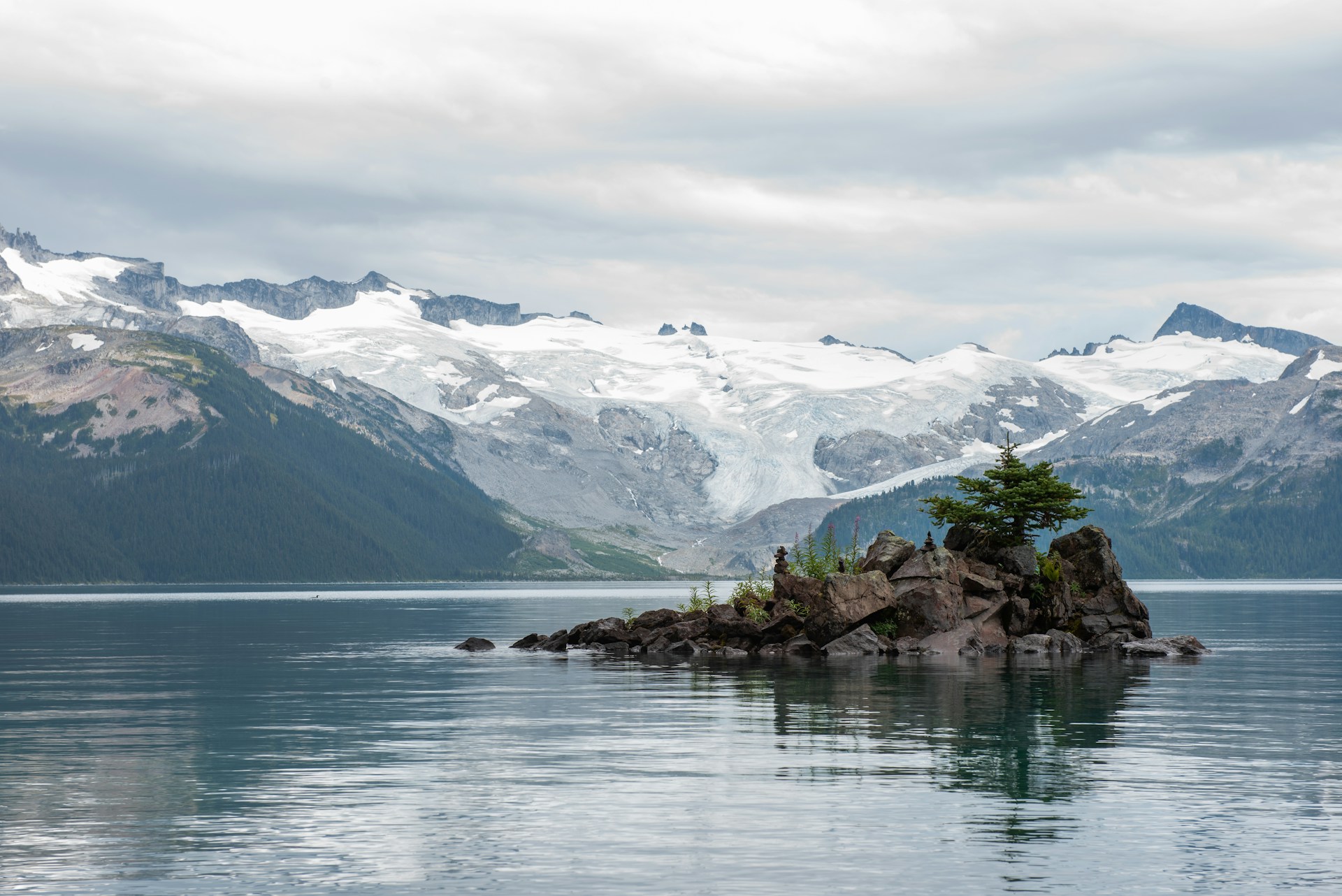
Garibaldi Lake outside Vancouver, B.C. (Photo: Leo Michine/Unsplash)
From massive kelp forests to monumental old-growth on land, British Columbia’s biodiversity — which is unrivalled in Canada — provides an array of cultural, economic, social and other benefits. B.C.’s wide-ranging ecological zones are home to over 70 per cent of Canada’s mammal, bird and non-vascular plant species.
The province is ostensibly proud of having a healthy environment, with its mottos “Splendour without Diminishment” and “Beautiful British Columbia” promoting its natural beauty. Yet despite this awareness, the province is hindered by a fragmented approach to biodiversity management.
B.C. possesses considerable knowledge resources with a wealth of top biodiversity scientists, biodiversity-based industries and leading conservation organizations. It is also home to over 200 First Nations with traditional knowledge systems closely tied with nature. However, current conservation initiatives lack co-ordination and there is no independent organization or provincial governing body overseeing the many actions underway. This must change.
Unco-ordinated approach
The lack of co-ordination in B.C. makes it difficult to obtain a clear picture of ecosystem health across the province. This murky picture has negative implications for efforts to quantify, forecast and adjust to biodiversity changes — with further knock-on repercussions for efforts to hold people and organizations accountable for infractions.
For example, when a species is listed on Canada’s Species at Risk Act, the first step for legislated action by the province is to map locations of habitats that are necessary for the species’ recovery. But, in part due to poor biodiversity inventories and low engagement across sectors, this information has been regularly delayed, by an average of 9.8 years. This is a costly time frame for an endangered species.
We cannot manage what we do not monitor and this challenge will only get worse as climate change shifts the range of many species.
Biodiversity work in B.C. is currently being performed by a passionate and engaged group of stakeholders, including non-governmental organizations, academics, First Nations, local interest groups, federal and provincial agents as well as private consultancies.
The breadth of work is vast and, despite having so many different groups involved, the goals are often aligned. Yet despite having similar goals, shared methods and the potential for combining knowledge across projects, fragmentation across individuals and groups persists.
The fragmented nature of B.C. biodiversity work is a missed opportunity that can lead to gaps and blind spots that ultimately undermine action. Potential interconnected threats like diseases, invasive species, ecological impacts of new developments and a range of other issues may be missed.
Biodiversity loss is too important to be detected by chance; it should be monitored in a systematic, open and inclusive way.
New data
New technologies are vastly increasing our capacity to monitor biodiversity.
Advances in environmental genomics and the discovery that organisms leave traces of their DNA in the environment means biodiversity now can be assessed from samples of water, soil and even the air. NGOs, Indigenous stewards and conservation groups in B.C. are already using environmental DNA (fragments of DNA floating freely in the environment) to track biodiversity change.
Remote automatic cameras deployed in a network can quickly and continuously record the distribution of certain species. What’s more, the data from these cameras can be processed quickly using community science web-based platforms quickly using crowd-sourced knowledge and artificial intelligence. Satellite data can reveal the status of forests across the province.
We are on the cusp of a deluge in biodiversity data, but data on its own is not knowledge.
To translate this data into actionable insights, collaboration and co-ordination is key. We need to work together to share knowledge and capacity for understanding change. User-friendly platforms are needed to make the data accessible, but it is equally important to integrate it with existing knowledge held by local communities and Indigenous groups.
Establishing a system of natural capital accounts would provide a clear picture of the value our ecosystems provide empowering decision-makers to understand the economic and social consequences of their choices.
Meeting our commitments
In December 2022, Canada hosted the 15th Conference of the Parties to the United Nations Convention on Biological Diversity in Montréal. In response to the Kunming-Montréal Global Biodiversity Framework, Canada committed to protecting 30 per cent of biodiversity by 2030. Canada also committed to developing a plan in response to the framework’s four goals and 23 targets. Yet co-ordinated action is needed at the provincial level to achieve this.
B.C.’s draft framework for biodiversity and ecosystem health is a positive step with its emphasis on “connecting initiatives,” “providing accessible and credible data” and “fostering innovation, skills, and training” — but much more work is still needed.
We need a body that draws together independent expertise in biodiversity and social sciences with policymakers and interest groups. Importantly, this body would need to be transparent, track progress and provide research and synthesized information to support informed decisions.
Crucially, any effort to co-ordinate biodiversity work in B.C. must inclusively engage with the many ongoing initiatives in the province to ensure it is adding value.
We may not have to look far for an effective model. Québec recently launched Biodiversité Québec — a partnership across government, scientific and Indigenous partners — to create an integrated monitoring system for nature.
Drawing inspiration from such initiatives and its own capacity, B.C. can rise to the challenge of biodiversity loss. With co-ordination and sustained support of expertise, B.C. can set clear goals, leverage existing initiatives, ensure efforts are aligned and results are communicated and ultimately, ensure that B.C.’s natural splendour remains undiminished.
Jennifer Sunday, Canada Research Chair, Global Change BIology, McGill University; David Castle, Professor, School of Public Administration, University of Victoria; George Poulakidas, Genomics and society advisor, Genome BC, University of Toronto, and Mary I. O’Connor, Professor, Department of Zoology, University of British Columbia
This article is republished from The Conversation under a Creative Commons license. Read the original article.