News
Sri Lanka: why the country’s wait for elections must end

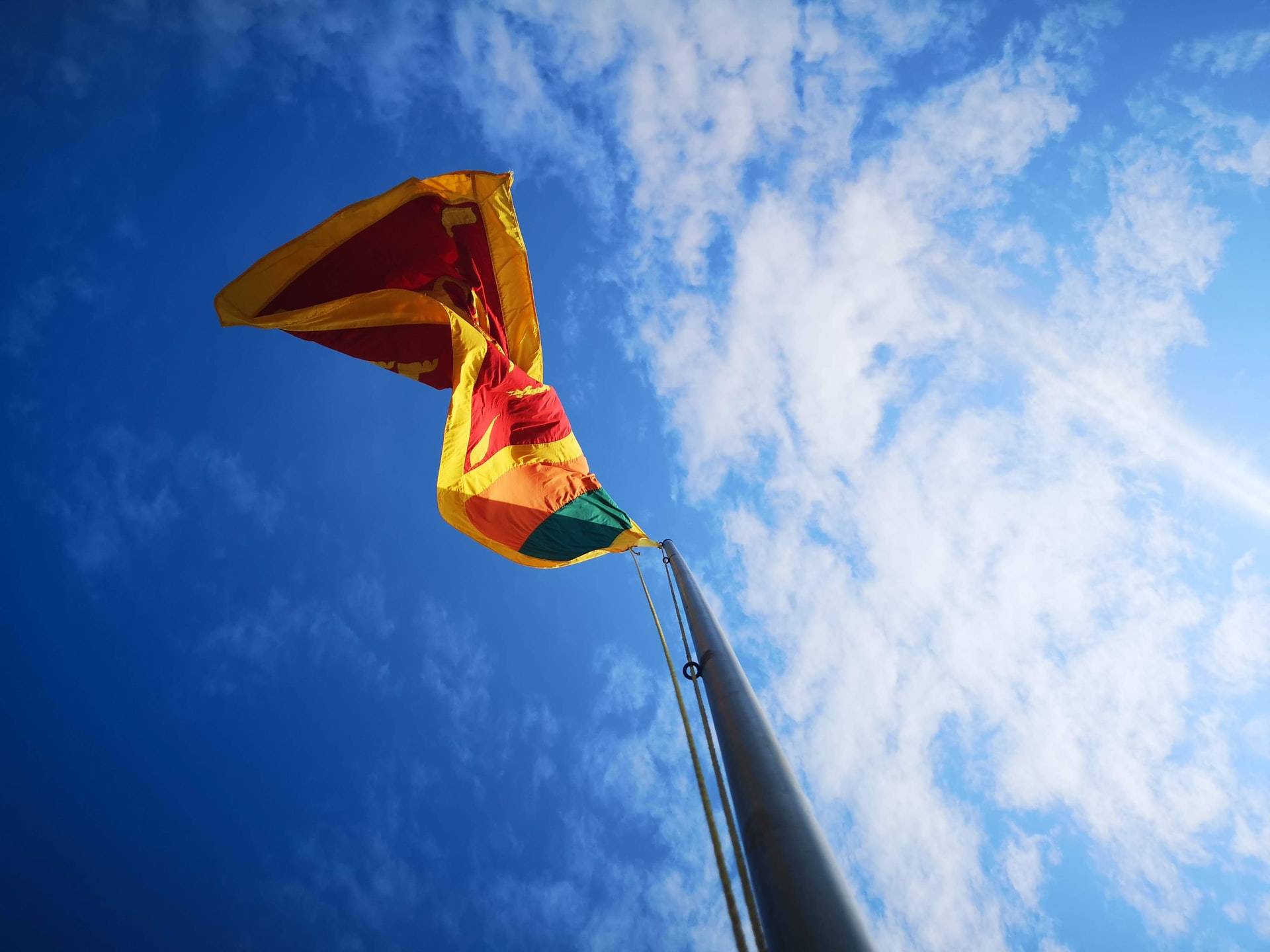
More than 17% of Sri Lankans are suffering from food insecurity and are in need of humanitarian assistance. (File photo: Mariana Proença/Unsplash)
Sri Lanka is grappling with its worst economic crisis since independence in 1948. Soaring prices, shortages of essential goods and crippling external debts have sparked widespread protests across the country in recent years. In 2022, enraged demonstrators even stormed the residence of the then president, Gotabaya Rajapaksa, forcing him to flee the country and resign.
The following year, elections were postponed indefinitely. Rajapaksa’s successor, Ranil Wickremesinghe, warned parliament that holding an election during the economic crisis could be disastrous. Opposition MPs criticised the move, accusing the president of using the economic crisis as an excuse to hold onto power and “sabotage democracy”.
But in November Wickremesinghe announced that presidential and parliamentary elections will finally be held in 2024 and 2025. Could this year be one of actual change that free and fair elections can bring? Or will they be used to tighten the grip of authoritarianism that was established by the Rajapaksa family over almost 15 years in power, and has worsened under Wickremesinghe?
Five elections will take place in South Asian countries this year, and most will likely return incumbent parties to power. It is not yet clear if Sri Lanka will follow suit.
Unpopular candidate
Wickremesinghe, who has already been Sri Lankan prime minister five times, is widely tipped to run for presidency. But he faces vast criticism on the grounds that he came to power without being elected by the people. He won a parliamentary vote to replace Rajapaksa but has no popular mandate.
It is expected that he will capitalise on the “stability” he has brought to Sri Lanka since reaching an agreement with the International Monetary Fund to approve a US$2.9 billion (£2.3 billion) loan to help the country through its financial crisis.
This stability, however, is a myth and the situation remains dire. More than 17% of Sri Lankans are suffering from food insecurity and are in need of humanitarian assistance.
The loan was granted on the condition that Sri Lanka reduce its domestic debt. But Wickremesinghe’s plans to restructure domestic debt have come at the expense of the working population.
The government plans to decrease interest rates on sovereign bonds held by major pension funds – a cut that would amount to a loss of close to 30% of the value of retirement funds over the next decade.
Militarisation is also at an all-time high. And efforts are being made to restrict the rights of minorities living in the north and east of the country through surveillance, harassment and unlawful arrests. His victory will only ensure continuity of all this, and more.
How not to hold elections
For Wickremesinghe to maintain his power, he has to honour his promise of holding elections. Local government elections were initially scheduled for March 9 2023, but they were repeatedly postponed due to a shortage of funds.
Their cancellation led to a spate of protests. Police used force to disperse crowds, resulting in 15 injuries. Shortly afterwards, the election commission postponed the elections indefinitely, defying a Supreme Court order.
Wickremesinghe then pursued constitutional amendments and appointed a commission to explore changes to the electoral system. So, when the announcement that elections would be held was finally made, it was unsurprisingly received with apprehension by the electorate.
The act of delaying elections is an undemocratic move. But these delay tactics appear to be a smokescreen, giving Wickremesinghe time to gather support for his presidential nomination.
It looks as if he is aiming to secure support from the Sri Lanka Podujana Peramuna party, which is led by Mahinda Rajapaksa – a former president and the brother of Gotabaya Rajapaksa. This is a calculated move as it is unlikely that Rajapaksa would have any public backing to make a reappearance as president himself.
In November 2023, a landmark ruling by the Supreme Court determined that the Rajapaksa brothers, alongside former governors of the central bank and other senior treasury officials, were responsible for Sri Lanka’s economic crisis.
Wickremesinghe is using this extra time as a political ploy too. He has promised to implement the 13th Amendment – a provision of the 1987 Indo-Lanka Accord that guarantees a measure of devolution to the country’s nine provinces. This is most definitely an attempt to appease minorities and use power sharing as a political tool to garner support.
But it could also have been a deliberate move to appease India’s foreign minister, Subrahmanyam Jaishankar, before his visit to Colombo in January. During Jaishankar’s visit, he supported the government’s debt restructuring plans.
Wickremesinghe has used the delay to rush the passing of the Online Safety Act through parliament. Created to provide protection against online harassment, abuse and fraud, this highly repressive law could threaten the right to freedom of expression that is crucial for free and fair elections.
The elusive winds of change
Elections are only as good as their contestants. So who are Wickremesinghe and his allies afraid of? Informal surveys reveal the rising popularity of Anura Kumara Dissanayake, the leader of the leftist National People’s Power alliance. Dissanayake could pose a serious threat to the leadership of Wickremesinghe.
Dissanayake, who also ran for presidency in 2019, has pledged to eradicate corruption, hold dishonest politicians and officials accountable, and establish a fresh system of governance. These pledges resonate with the kind of political party Sri Lanka wants and needs to lift itself out of the mess it is currently in.
Wickremesinghe originally claimed that elections would be held when Sri Lanka had achieved greater stability. But the real reason for the delay could have more to do with the simple fact that holding elections could potentially create a more legitimate and credible government – a prospect that Sri Lanka’s entrenched ruling elite may not welcome.
Demanding they take place is thus of utmost importance.
Thiruni Kelegama, Lecturer in Modern South Asian Studies, Oxford School of Global and Area Studies., University of Oxford
This article is republished from The Conversation under a Creative Commons license. Read the original article.