News
Workers in Argentina face the biggest blow to their employment rights since the military dictatorship of the 1970s

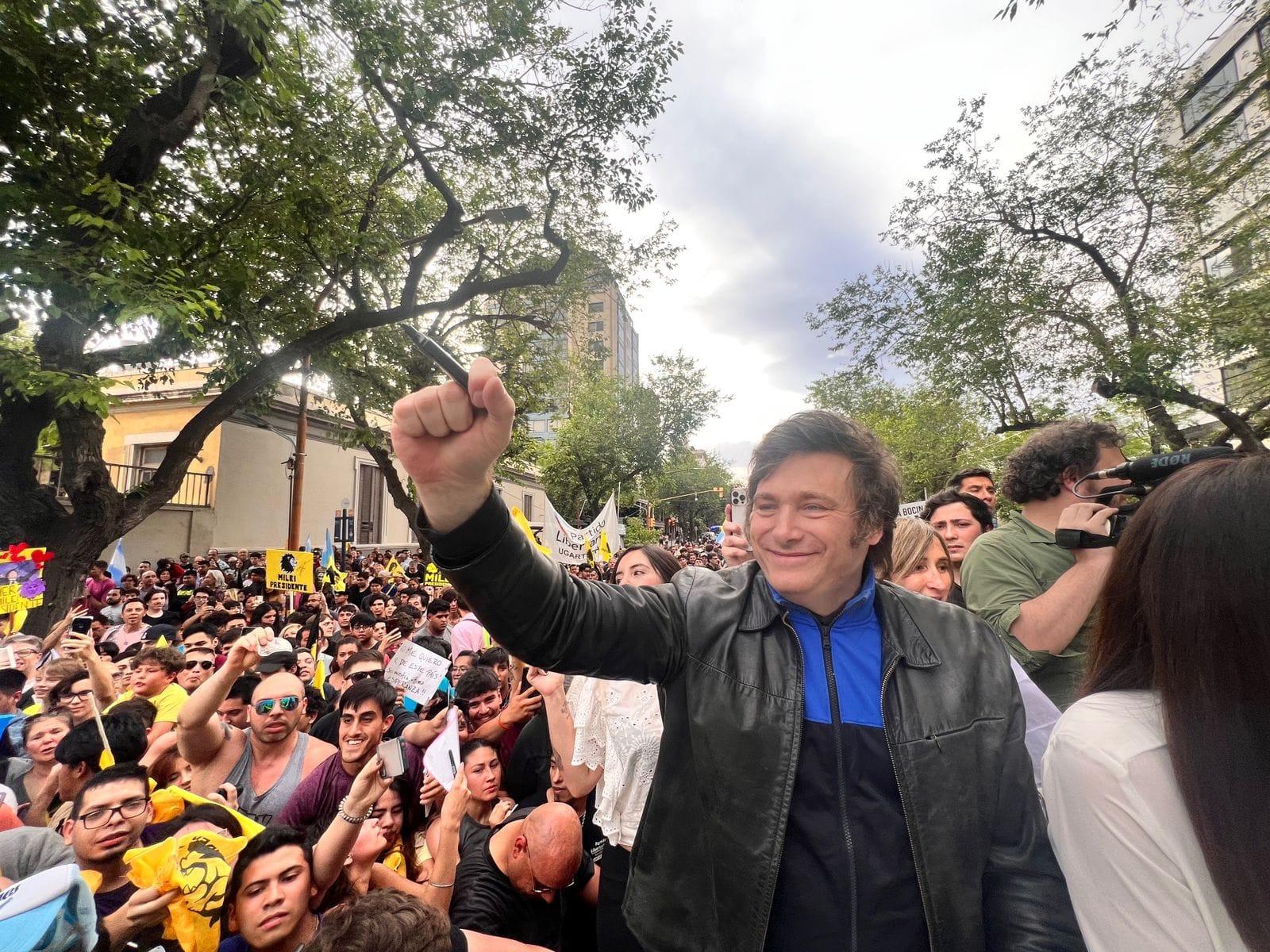
One section of Milei’s decree aims to limit the right to strike, the right of assembly and the right to collective bargaining. (File Photo: Javier Milei/Facebook)
When he was elected as president of Argentina in November 2023, Javier Milei was seen by many voters as a political outsider. An economist by profession, he promised a reset for the country which would end inflation and slash public spending.
Amid diatribes against politicians and dismissals of the climate emergency as a “socialist lie”, he was keen on wielding a chainsaw to symbolise his plans for fixing a stagnant economy burdened with debt.
And since he took office, Milei has been busy with his agenda of cutting. Within weeks he had published an 82-page executive decree as an inaugural phase of his extensive deregulation.
The decree is designed to fundamentally change Argentinian society, directly affecting the rights and protections of millions of workers. It has already prompted comparisons with General Augusto Pinochet’s deregulation of the Chilean economy in the 1970s.
One section of Milei’s decree aims to limit the right to strike, the right of assembly and the right to collective bargaining. It would alter trade unions’ financial standing, workers’ healthcare provision and basic rights such as maternity leave.
This is all presented as a way of streamlining the labour market, to improve economic dynamism and growth. It is also seen as a way to dismantle the ideology of rights and protections which Milei and his allies rail against.
But despite the rhetoric, there is no evidence that reforms of this kind in the region have created jobs or improved the labour market dynamic. Instead, evidence suggests they merely increase levels of poor quality employment.
Milei’s decree was swiftly followed by a 664-article reform bill covering a vast range of issues, including the privatisation of 41 public companies (including the state-run oil company YPF), changes to the electoral system and the introduction of new taxes.
It also contains a declaration of emergency, not just in the economy, but in matters of security, energy and health (and many others). To address this, Milei is seeking to delegate legislative powers to the executive (himself) for at least two years.
This would mean he could sidestep parliament for pretty much everything he wants to do, reasoning that institutional democratic decision making is just too slow. Arguing in favour of these special powers, one of Milei’s senior allies stated: “If there is an economic crisis there will not be a valid constitution.” Severe ills demand, in their view, unconventional remedies.
It would also suit Milei from a political perspective. Despite securing 55.6% of the votes in the run-off election, his coalition holds a minority of seats in both chambers of Argentina’s parliament. Executive power would mean being able to avoid needed negotiations with other parties.
Legal challenges
But the president is facing opposition to his plans. More than 40 legal challenges have been filed claiming Milei’s decree is unconstitutional, while a court suspended the labour reform chapter of his decree, questioning its necessity and urgency.
Outside of the courts, the General Confederation of Labour (CGT), the most important union federation in the country, have called for a national strike on January 24 and there have been protests in the streets.
Elsewhere though, Milei has received backing for some of his plans from the US, the IMF and other right wing politicians.
As for Argentina’s workers, at stake over the coming weeks and months is a fresh setback in rights and the imposition of a working environment similar to that experienced after the military take-over of 1976. For among the killings and disappearances of that era, a top priority for the dictatorship was regressively reforming labour relations.
Immediately after taking power, the military extensively trimmed down employment regulations. They took control of unions, froze their funds and prohibited all forms of collective bargaining.
Rights connected with joining trade unions, collective action and strikes were suspended. Employers’ power was regenerated and discipline revived. Our research reveals that the consequences were a profound restructuring of capital labour relations, to the detriment of workers.
Milei appears determined to make changes of a similar magnitude, under the claim that there is no alternative. If successful, bypassing democratic institutions, liberalising markets at any social cost and engaging in a war against rights and protections will undoubtedly alter Argentinian society. But it will not make Argentina “great again” as he has promised.
What happens next remains uncertain. But the new president’s barrage of measures will affect millions of lives. And in doing so, they may well provoke resistance, strengthen social solidarity and potentially reopen a democratic discussion about an alternative path.
Luciana Zorzoli, Senior Lecturer in Employment Relations, Essex Business School, University of Essex
This article is republished from The Conversation under a Creative Commons license. Read the original article.