Canada News
The Trudeau government needs to get straight with people about its budget

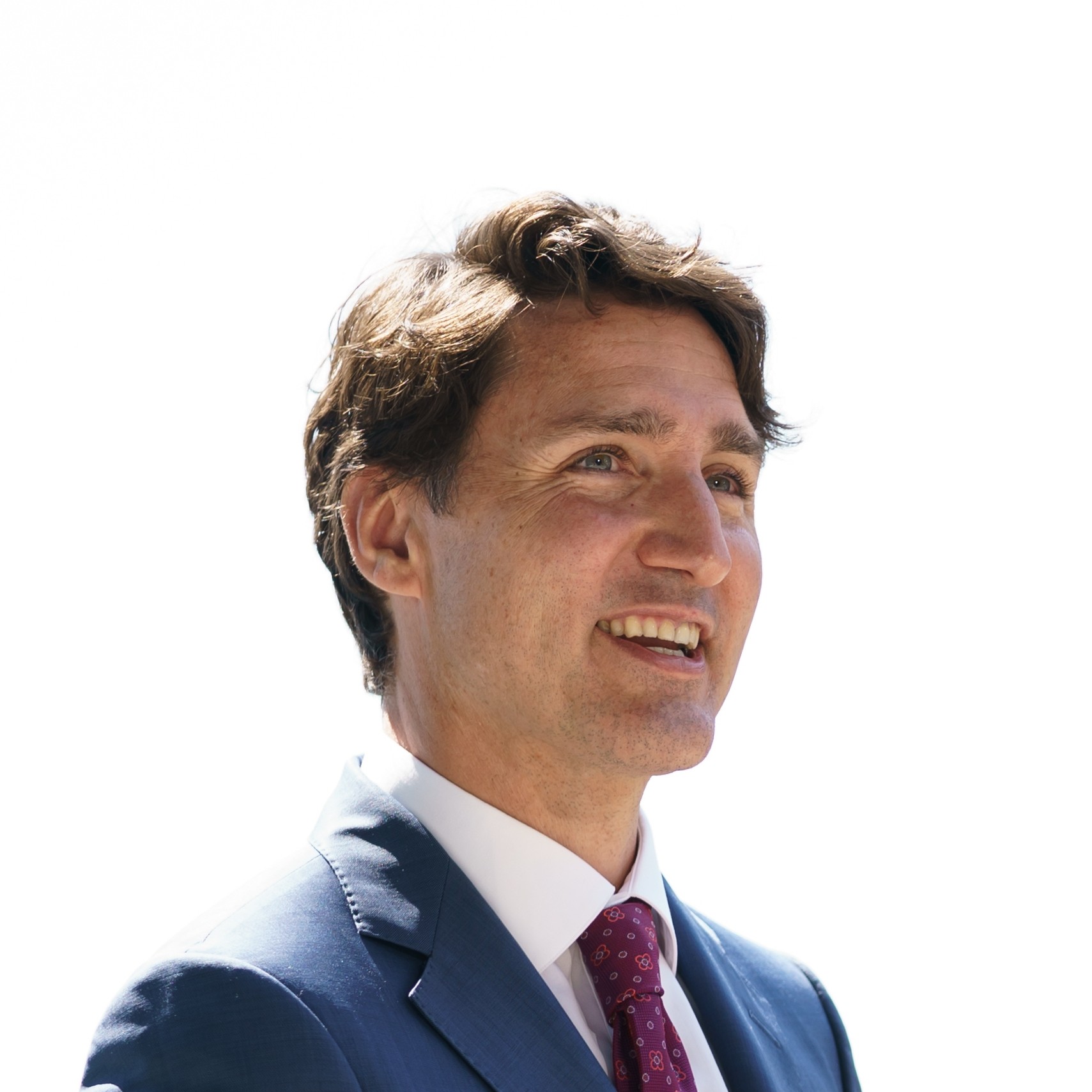
The Liberals seem to think it can turn their fortunes around with its latest economic update. Instead, they should give Canadians clarity. (File Photo: Justin Trudaeu/Facebook)
Roy Jenkins, one of the most respected British chancellors of the exchequer, once said he did not believe budgets designed to be popular with voters could ever win votes.
“I was absolutely convinced, and I am still totally convinced,” Jenkins said, “that the public are highly sceptical of give-away budgets before elections, and I don’t think I would have won a single vote if I had done a budget that might have looked as though it was an election-buy budget.”
Jenkins said this in defence of his 1970 budget, which he refused to load with pre-election goodies. This despite the fact that the Labour government of then-prime minister Harold Wilson was well behind the Conservatives in the polls. Many voices in his own party thought Jenkin’s fiscal orthodoxy led to the government’s defeat a few months later.
Lord Jenkins was probably right in his assessment, though. In Canada, there is also little evidence that long-in-the-tooth governments can fundamentally turn political fortunes around through budget policy.
The Trudeau government clearly does not buy into this thesis. It has always operated under the basic assumption that budgets exist chiefly to appeal to core electoral constituencies rather than deliver sober minded and prudent fiscal policy.
Finance Minister Chrystia Freeland’s latest fiscal and economic update, tabled November 21, is another case in point. The “update,” as it is known in government parlance – a concept invented a quarter century ago to literally “update” economic and fiscal projections that are always soft and subject to estimation error – has evolved into a second annual budget delivered at the mid point of the fiscal year.
This one contained roughly $20 billion in spending over the next six years, principally targeted to stimulate housing supply, a top priority for Canadians according to public opinion surveys.
It also commits the government to a new “fiscal anchor.” Starting in 2026-27, the government claims it will run deficits of no larger than one per cent of the gross domestic product. A general election is due in 2025, meaning this latest anchor is an attempt to bind a future government. A new if not shameless innovation in fiscal policy is thus born.
It’s worth remembering recent history here. This is the third fiscal anchor the Trudeau government has inaugurated. The first – a commitment to adhere to deficits of no more than $10 billion per year – was abandoned shortly after the government first came to office and prior to the pandemic. The second – put in place post-pandemic – of a declining debt-to-GDP ratio was jettisoned in budget 2023. The debt ratio is projected to rise next fiscal year.
There are many in this country who believe a fiscal anchor of any description is a bad idea in the context of the dual crisis of “affordability” and the acute housing supply shortages. This position is buttressed further by the fact that Ottawa retains healthy finances relative to peer countries and when compared to the depths of the 1990s fiscal crisis.
Then there are those who argue a credible fiscal anchor is necessary for two basic reasons. First, to reduce inflationary pressures in the economy. Second to restore the national finances to a position of real strength, so the economy can weather another major external shock, like a pandemic.
Sound finances achieved through tough decisions by governments in the 1990s, coupled with a degree of fiscal prudence in the early 2000s, put Ottawa in a position to support people and businesses during COVID to the tune of $360 billion, or about 15 per cent of GDP.
The history of the Trudeau government actions suggests that it resides in the former camp but wants to convince people it also holds dear to sound finance. This posture is both to reassure bond markets and to appeal to the “old guard,” who saw solving the 1990s fiscal crisis as a legacy of previous Liberal governments (namely Jean Chretien and his finance minister Paul Martin).
Ottawa has cut loose all fiscal anchors
However, former Parliamentary budget officer Kevin Page has a somewhat different take. He implies the one-per-cent- of-GDP fiscal anchor is designed in part to reassure the Bank of Canada. It’s a way to signal that the government will not run a fiscal policy that complicates the bank’s efforts to bring inflation back to its two-per-cent-target.
Recently senior Bank of Canada officials have suggested publicly that fiscal policy is not sufficiently aligned to monetary policy. However, if officials in the Bank of Canada are reassured by the one per cent commitment, they need to think again.
There will be a federal budget within four or five months that will likely render the update obsolete. That budget will contain further spending and might involve major spending.
For example, if the Liberal government follows through with the commitment in its supply deal with the NDP for a “national pharmacare program,” the PBO estimates it will cost an additional $11-to-13 billion per year. Not to mention that within a year or so the Liberals will publish an election manifesto loaded with more spending commitments similar to their three previous platforms.
Spending policy is fundamentally how this government thinks it achieves electoral success, when the political weather for them is both good and bad. And recent polls suggest the Liberals might face a hurricane in the next election.
It is time to be straight with people. Recent opinion surveys rank deficit and debt reduction among the lowest priorities for Canadians. Freeland, the prime minister and their cabinet colleagues should therefore have the courage of their convictions and say: “We are spending in the areas of housing and affordability, pharmacare and other areas of social policy, where Canadians want us to spend, and where spending is needed. Deficit and debt reduction are not our priority at this time, nor are they the priorities of Canadians.”
In other words, give Canadians clarity and honesty in budget policy, rather than opacity and disingenuous genuflection. That would amount to a noteworthy fiscal policy innovation.
This article first appeared on Policy Options and is republished here under a Creative Commons license.