Environment & Nature
Climate crisis: what to consider if you’re questioning whether to have children

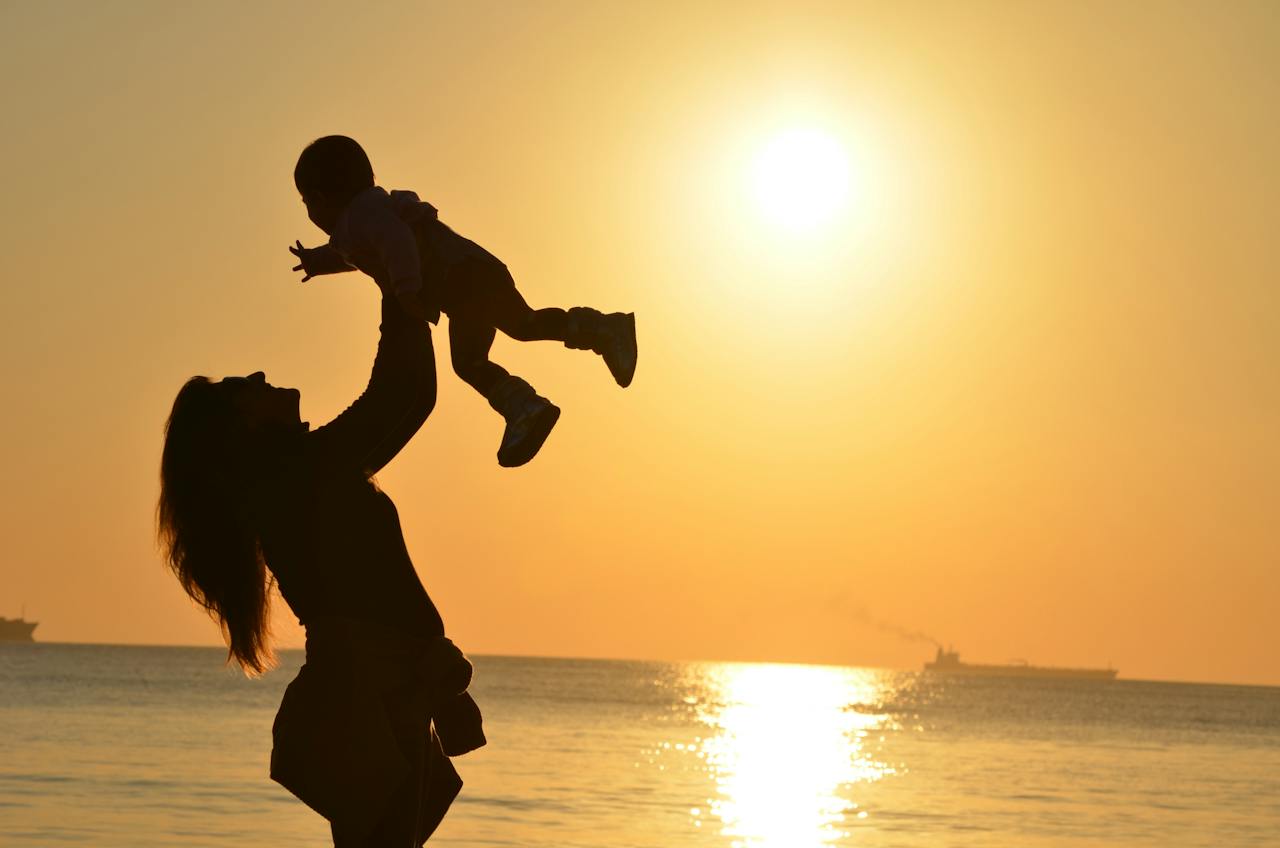
Analysing research published between 2012 and 2022, the researchers found that people who were concerned about the climate crisis typically wanted to have few children or no children at all. (Pexels Photo)
The warnings about the disastrous impact we are having on our planet are becoming more dire. The UN Environment Programme’s most recent emissions gap report, which tracks our progress in limiting global warming, revealed that the world is on course for a “hellish” 3°C of global heating before the end of this century.
How can you plan for a family when the outlook is so bleak? A recent study, conducted by Hope Dillarstone, Laura Brown and Elaine Flores from University College London, has reviewed existing evidence to shed light on how the climate crisis is shaping decisions about whether to have children or not.
Analysing research published between 2012 and 2022, the researchers found that people who were concerned about the climate crisis typically wanted to have few children or no children at all. Concerns about overpopulation and overconsumption, uncertainty about the future, and worries about meeting their family’s needs were among the factors driving people’s desire for smaller families.
Should I have children? The pieces in this series will help you answer this tough question – exploring fertility, climate change, the cost of living and social pressure.
We’ll keep the discussion going at a live event in London on November 30. Click here for more information and tickets.
Overpopulation and overconsumption
Do you feel guilty about your potential child’s carbon footprint? Perhaps you’re frustrated by the materialistic values of modern society and the inevitability of overconsumption? These issues also came up in several of the reviewed studies.
There is a long, problematic, and very political history behind the idea of overpopulation. In various forms, the idea has been floating around since at least the late 18th century. It has led to unethical “population control” measures in some countries.
Some (such as Paul Ehrlich, author of the controversial 1960’s book “The Population Bomb”) argue that there are already too many people living on our planet, and that the sheer number of people is causing our current environmental crisis. But what overpopulation arguments frequently miss is that it’s not just about how many people are on the planet, but also how sustainably we live that matters. Numbers cannot tell the full story.
The urgency with which we need to tackle the climate crisis also implies that opting not to have children for the sake of the climate would now prove insufficient and ineffective. Even with reduced fertility, the population will continue to grow because of population momentum. Even if the fertility rate is declining, there is still a large number of people of reproductive age in the global population, resulting in more births than deaths.
The participants of several studies pointed out that more structural solutions, such as drastic reductions in carbon emissions, are urgently needed and promise to be more effective than reducing family size.
Uncertainty about the future
Are you worried your future children may not be able to enjoy nature due to damaged ecosystems? Perhaps you’re concerned about a more catastrophic outcome, such as full societal collapse? The review shows that these are major themes influencing people’s decision to have fewer children, particularly for those living in the US, Canada, Europe and New Zealand.
These concerns are understandable. The UN’s recent emissions gap report concluded that there is only a 14% chance that the world will limit global warming to the maximum 1.5°C rise that is being called for by climate scientists.
At the same time, hundreds of millions of people around the globe are already experiencing the catastrophic consequences of climate change in their everyday lives. In Zambia and Ethiopia, for example, climate change concerns are having much more immediate impacts on childbearing.
In a study from 2021, which explored the impact of droughts on Zambian women’s social and financial wellbeing and their reproductive lives, one participant said: “The six children I desire to have may not have enough food to eat.” But in order to have fewer children, people require access to contraception, the supply of which can be disrupted, particularly in times of crisis.
In parallel, other respondents in Zambia reported that they are considering having more children to provide financial and labour support. This highlights how the climate crisis is already and very directly impeding reproductive justice – the right to have children, to not have children, and to parent in safe and healthy environments – especially in the global south (lower income countries in Africa, Asia and Latin America).
Childbearing as a political choice
Ultimately, the climate crisis is a collective, and therefore political, crisis. We are much more likely to avoid the worst climate outcomes if we mandate our governments to drastically reduce the emissions generated by industry and consumers than if we concentrate on changing our own individual behaviours.
One study included in the review made this point by analysing how environmental activists approached childbearing decisions. Some decided not to have children as a means of exerting political pressure and advocacy, for example, through the former BirthStrike movement.
For others, not having children was a choice made to free up time and energy for political and advocacy activities centring on the climate crisis. Some people instead saw having children as a way of raising future activists.
In the end, the choice is deeply personal. The only “right” answer is the one that is best for you. But we can all do more to make sure policies help everyone enact their own choices.
Jasmine Fledderjohann, Senior Lecturer in Sociology, Lancaster University and Laura Sochas, Leverhulme Early Career Fellow, School of Social and Political Science, The University of Edinburgh
This article is republished from The Conversation under a Creative Commons license. Read the original article.