Food
What is ‘fried rice syndrome’? A microbiologist explains this type of food poisoning – and how to avoid it

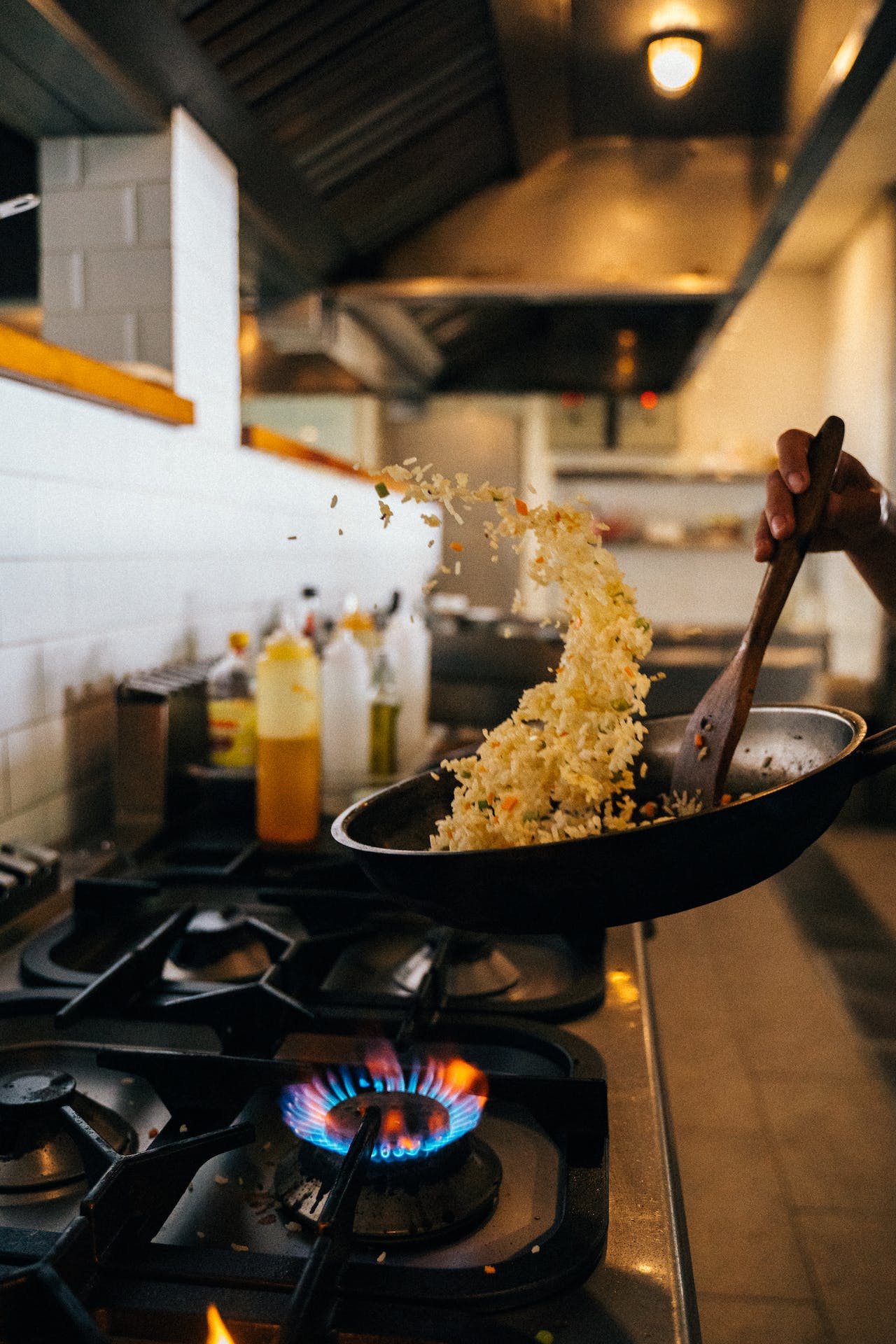
“Fried rice syndrome” refers to food poisoning from a bacterium called Bacillus cereus, which becomes a risk when cooked food is left at room temperature for too long. (Pexels Photo)
A condition dubbed “fried rice syndrome” has caused some panic online in recent days, after the case of a 20-year-old who died in 2008 was resurfaced on TikTok.
“Fried rice syndrome” refers to food poisoning from a bacterium called Bacillus cereus, which becomes a risk when cooked food is left at room temperature for too long.
The 20-year-old college student died after reportedly eating spaghetti that he cooked, left out of the fridge, and then reheated and ate five days later.
Although death is rare, B. cereus can cause gastrointestinal illness if food isn’t stored properly. Here’s what to know and how to protect yourself.
What is ‘fried rice syndrome’?
Baccilus cereus is a common bacterium found all over the environment. It begins to cause problems if it gets into certain foods that are cooked and not stored properly.
Starchy foods like rice and pasta are often the culprits. But it can also affect other foods, like cooked vegetables and meat dishes.
Certain bacteria can produce toxins. The longer food that should be refrigerated is stored at room temperature, the more likely it is these toxins will grow.
B. cereus is problematic because it has a trick up its sleeve that other bacteria don’t have. It produces a type of cell called a spore, which is very resistant to heating. So while heating leftovers to a high temperature may kill other types of bacteria, it might not have the same effect if the food is contaminated with B. cereus.
These spores are essentially dormant, but if given the right temperature and conditions, they can grow and become active. From here, they begin to produce the toxins that make us unwell.
What are the symptoms?
The symptoms of infection with B. cereus include diarrhoea and vomiting. In fact, there are two types of B. cereus infection: one is normally associated with diarrhoea, and the other with vomiting.
Illness tends to resolve in a few days, but people who are vulnerable, such as children or those with underlying conditions, may be more likely to need medical attention.
Because the symptoms are similar to those of other gastrointestinal illnesses, and because people will often get gastro and not seek medical attention, we don’t have firm numbers for how often B. cereus occurs. But if there’s an outbreak of food poisoning (linked to an event, for example) the cause may be investigated and the data recorded.
We do know B. cereus is not the most common cause of gastro. Other bugs such as E. coli, Salmonella and Campylobacter are probably more common, along with viral causes of gastro, such as norovirus.
That said, it’s still worth doing what you can to protect against B. cereus.
How can people protect themselves?
Leftovers should be hot when they need to be hot, and cold when they need to be cold. It’s all about minimising the time they spend in the danger zone (at which toxins can grow). This danger zone is anything above the temperature of your fridge, and below 60°C, which is the temperature to which you should reheat your food.
After cooking a meal, if you’re going to keep some of it to eat over the following days, refrigerate the leftovers promptly. There’s no need to wait for the food to cool.
Also, if you can, break a large batch up into smaller portions. When you put something in the fridge, it takes time for the cold to penetrate the mass of the food, so smaller portions will help with this. This will also minimise the times you’re taking the food out of the fridge.
As a general guide, you can follow the two hour/four hour rule. So if something has been out of the fridge for up to two hours, it’s safe to put it back. If it’s been out for longer, consume it then and then throw away the leftovers. If it’s been out for longer than four hours, it starts to become a risk.
The common adage of food safety applies here: if in doubt, throw it out.
It’s also worth keeping in mind the general principles of food hygiene. Before preparing food, wash your hands. Use clean utensils, and don’t cross-contaminate cooked food with raw food.
Enzo Palombo, Professor of Microbiology, Swinburne University of Technology
This article is republished from The Conversation under a Creative Commons license. Read the original article.